Animals went up first to show that a living body could survive spaceflight. These nine photographs show monkeys, chimpanzees, dogs, spiders and a newt that flew between 1959 and 1994. They come from NASA, the Smithsonian, the U.S. Senate and a Moscow museum, and every one is in the public domain or released under CC0.
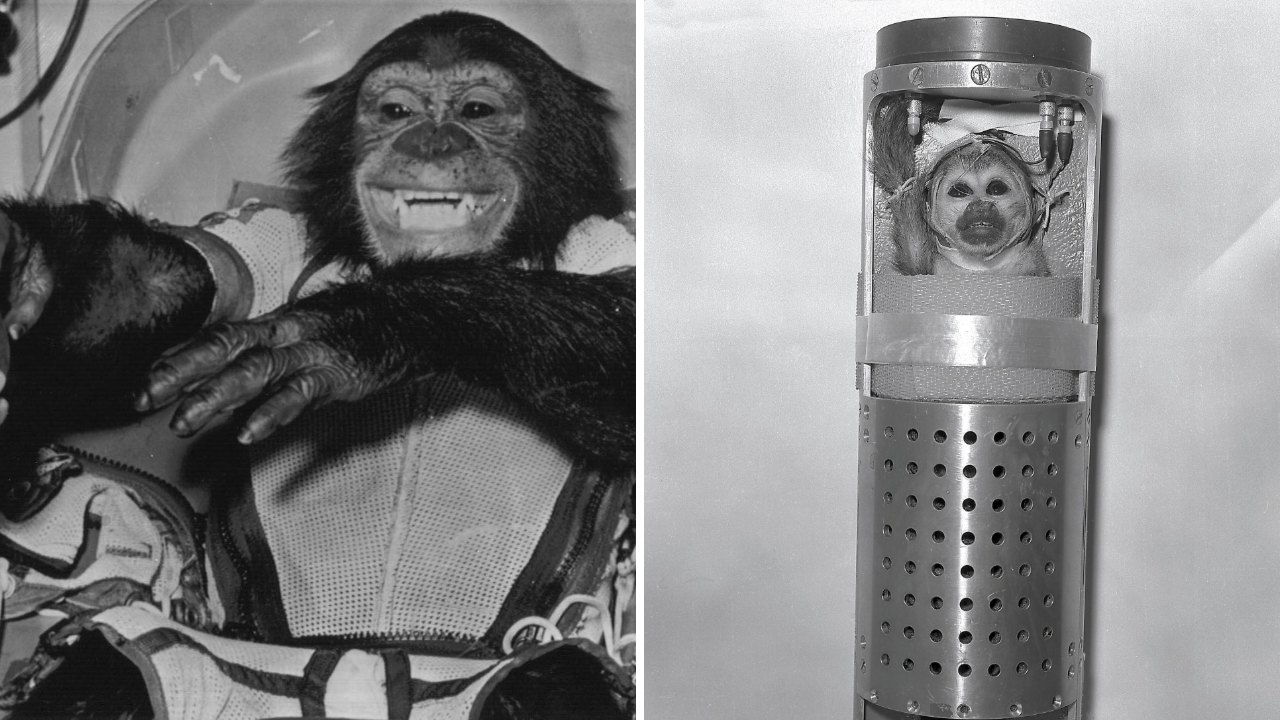
Ham reaches for an apple
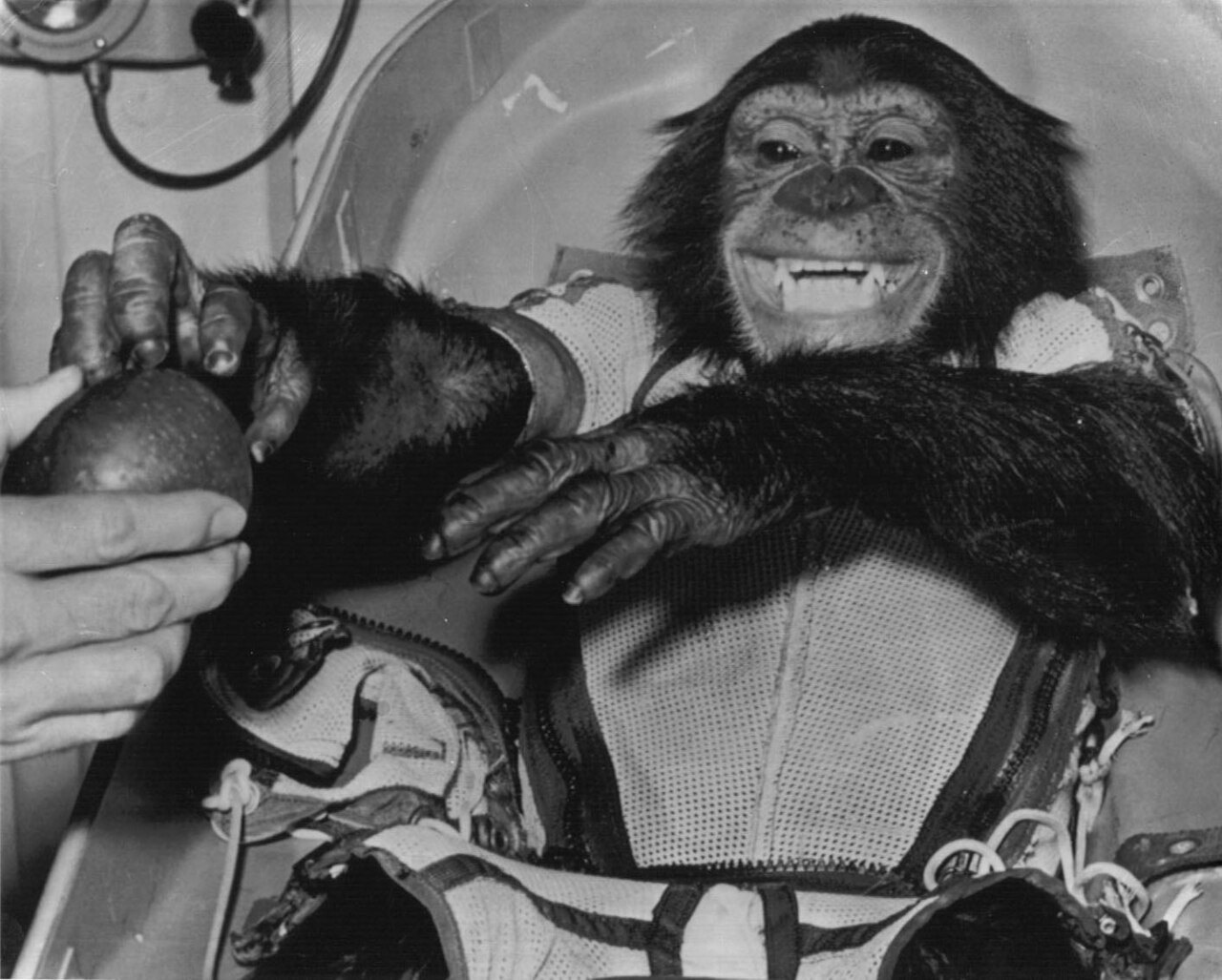
A crewman on the USS Donner handed Ham an apple after the three-year-old chimpanzee’s Mercury-Redstone 2 flight on January 31, 1961. It was his first food since the launch from Cape Canaveral. His wide grin looks happy, but a bared-teeth grin in a chimpanzee more often means fear.
Enos in his flight couch
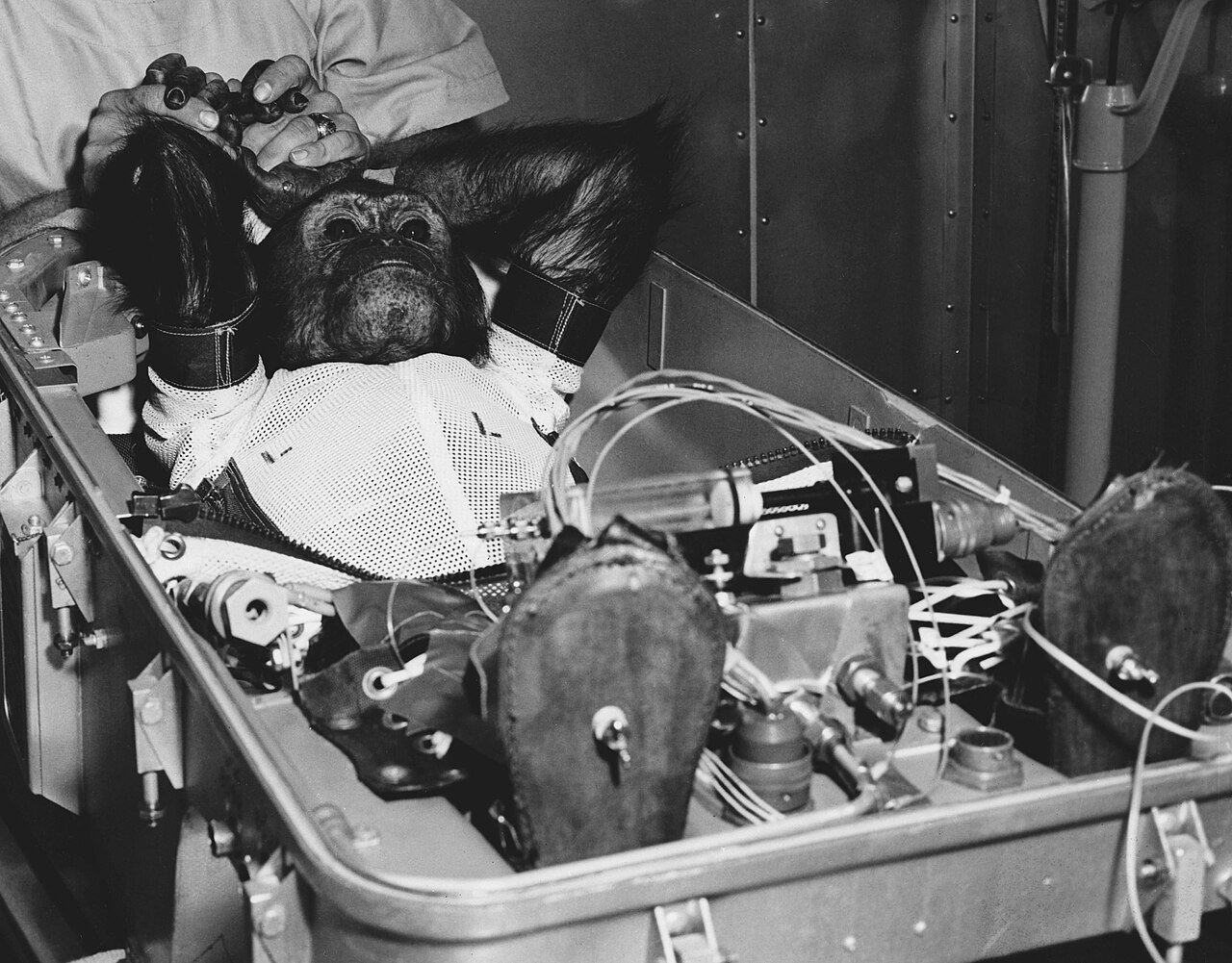
Enos was being prepared for the Mercury-Atlas 5 capsule when this picture was taken. On November 29, 1961, he completed two orbits of the Earth, one short of the plan, because of a malfunctioning control jet and an overheated inverter. He then waited more than three hours in the floating capsule before the recovery ship reached him.
Miss Baker in her flight pack
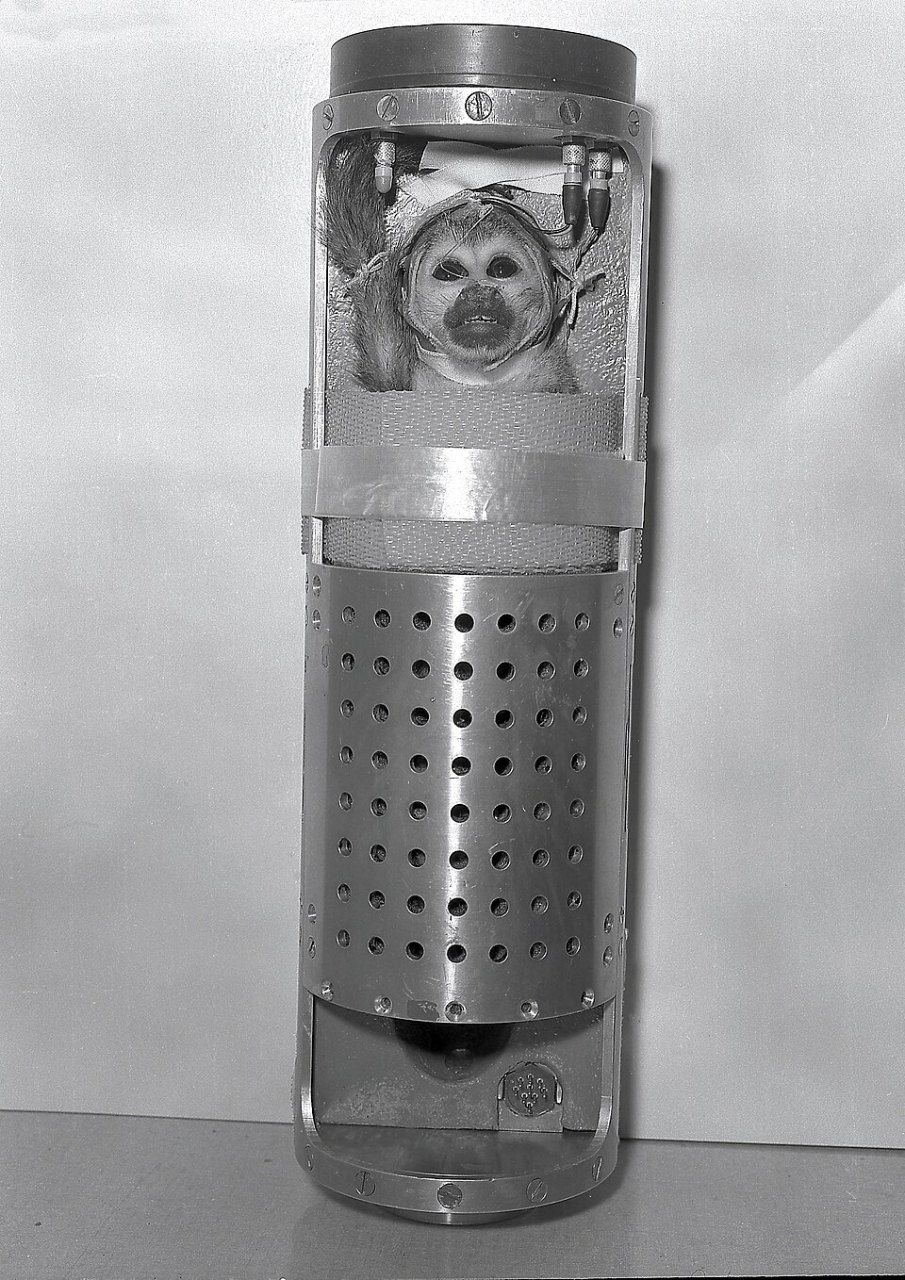
Baker, a squirrel monkey, was readied for the Jupiter AM-18 flight, which launched on May 28, 1959. She and a rhesus monkey named Able both came back in good condition. Baker lived until 1984, and she is buried at the U.S. Space and Rocket Center in Huntsville, Alabama.
Able’s capsule and couch
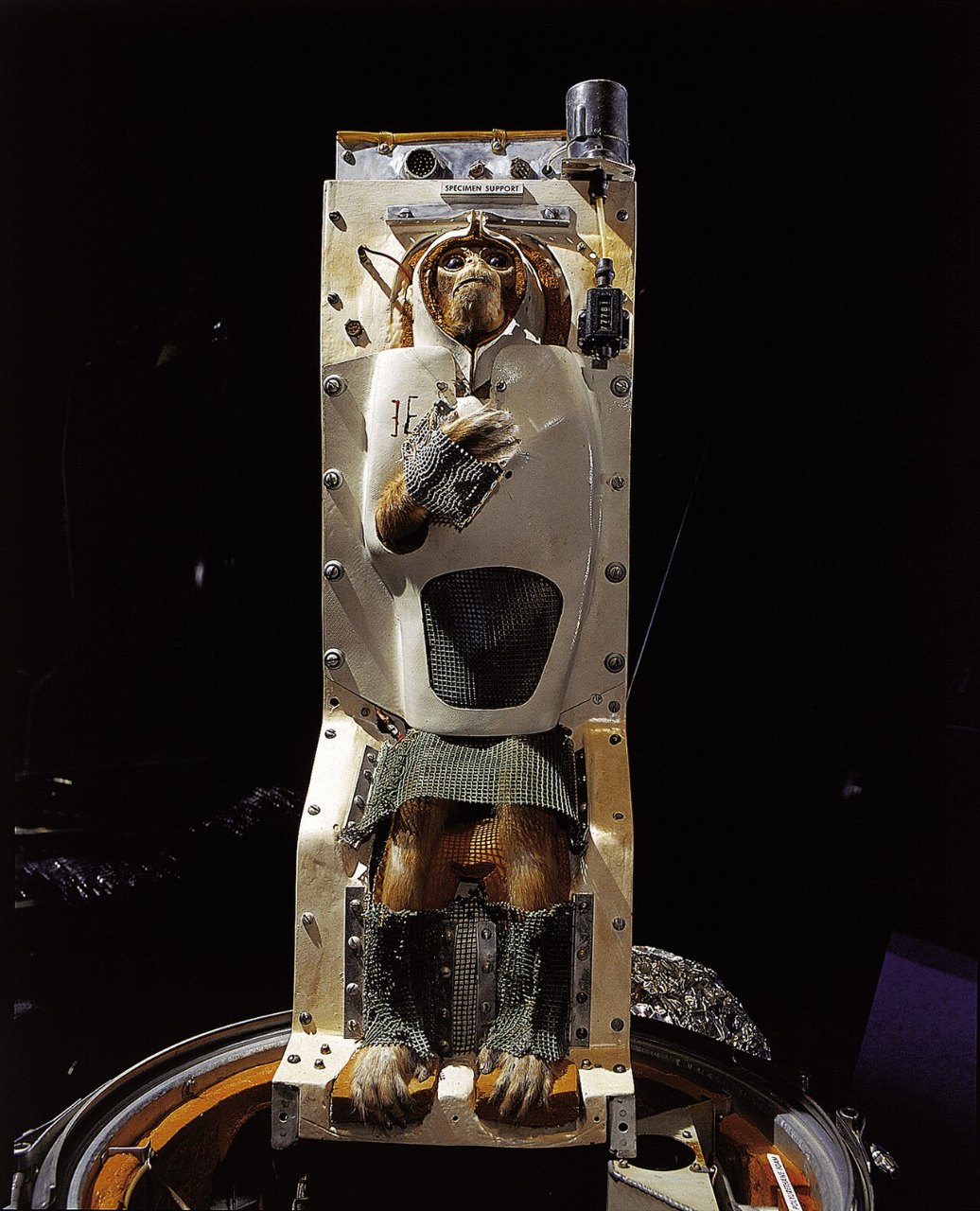
The Smithsonian’s record says Able, a rhesus monkey, and Miss Baker were placed inside a Jupiter missile nose cone for a test flight in May 1959. This is the capsule and couch that carried Able, shown in the museum’s Apollo to the Moon exhibition. Able died four days later, during surgery to remove an infected electrode.
Sam after his Little Joe 2 ride
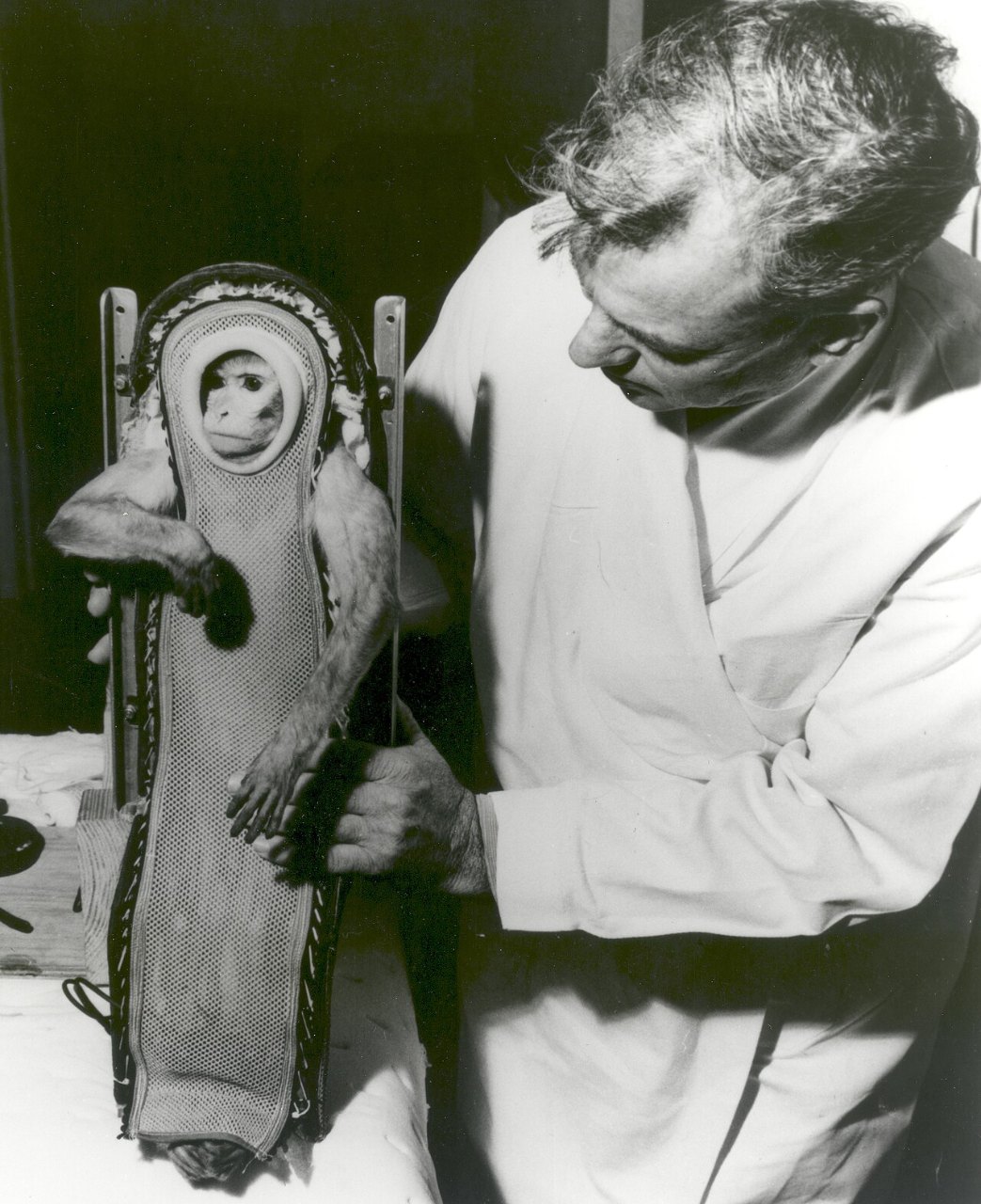
Sam, a rhesus monkey, rode a Little Joe 2 rocket from Wallops Island, Virginia, on December 4, 1959. NASA’s record says he felt three minutes of weightlessness and was picked up by a U.S. Navy destroyer. His name was a nod to the Air Force School of Aerospace Medicine in Texas.
Belka in her museum case
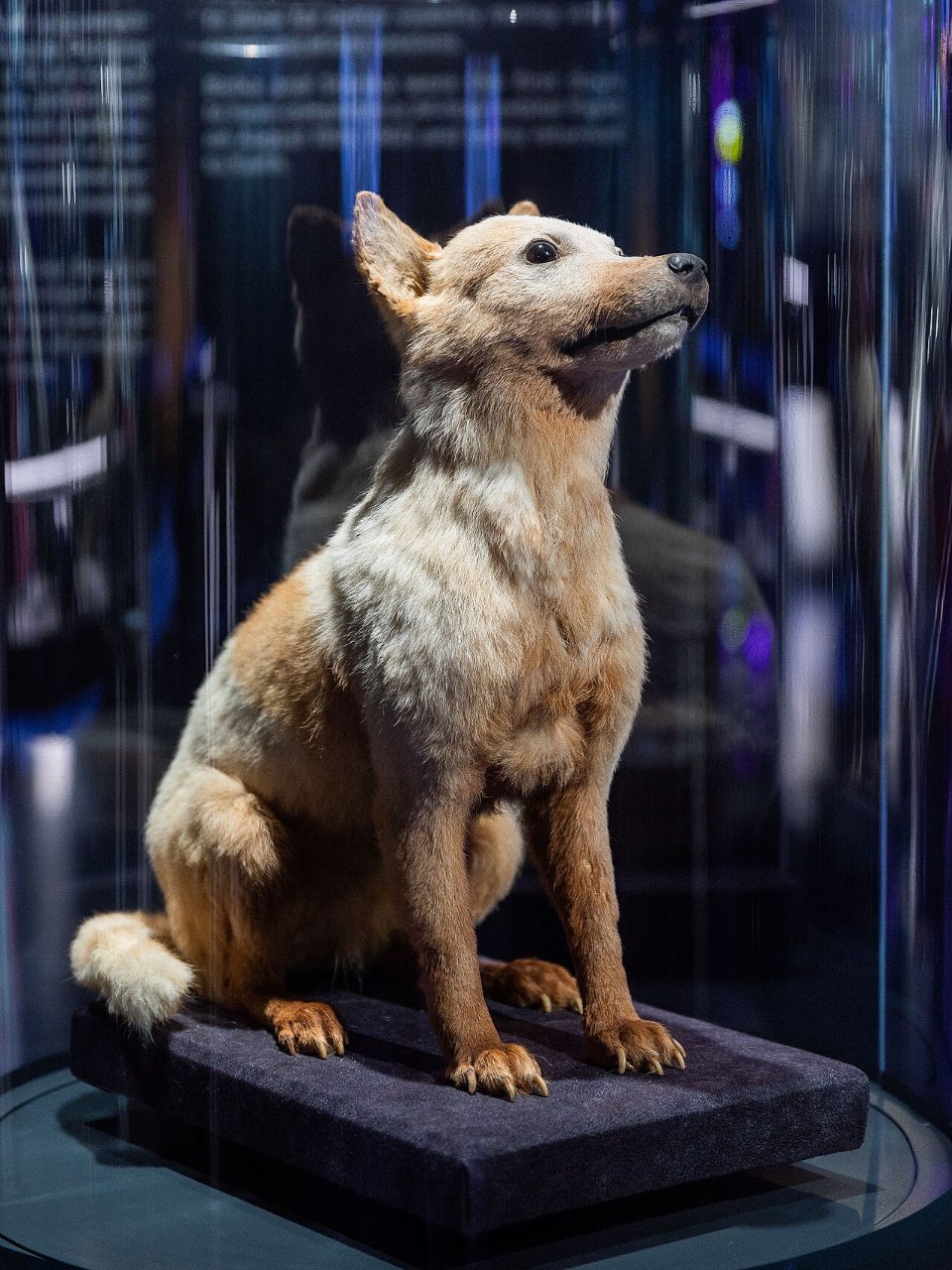
Belka and Strelka were launched on Korabl-Sputnik 2 on August 19, 1960, and made 17 orbits of the Earth before coming home alive. This photograph shows Belka’s preserved body at the Memorial Museum of Cosmonautics in Moscow. Her name is the Russian word for squirrel.
Strelka, the dog with a famous puppy
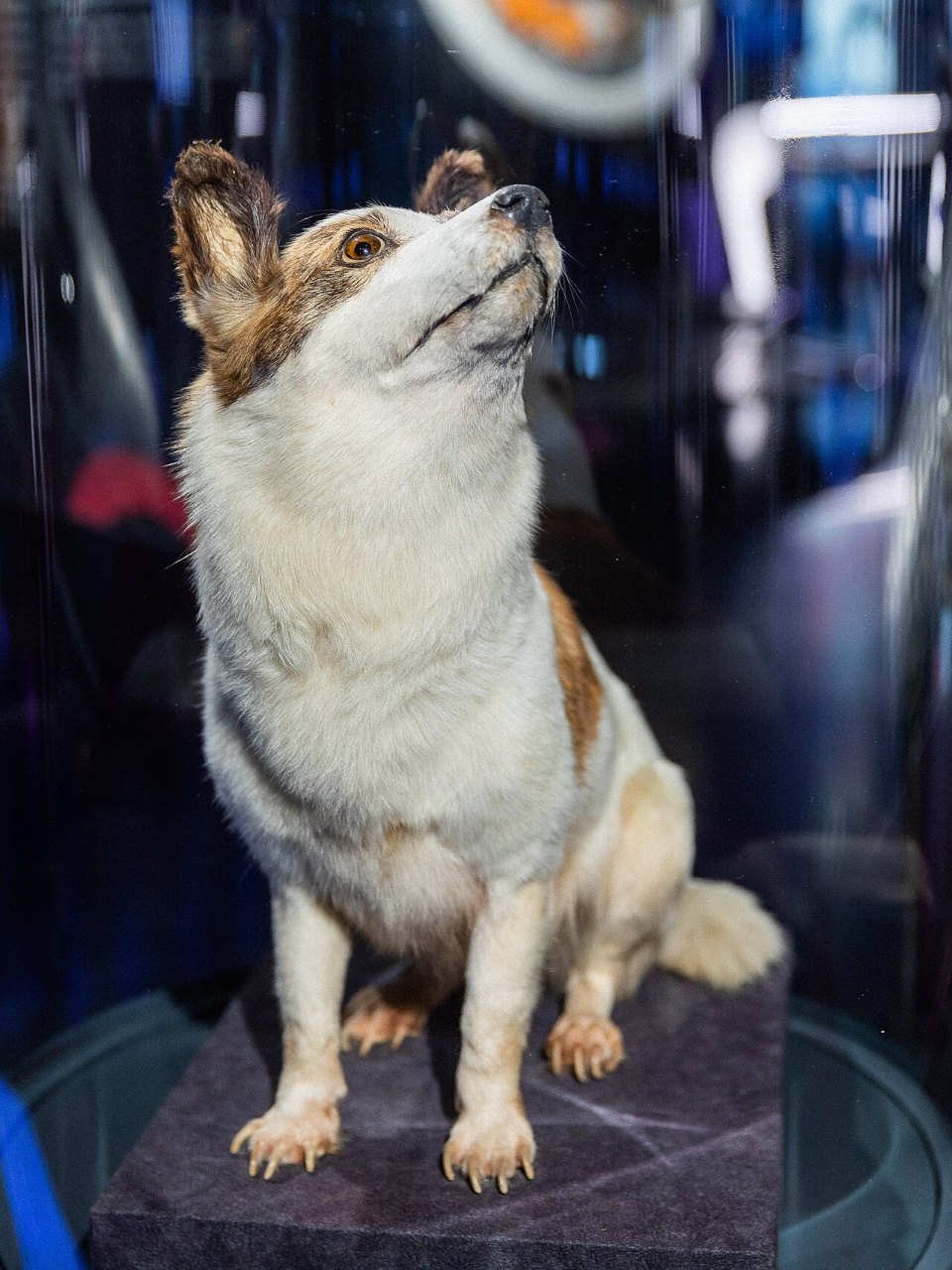
Strelka flew with Belka in 1960 and later had six puppies. In 1961 Soviet leader Nikita Khrushchev sent one of them, Pushinka, to the Kennedys, and she lived at the White House. Strelka’s name means arrow in Russian, and this is her preserved body in the same Moscow museum.
Arabella spins a web in orbit
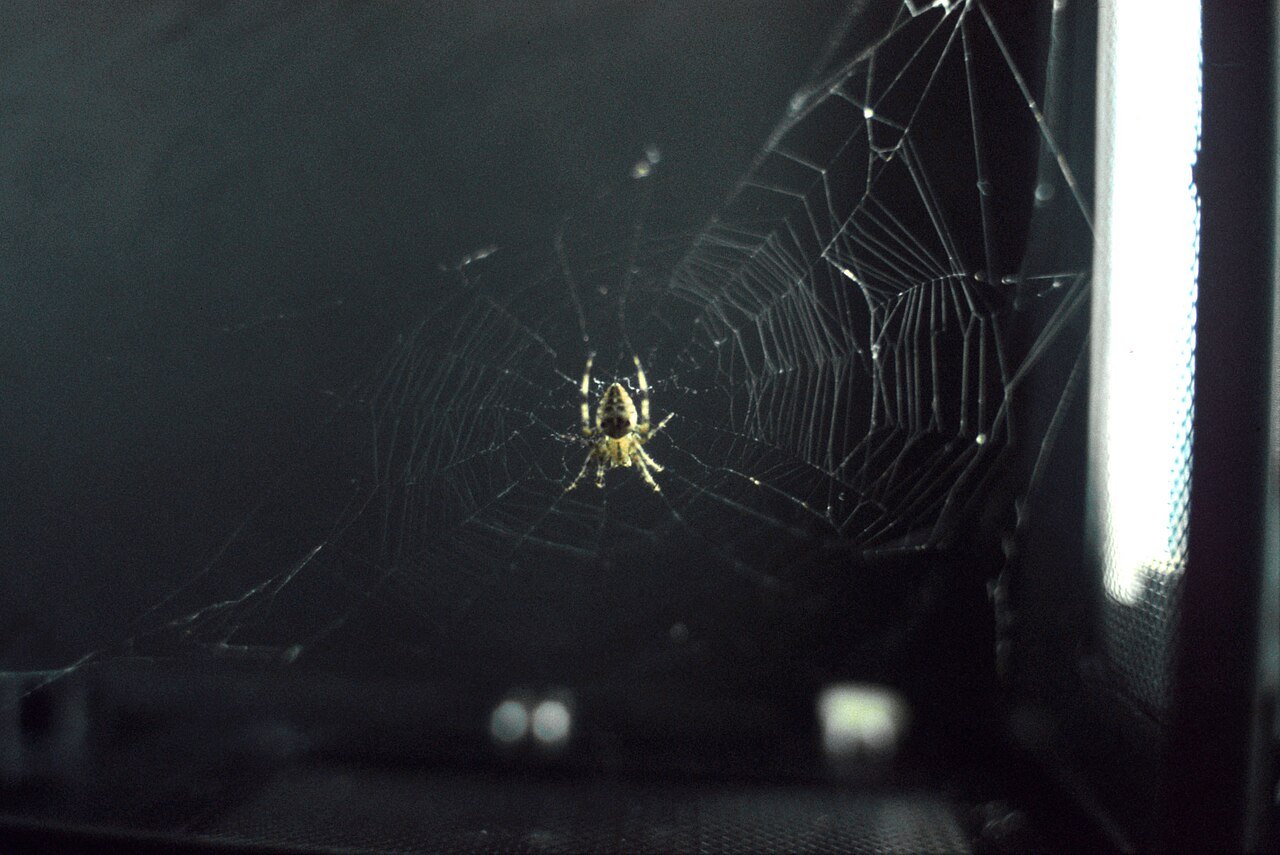
Arabella was one of two cross spiders that flew on Skylab 3 in 1973 to test whether a spider could build a web in weightlessness. The experiment came from Judith Miles, a 17-year-old from Lexington, Massachusetts, whose idea was picked from more than 3,400 student proposals. The web in this hand-held Nikon photograph has the familiar spiral pattern.
A newt in the Spacelab
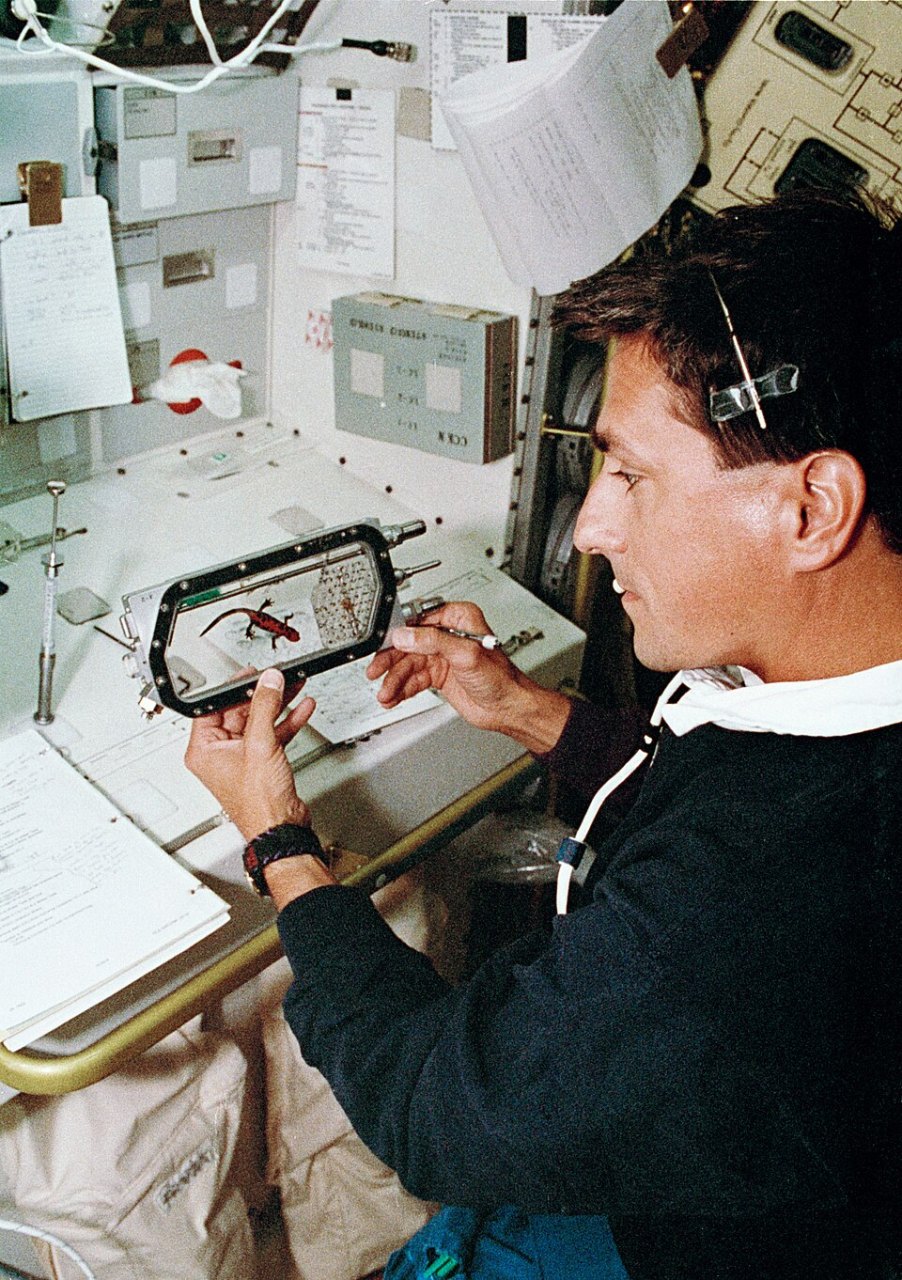
Donald Thomas checks one of the newts that flew on the Space Shuttle Columbia on STS-65 in July 1994. The newts lived in a tank unit that also held medaka and goldfish, and the experiment asked whether embryos develop normally in space. Thomas shared the two-week mission with five other NASA astronauts and a Japanese payload specialist.