Between about 1905 and 1915, Sergey Prokudin-Gorsky photographed the Russian Empire using three black-and-white exposures taken through red, green and blue filters. These ten views, from Tolstoy’s estate to a lesson in Samarkand, show the empire in full color. Every photograph is in the public domain.
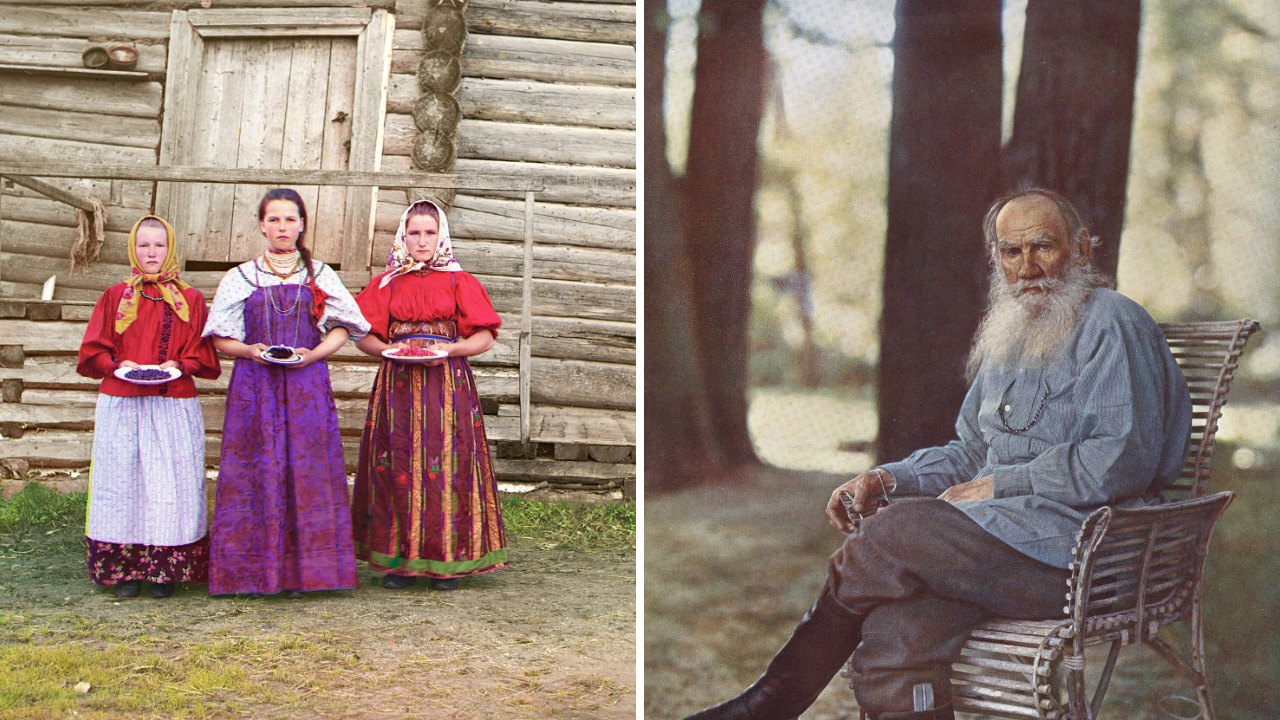
Three girls offering berries
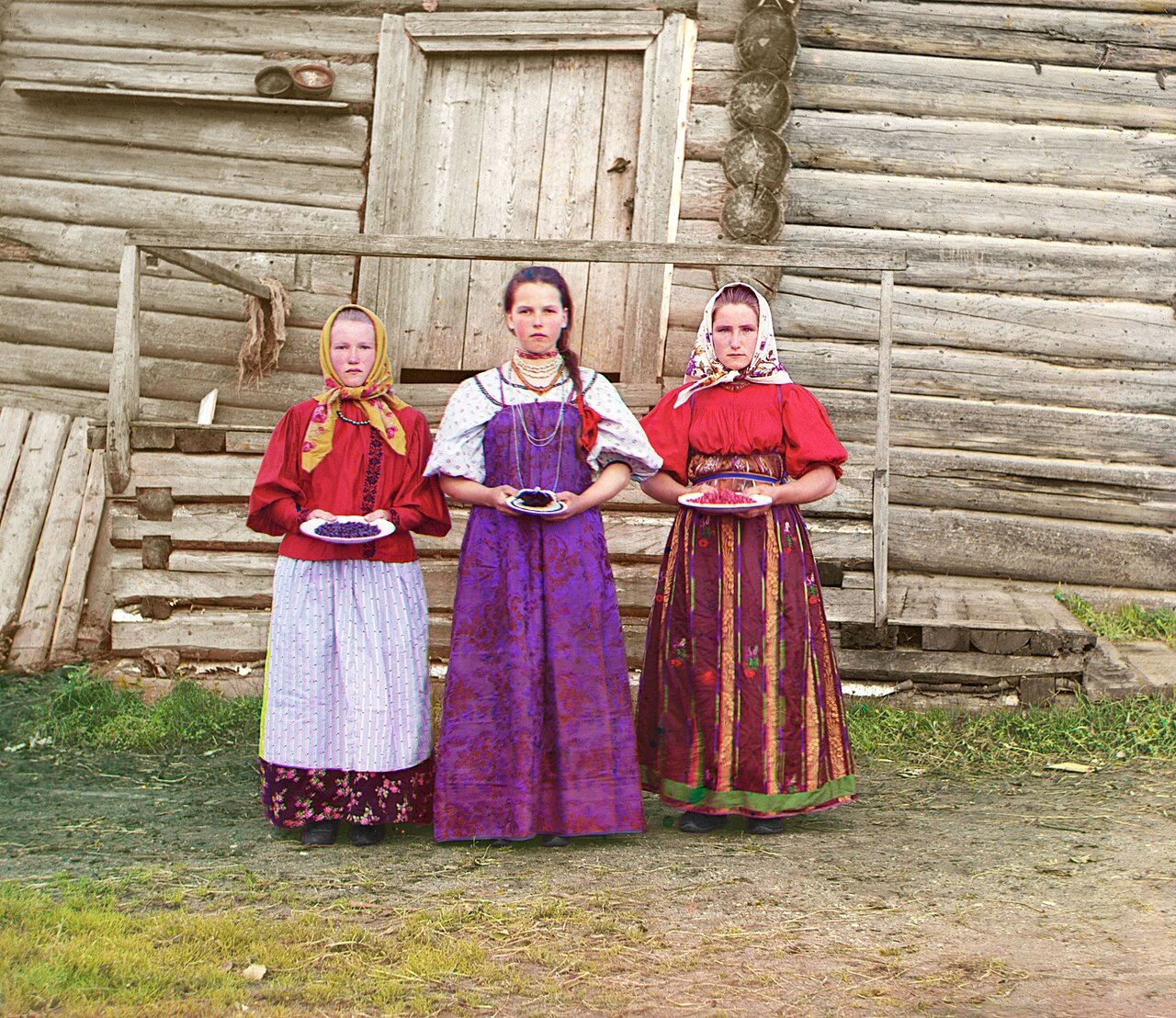
The Library of Congress describes this as three young women offering berries to visitors at their log house along the Sheksna River near Kirillov. It dates from 1909 and appears in Prokudin-Gorsky’s album of views along the Mariinsky canal and river system. Each girl holds her dish at waist height and looks straight at the camera.
Leo Tolstoy at Yasnaya Polyana
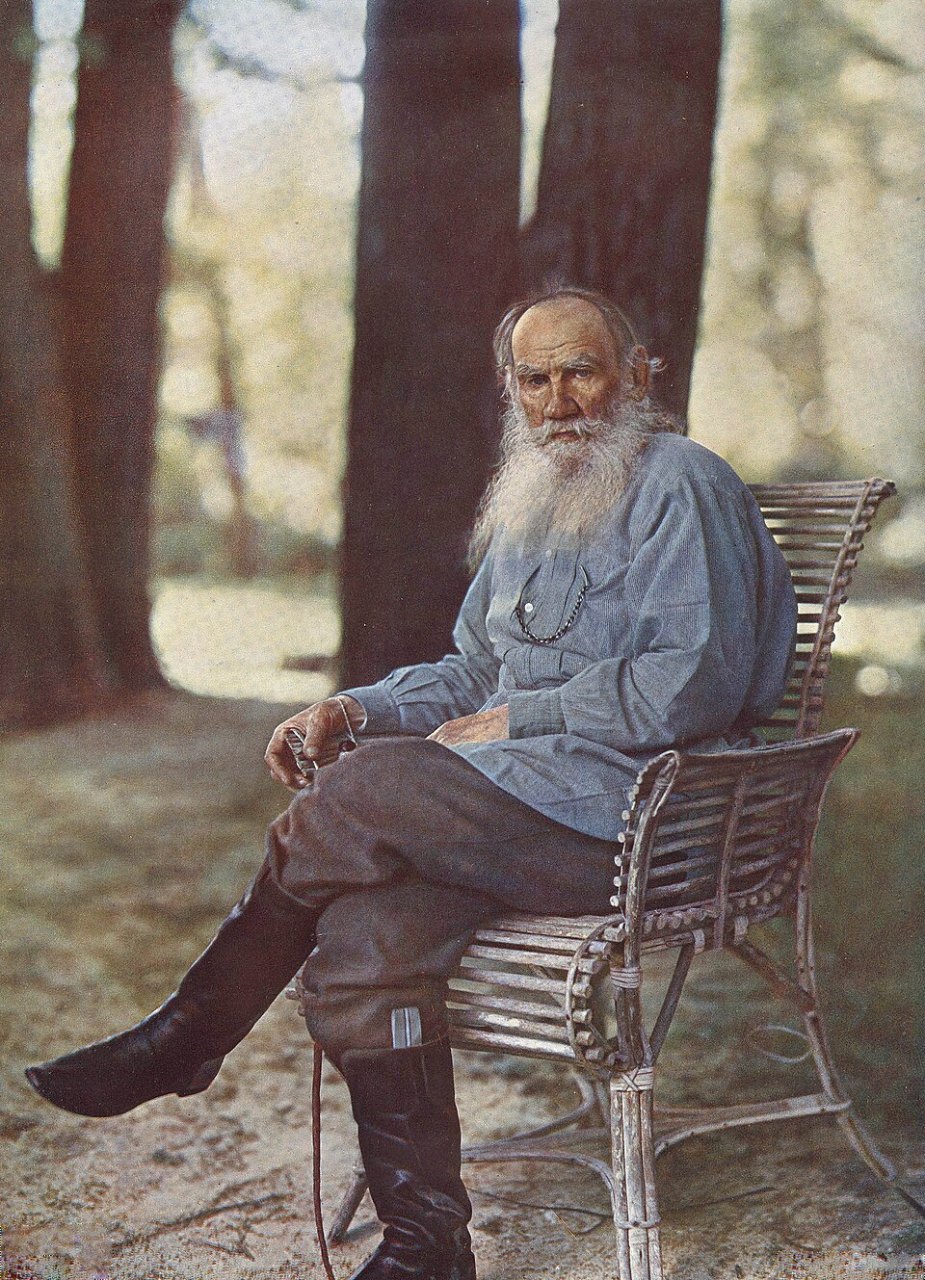
Prokudin-Gorsky photographed Tolstoy at the writer’s family estate in May 1908, when Tolstoy was 79. That year the picture was announced as the first Russian color portrait. He died in 1910, and his gaze here is steady and stern.
Nilov Monastery on Lake Seliger
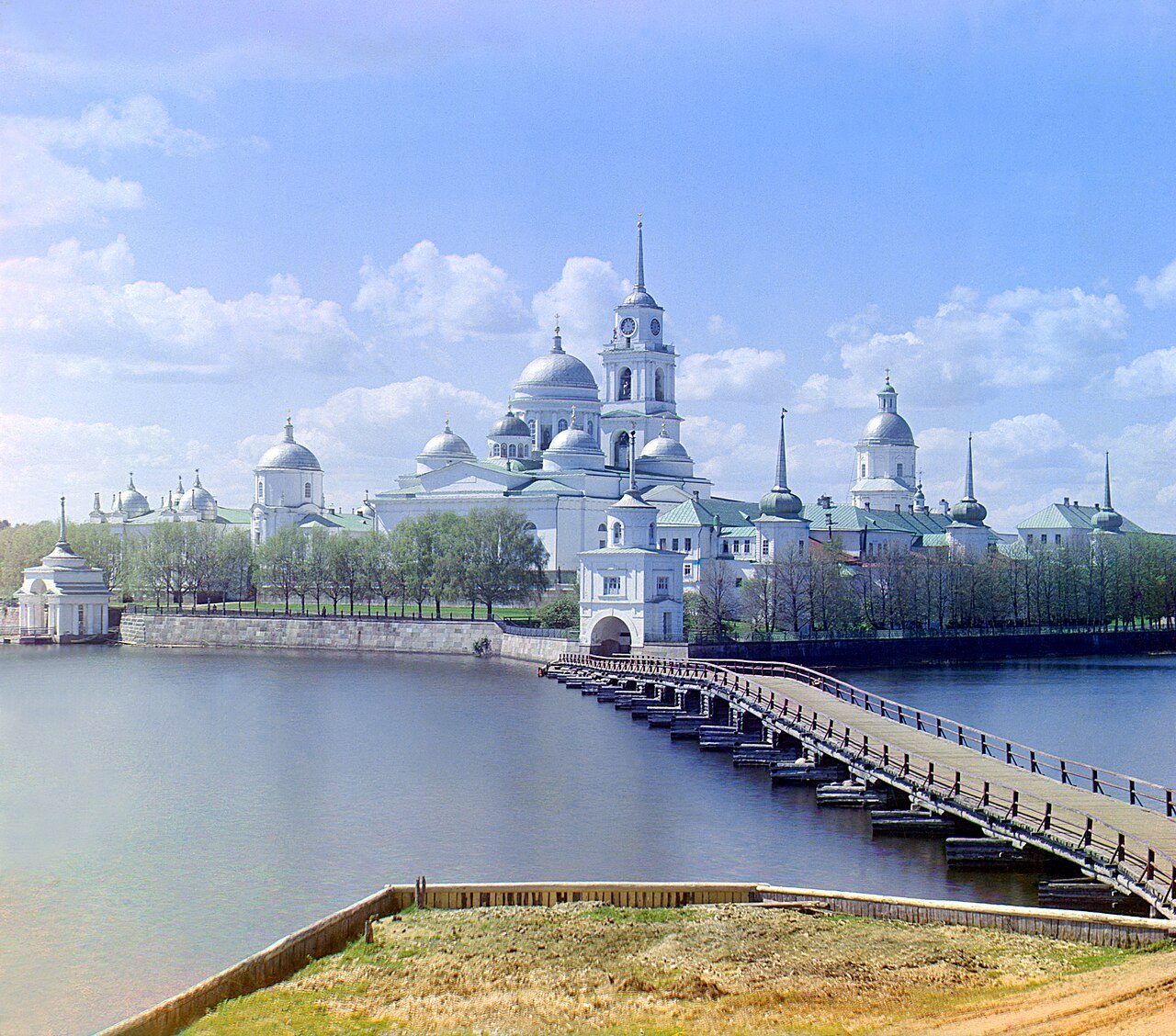
The Nilov Monastery stands on Stolobny Island in Lake Seliger, northwest of Moscow. Saint Nil settled there around 1528, and his followers built one of the empire’s largest monasteries. The Soviet government closed it in 1927 and used the buildings for other purposes, including a concentration camp and an orphanage, until the Church got them back in 1990.
A woman spinning yarn at Izvedovo
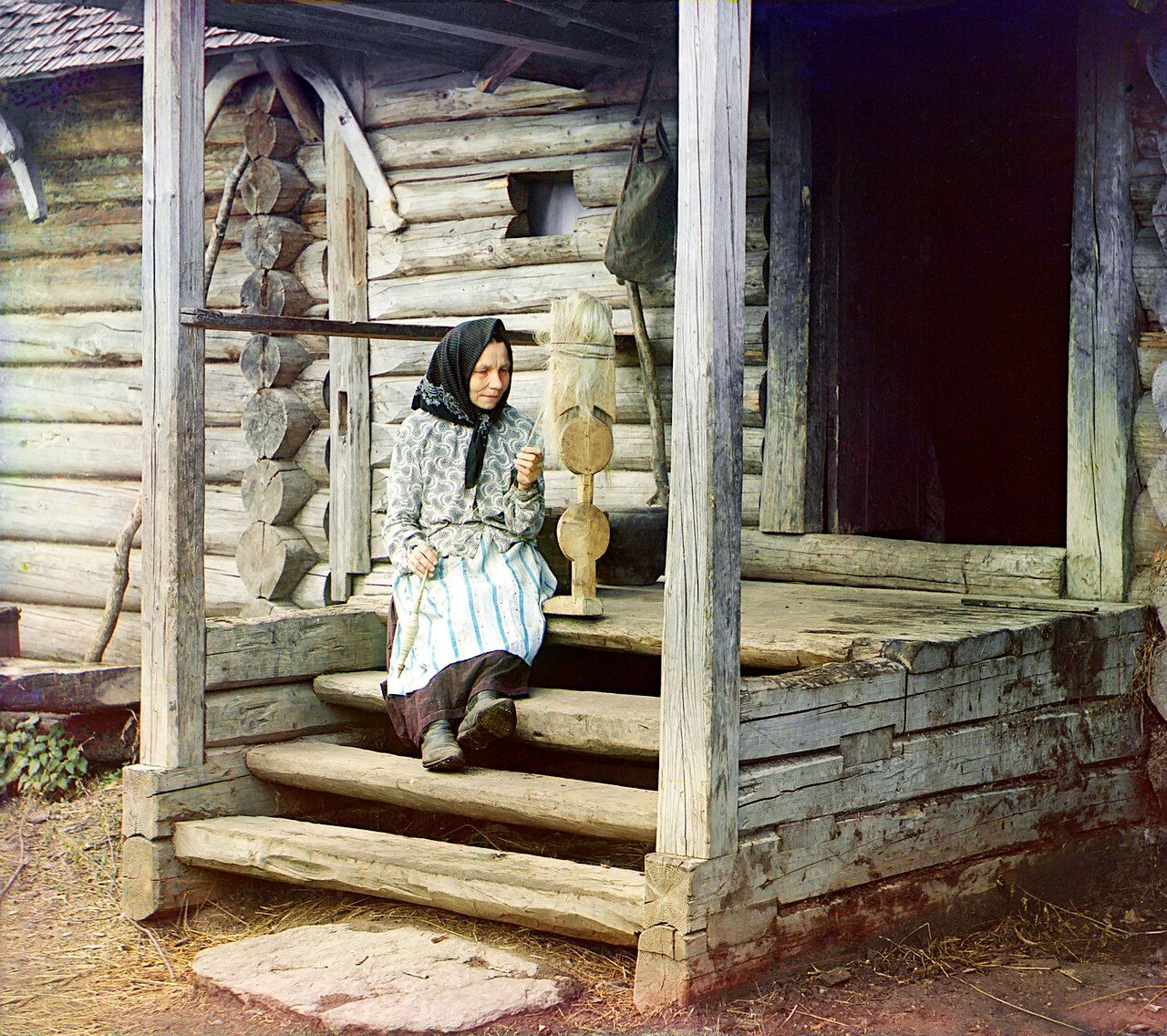
A woman spins yarn on the steps of a log house in the village of Izvedovo, with a carved wooden distaff beside her. Prokudin-Gorsky took it in 1910 for an album of views along the upper Volga, from its source in the Valdai Hills to Kalyazin. She pauses her work just long enough to look toward the camera.
The Emir of Bukhara in a blue robe
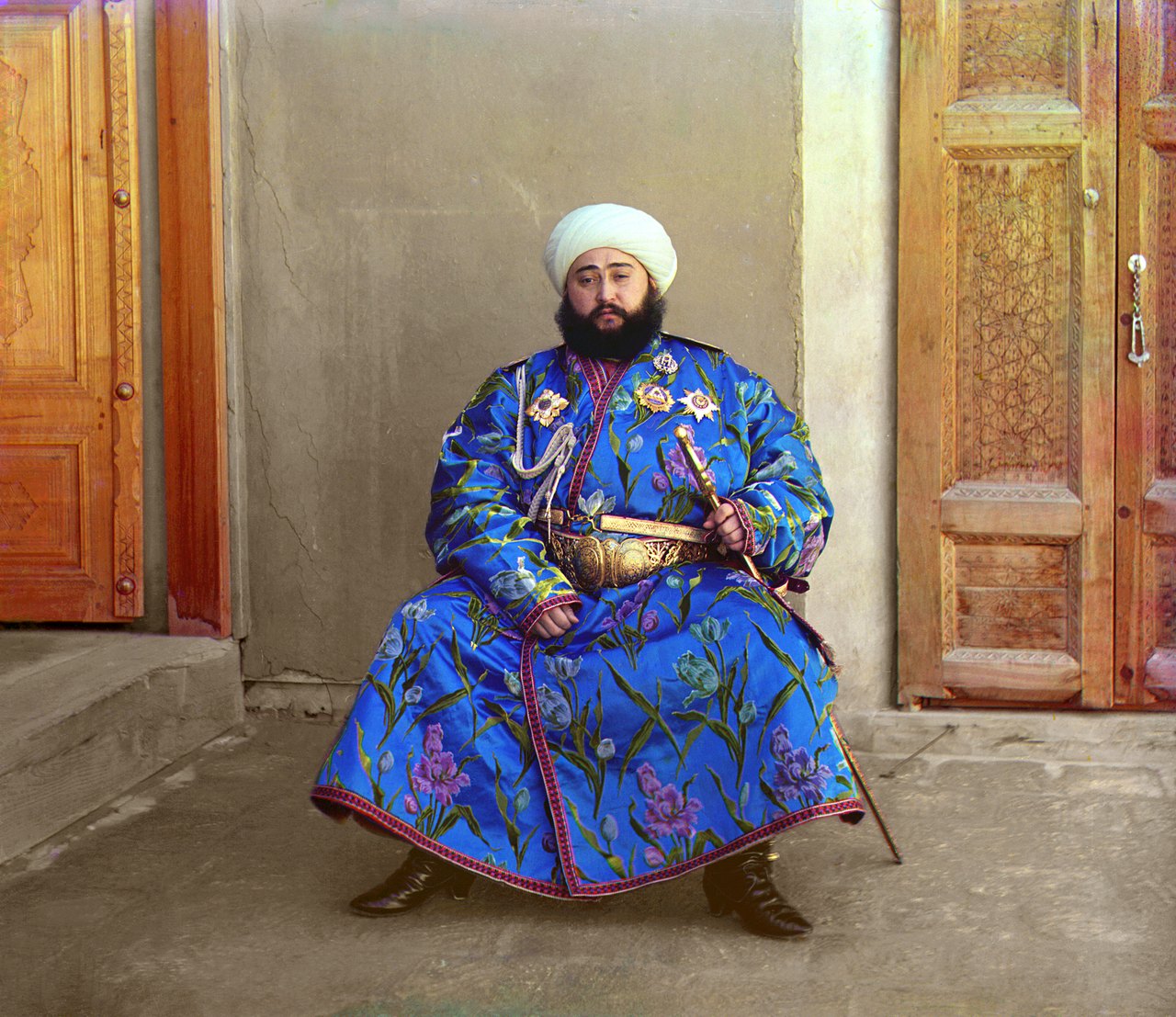
Alim Khan, the emir of Bukhara, posed for this portrait in 1911, soon after taking the throne. Bukhara was a Russian vassal state, though he ruled as an absolute monarch at home. In 1920, after Soviet power arrived, he fled to Afghanistan, and he died there in 1944.
A Trans-Siberian bridge over the Kama
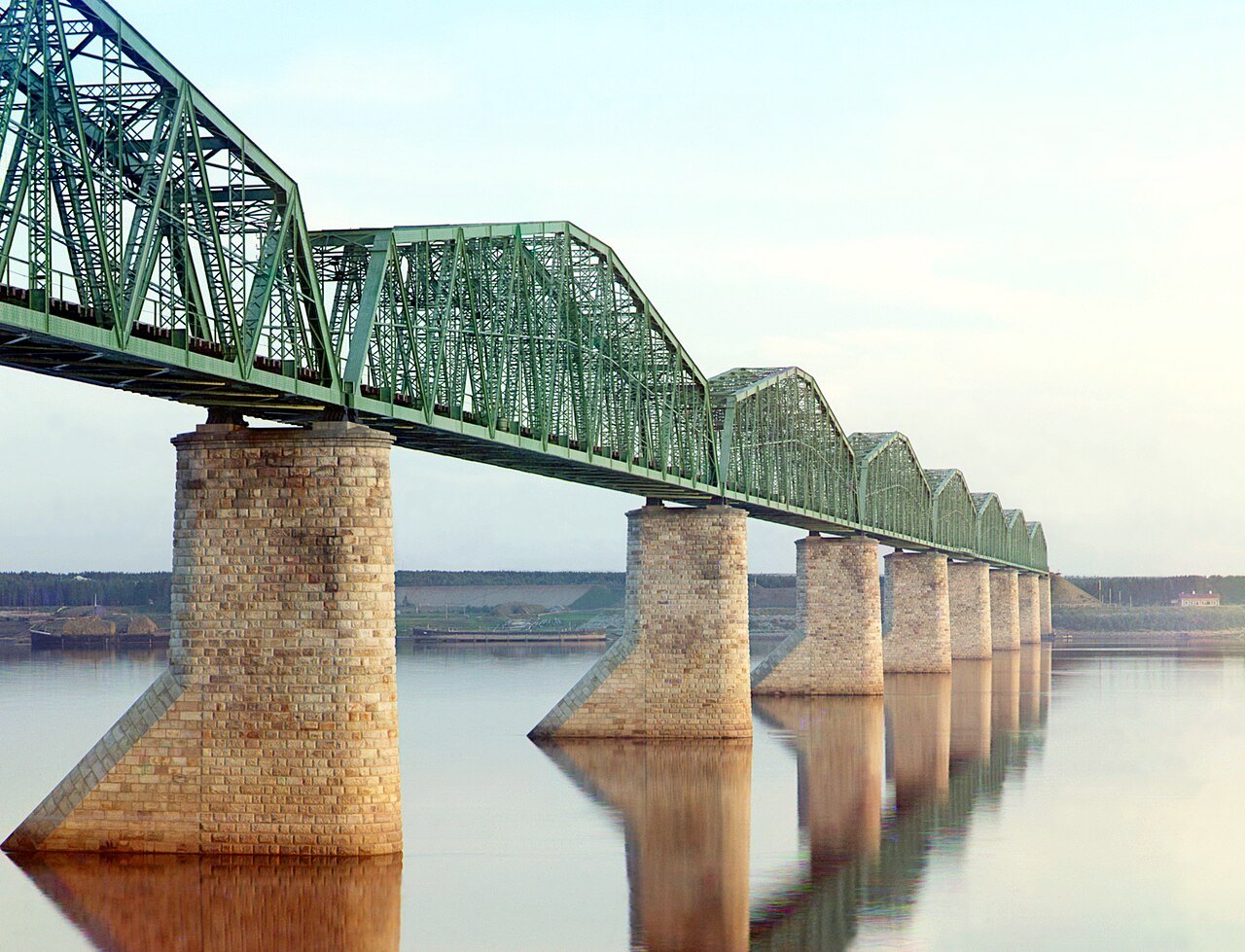
This metal truss bridge carried the Trans-Siberian Railway across the Kama River near Perm, in the Ural Mountains region. The railway ran more than 6,000 miles from central European Russia to the Pacific, and big rivers like the Kama were among the obstacles in its way. The stone piers march into the haze, and the calm water doubles them.
A lesson in a Samarkand courtyard
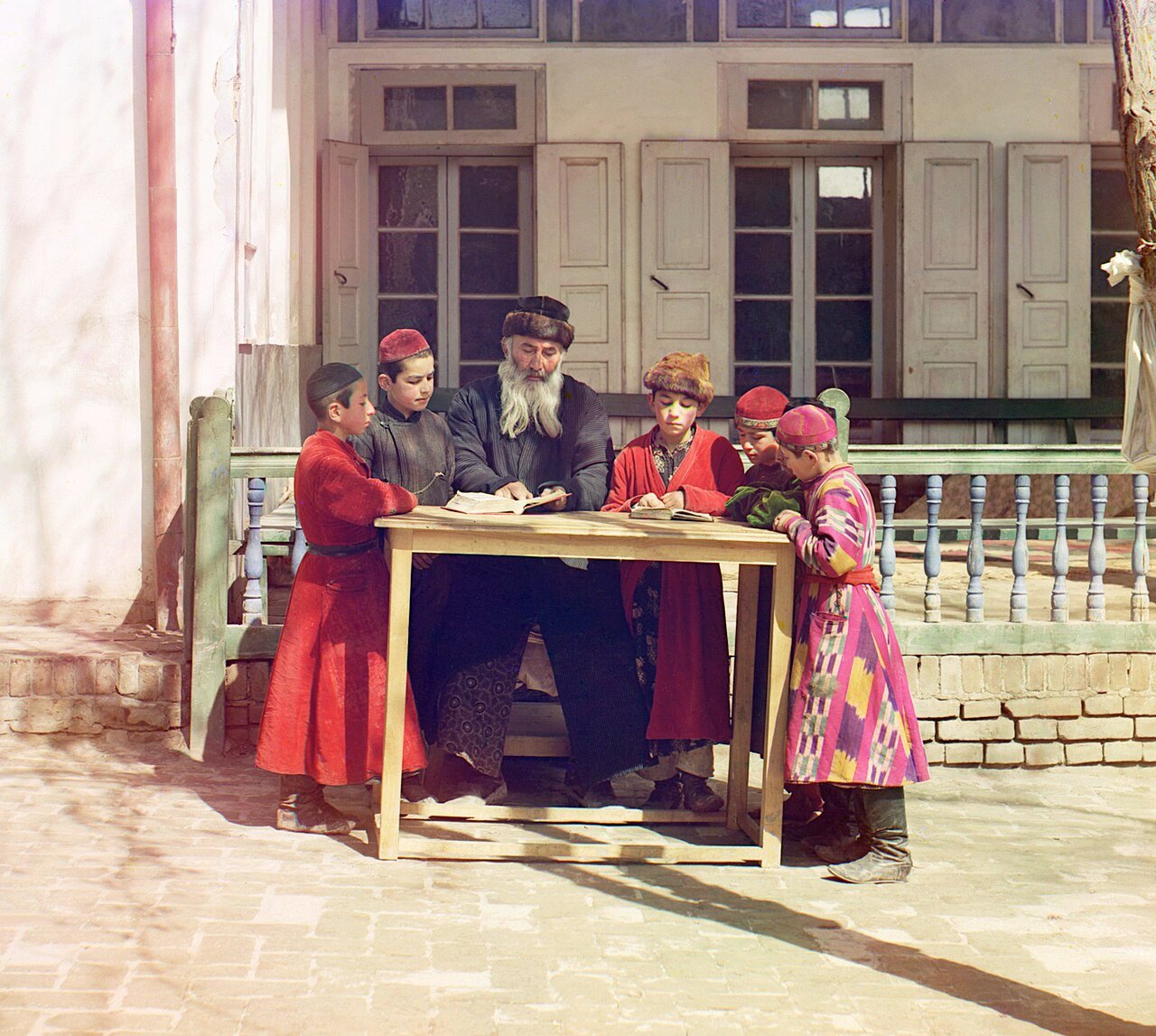
A group of Jewish boys study with their teacher in a Samarkand courtyard, in a photograph the Library of Congress dates to 1911. Samarkand was a Silk Road city of Tajiks, Persians, Uzbeks, Arabs, Jews and Russians, and part of the Russian Empire since the mid-1800s. The boy at right is the only one in a patterned coat.
Weighing tea at Chakva, near Batumi
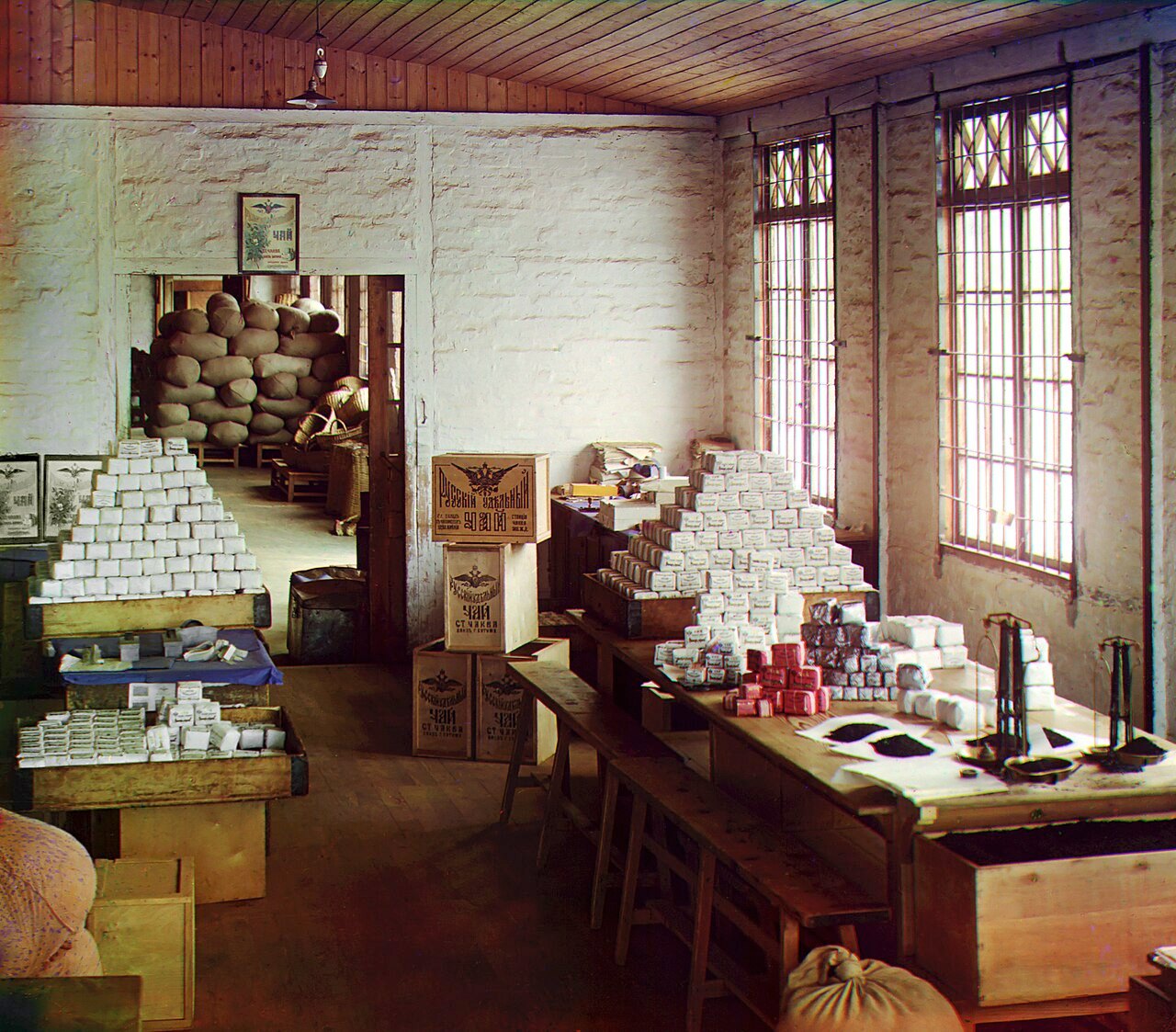
The weighing room of the Chakva tea factory, in a small town just north of Batumi on the Black Sea coast, is stacked with neat pyramids of white packages. The region’s semi-tropical climate suited tea. Prokudin-Gorsky made several pictures at Chakva, including one of a Chinese foreman posing among the tea plants.
The Church of the Resurrection in Kostroma
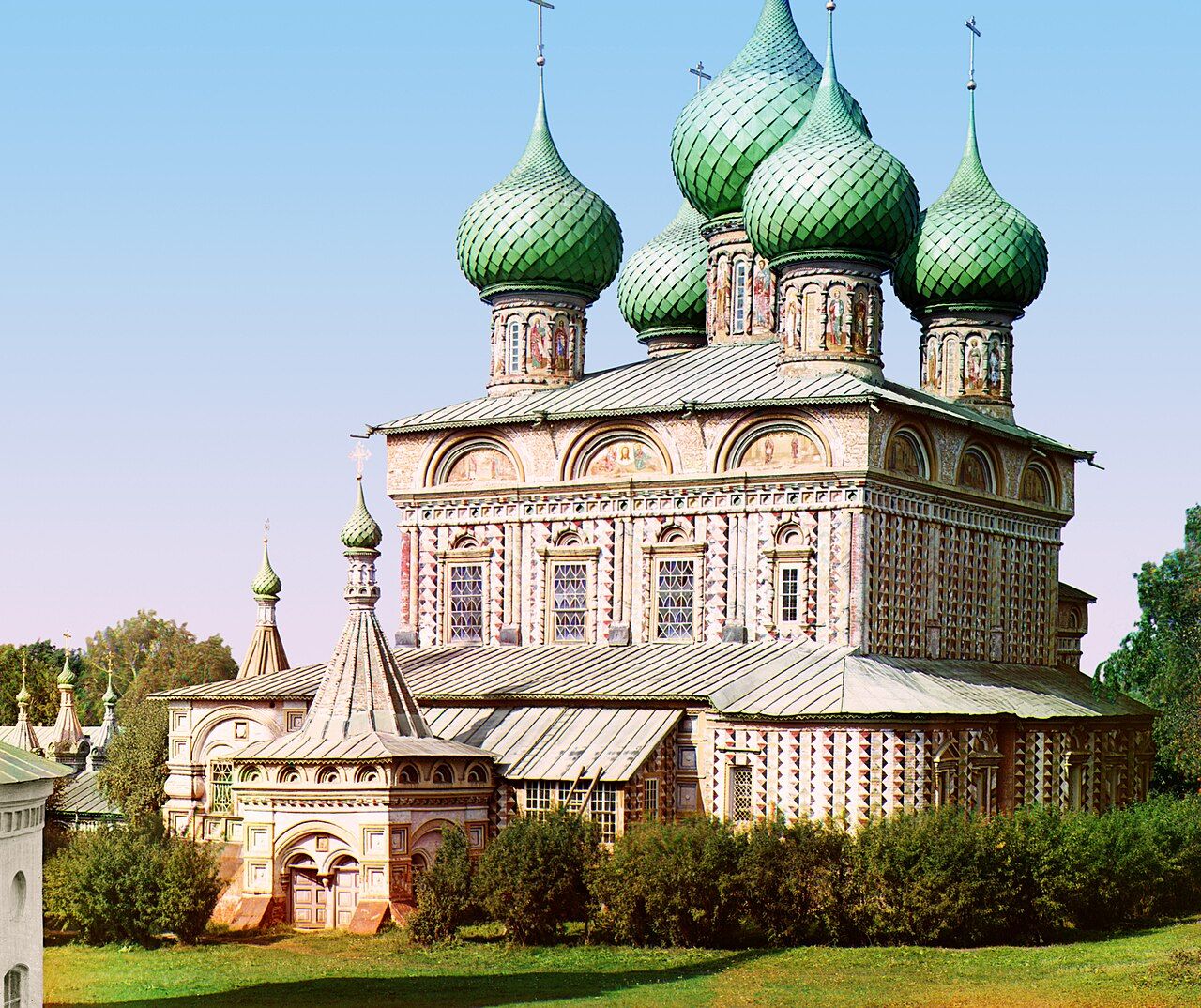
The Church of the Resurrection in Kostroma, a city on the Volga, was built in the 1650s, and Prokudin-Gorsky photographed it in 1910. The Library of Congress notes that despite its dramatic exterior, the church is known mainly for the wall paintings inside. Those do not show here, but the green domes and patterned walls do.
A fabric merchant in his Samarkand stall
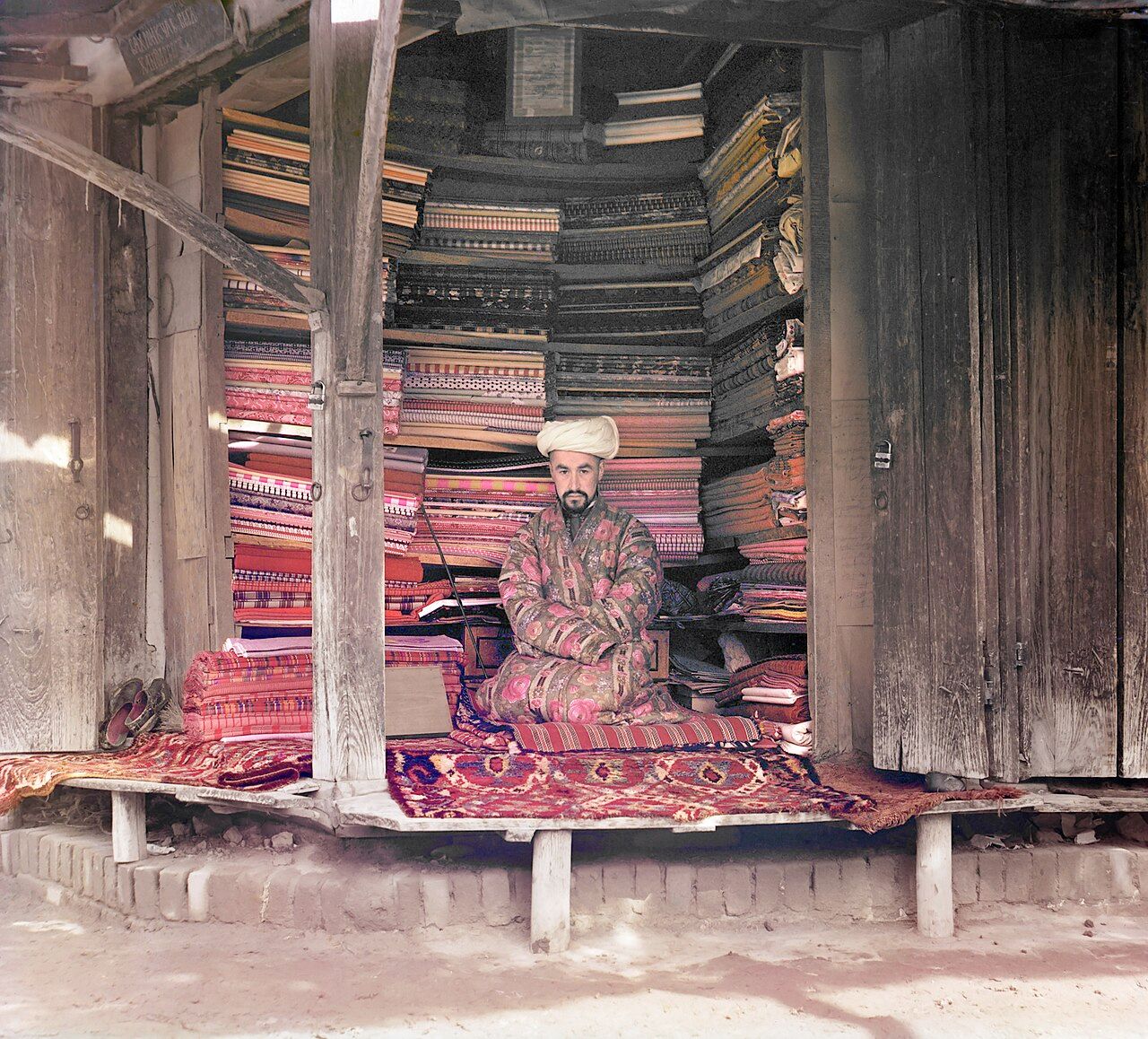
A merchant sits cross-legged on carpets in his Samarkand stall, with tall stacks of cloth behind him. The Library of Congress says the display includes silk, cotton and wool fabrics, and a framed page of the Koran hangs at the top of the stall. The photograph is dated only to between 1905 and 1915.