Between December 1968 and December 1972, nine NASA crews flew to the Moon and six of them landed. The astronauts took most of the pictures themselves with Hasselblad cameras, and NASA’s images are in the public domain. These eight run from Earthrise in 1968 to the Blue Marble in 1972.
Earthrise, Apollo 8
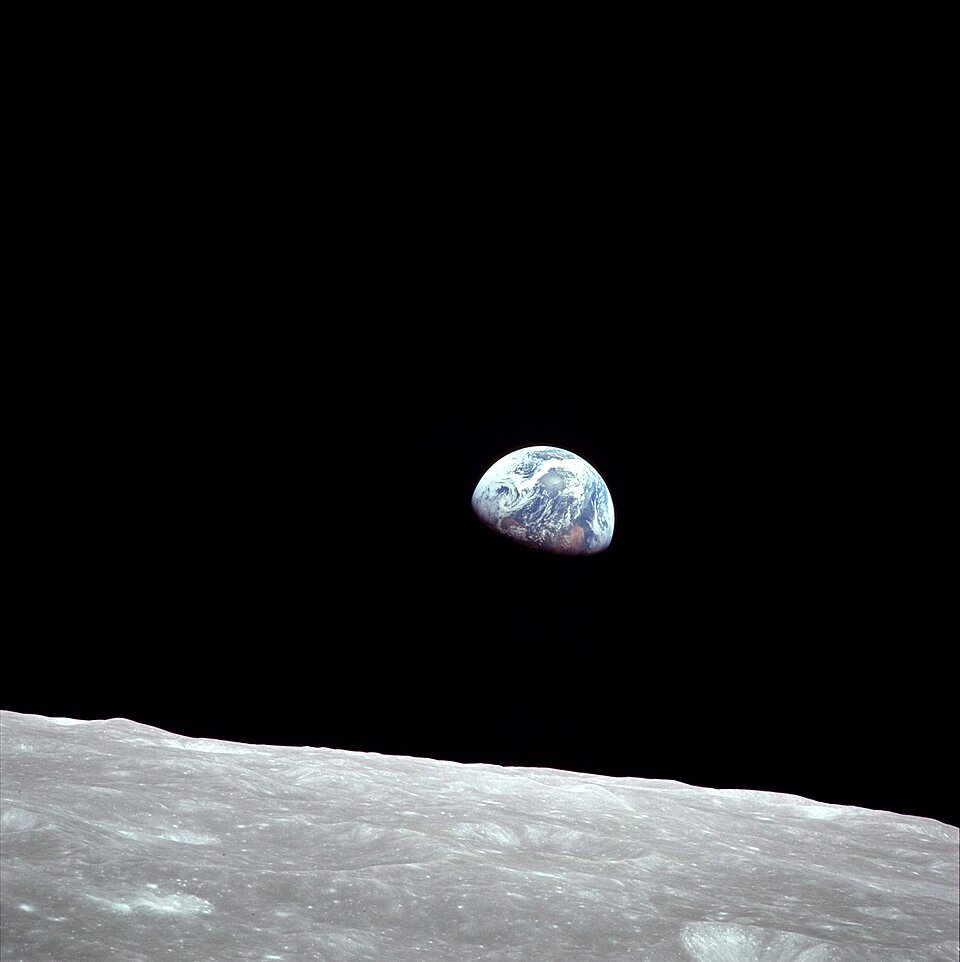
Bill Anders took this on the morning of December 24, 1968, while Apollo 8 orbited the Moon and the Earth rose for the third time. The lunar horizon in the frame is about 570 kilometers (350 miles) from the spacecraft. Everything in the picture is gray or black except one small blue planet.
Apollo 11 lifts off
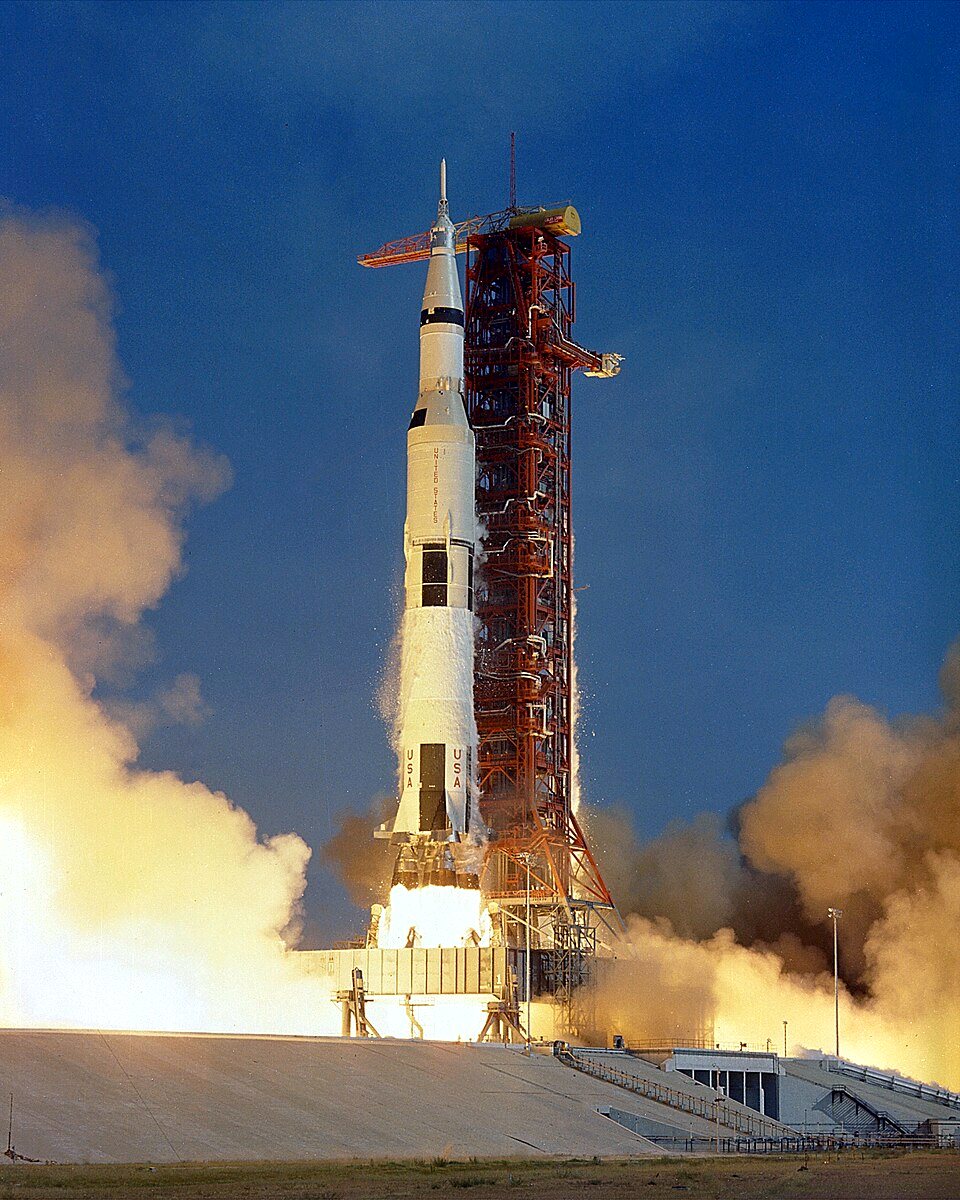
The Saturn V carrying Neil Armstrong, Michael Collins and Buzz Aldrin lifted off at 9:32 a.m. EDT on July 16, 1969, from Launch Complex 39A at Kennedy Space Center. Flame and smoke fill the lower half of the frame, and the rocket looks almost too slender to be the cause of all of it.
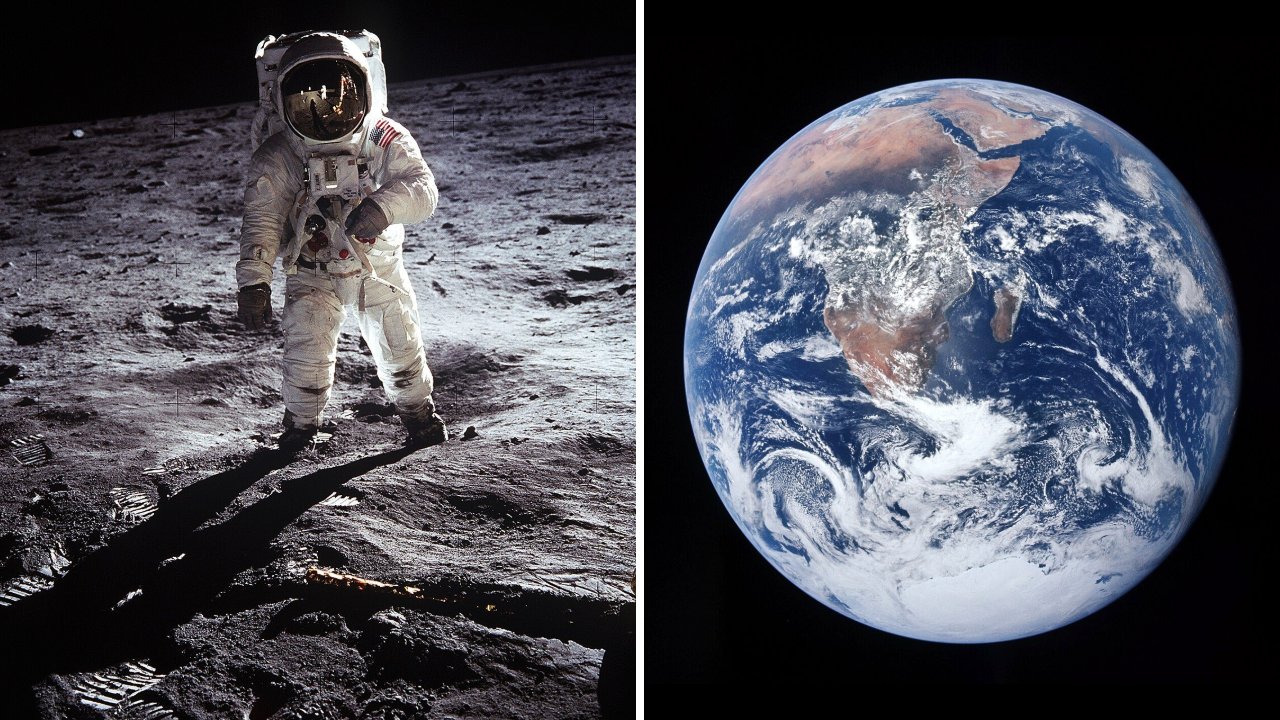
Buzz Aldrin on the Moon
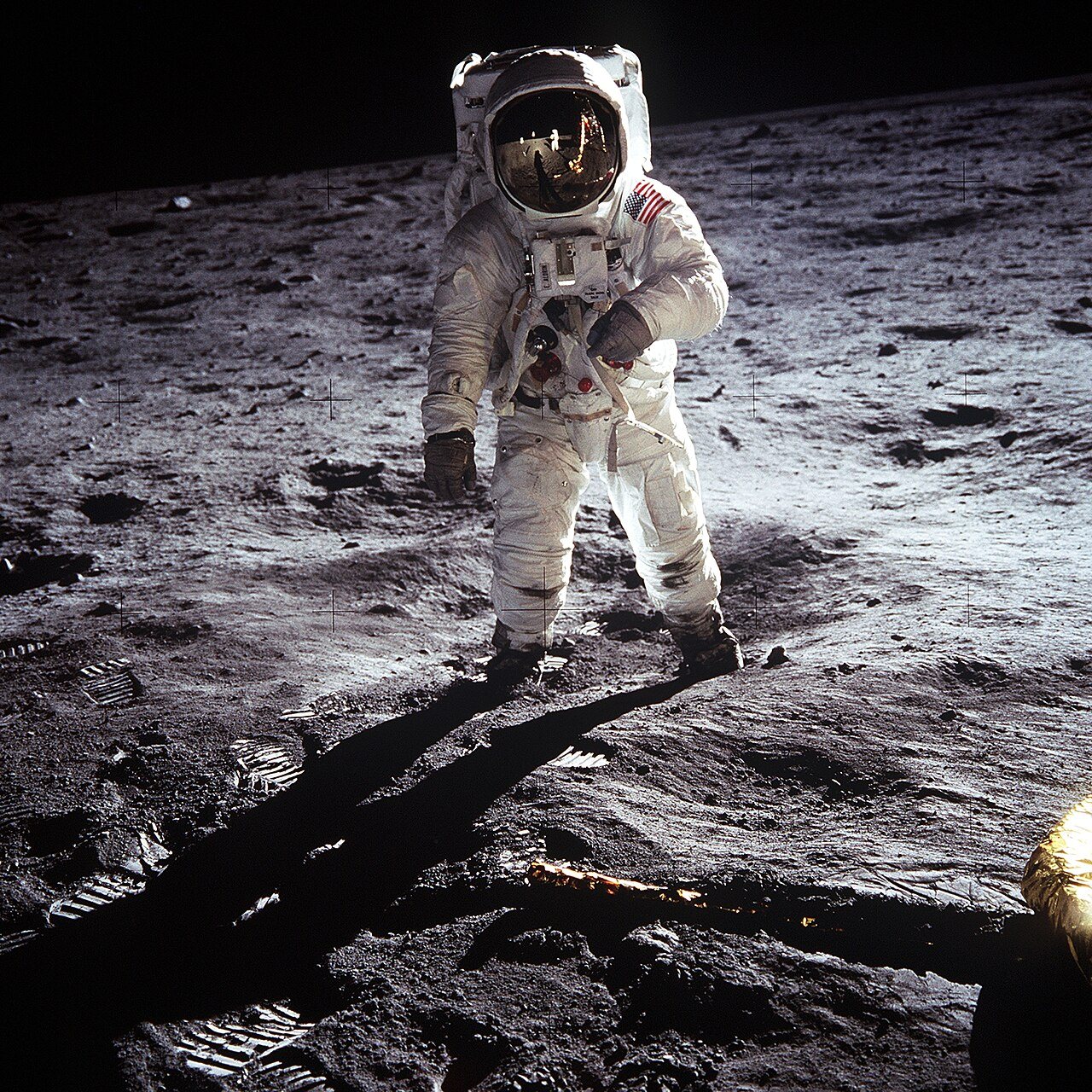
Neil Armstrong took this photograph on July 20, 1969, as Aldrin walked near a leg of the lunar module Eagle. Armstrong shows up only as a small reflection in Aldrin’s visor, which is how it went most of the time on the surface: the man holding the camera was almost never in the pictures.
A bootprint in lunar soil
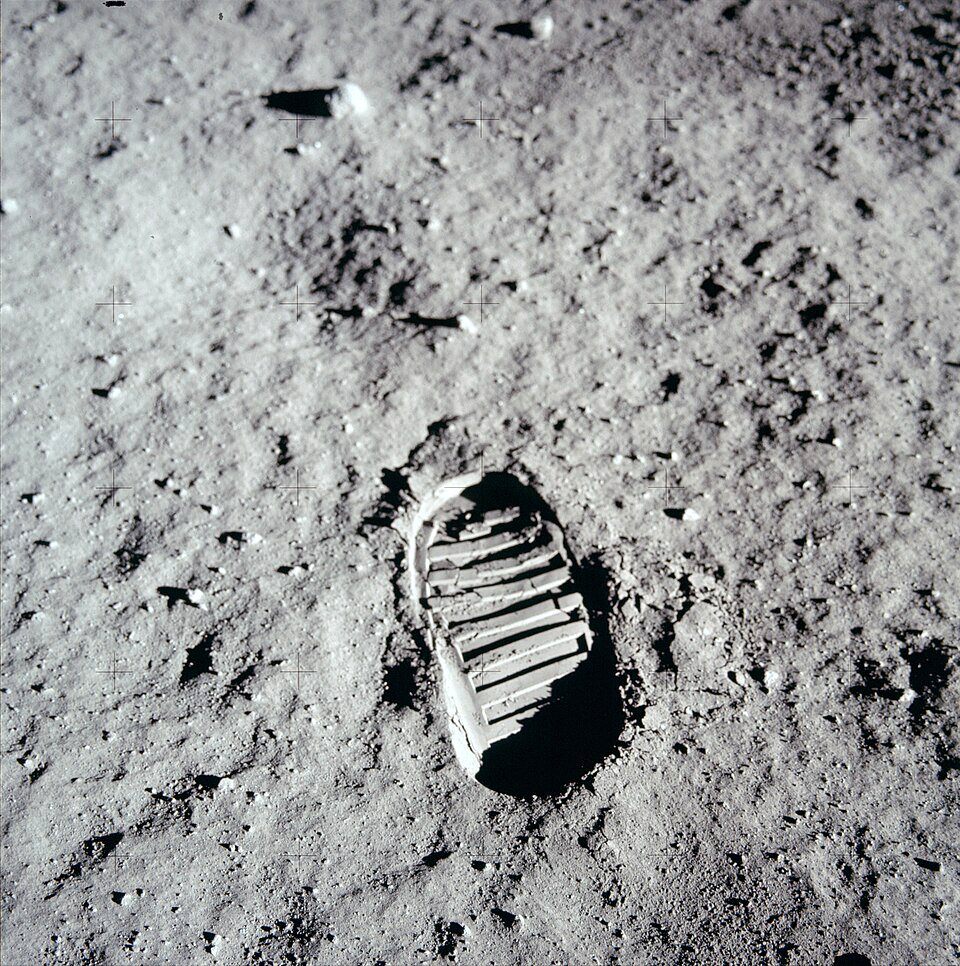
Aldrin photographed his own bootprint on July 20, 1969, so that the soil could be studied later. NASA’s caption for the overhead view says it shows how much the lunar surface was compacted by the weight of a man. The tread is crisp enough to count the ridges, and nothing else is in the frame.
Apollo 12 visits Surveyor 3
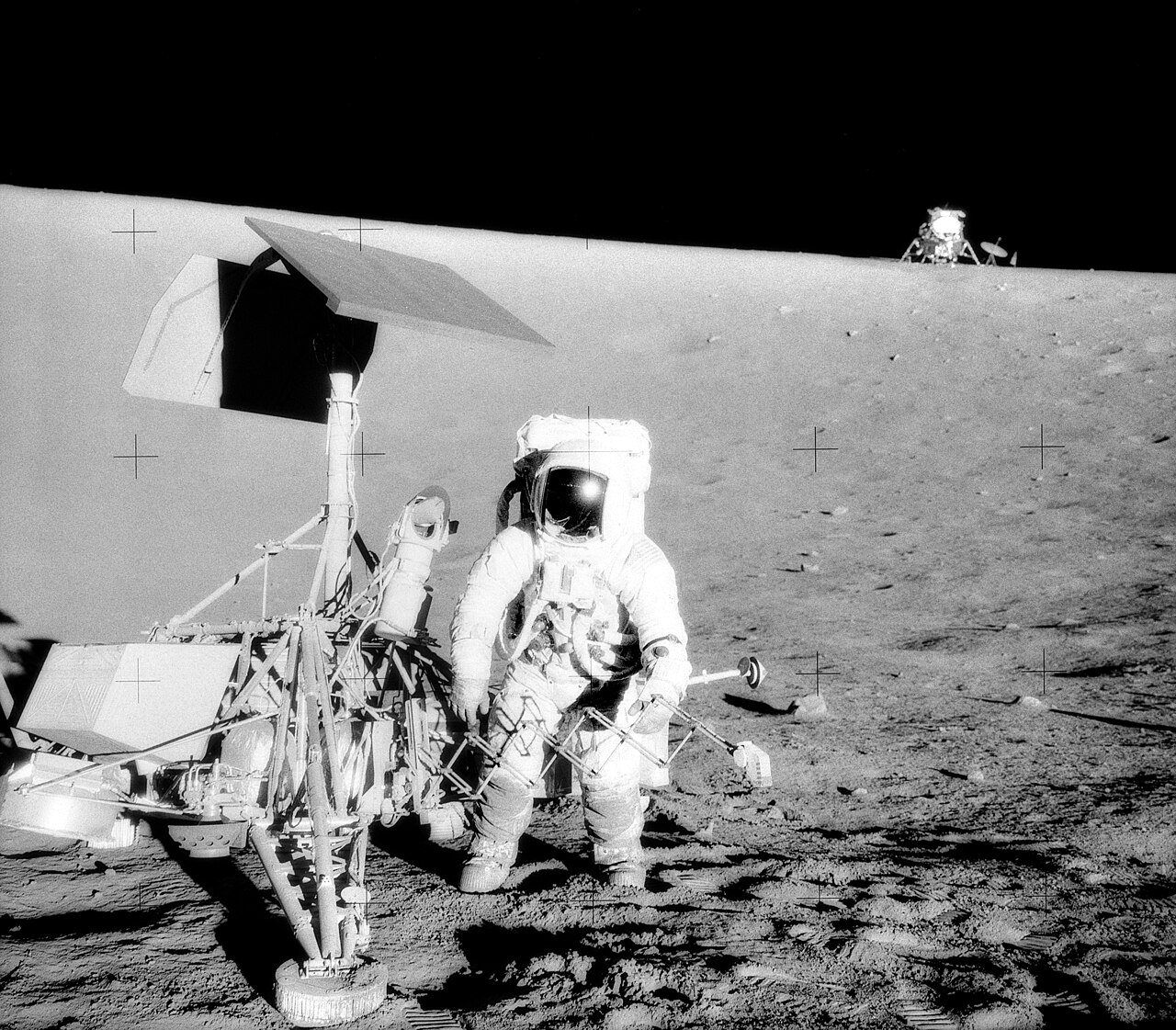
Alan Bean took this photograph on November 20, 1969, of Charles Conrad examining the unmanned Surveyor 3 spacecraft. The lunar module Intrepid had landed only about 600 feet away, and the crew brought Surveyor’s television camera and other parts home for analysis. Intrepid is the small speck on the horizon at the upper right.
Apollo 15 salutes the flag
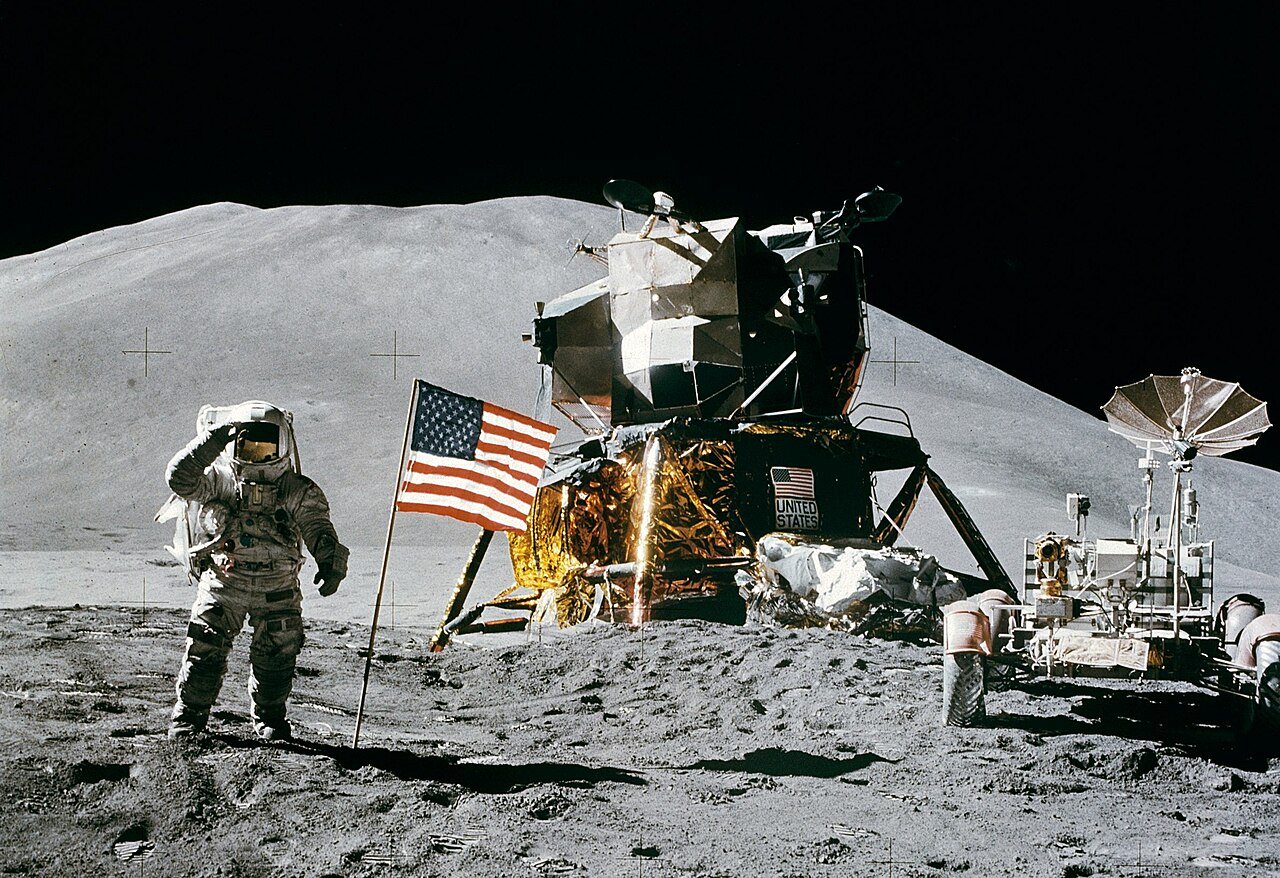
David Scott photographed lunar module pilot James Irwin saluting the flag at the Hadley-Apennine landing site on August 1, 1971. The lunar module Falcon stands behind him, and the rover is parked just beyond, the first one driven by astronauts. A mountain looks close enough to touch, but with no air to haze the distance it is far away.
Gene Cernan and the rover, Apollo 17
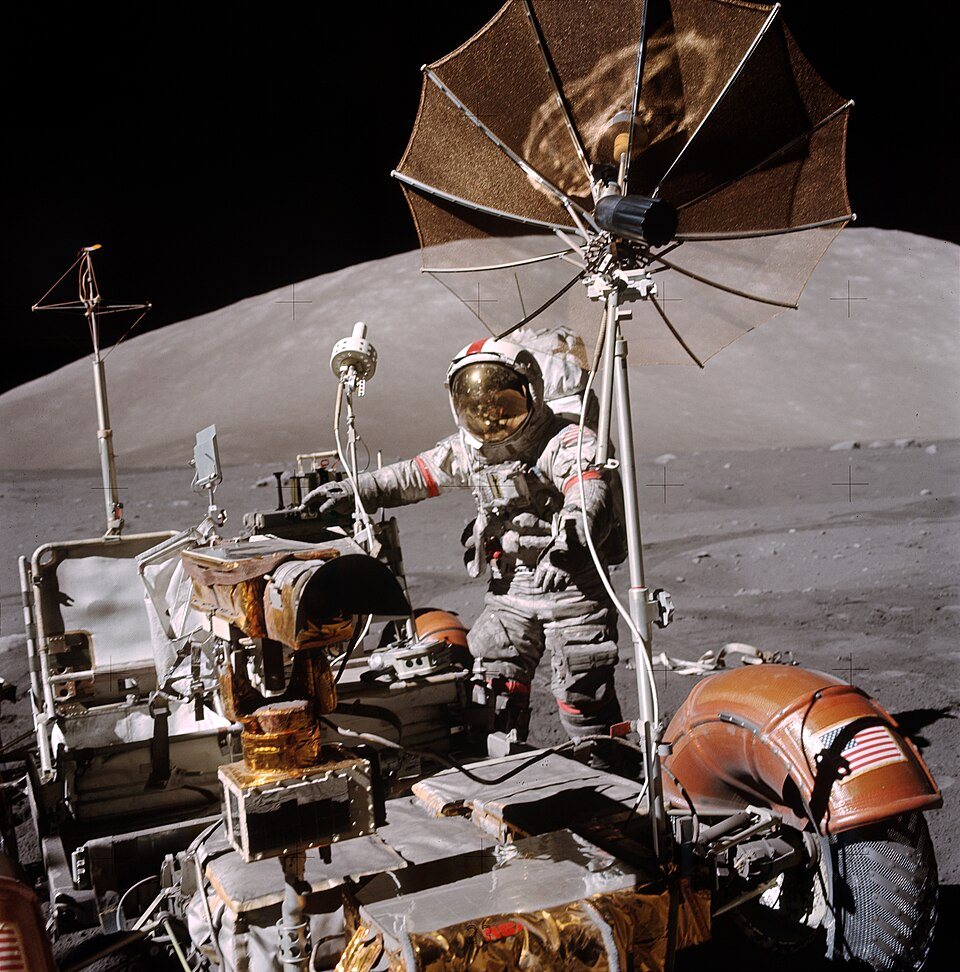
On December 12, 1972, Harrison Schmitt photographed commander Eugene Cernan with the Lunar Roving Vehicle at the Taurus-Littrow landing site. Apollo 17 was the last landing, and Cernan was the last of the twelve people to walk on the Moon. With its mesh dish and loaded racks, the rover looks like a dune buggy packed for a long trip.
The Blue Marble
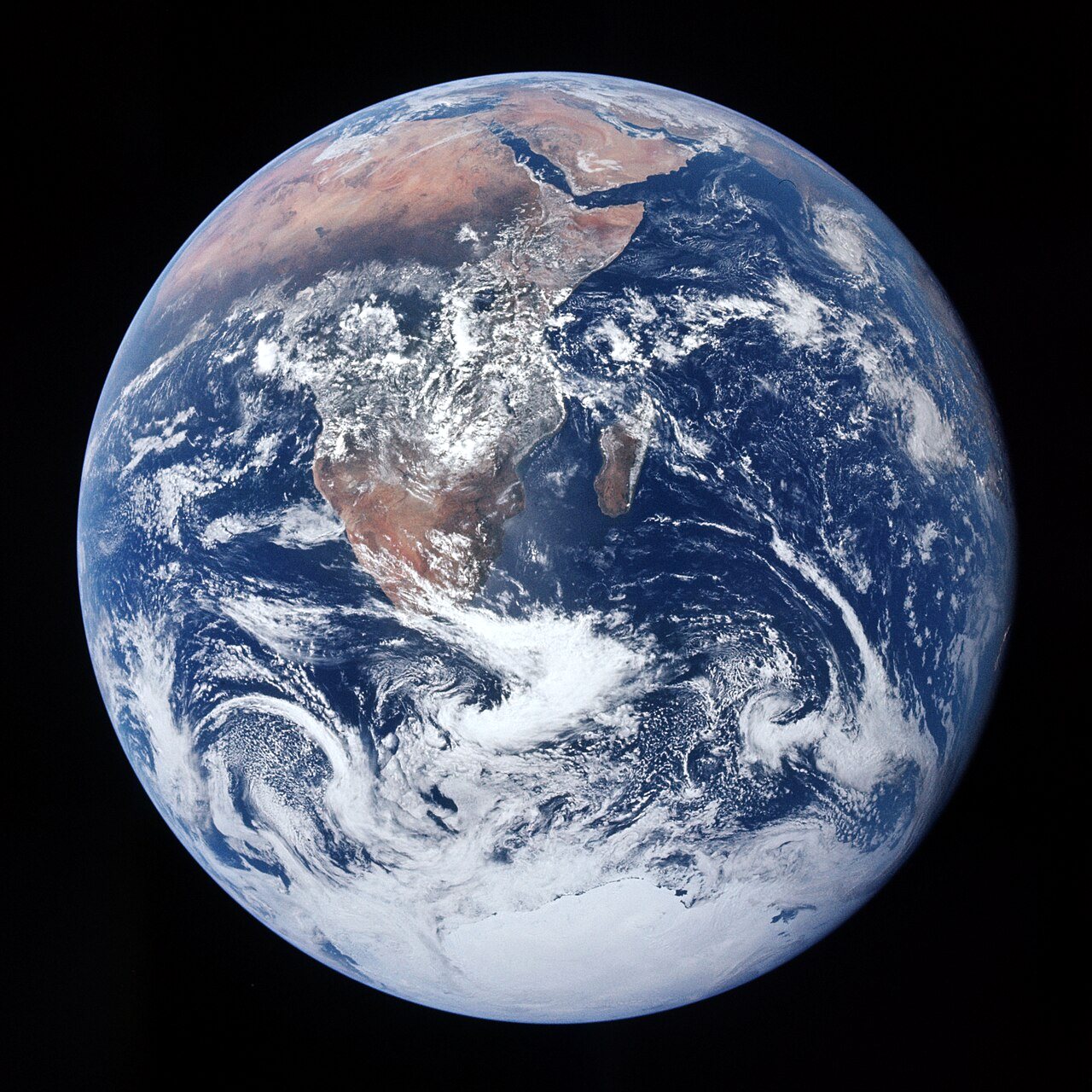
Five days before Cernan’s drive, the Apollo 17 crew photographed the whole Earth on their way to the Moon, with the Sun behind them so the full disk was lit. Africa dominates the upper half and the Antarctic ice cap shows at the bottom. More than fifty years later, people still find new patches of weather in it.