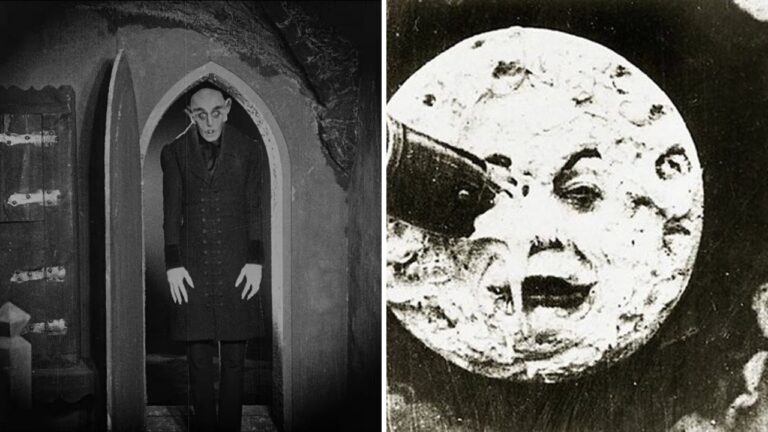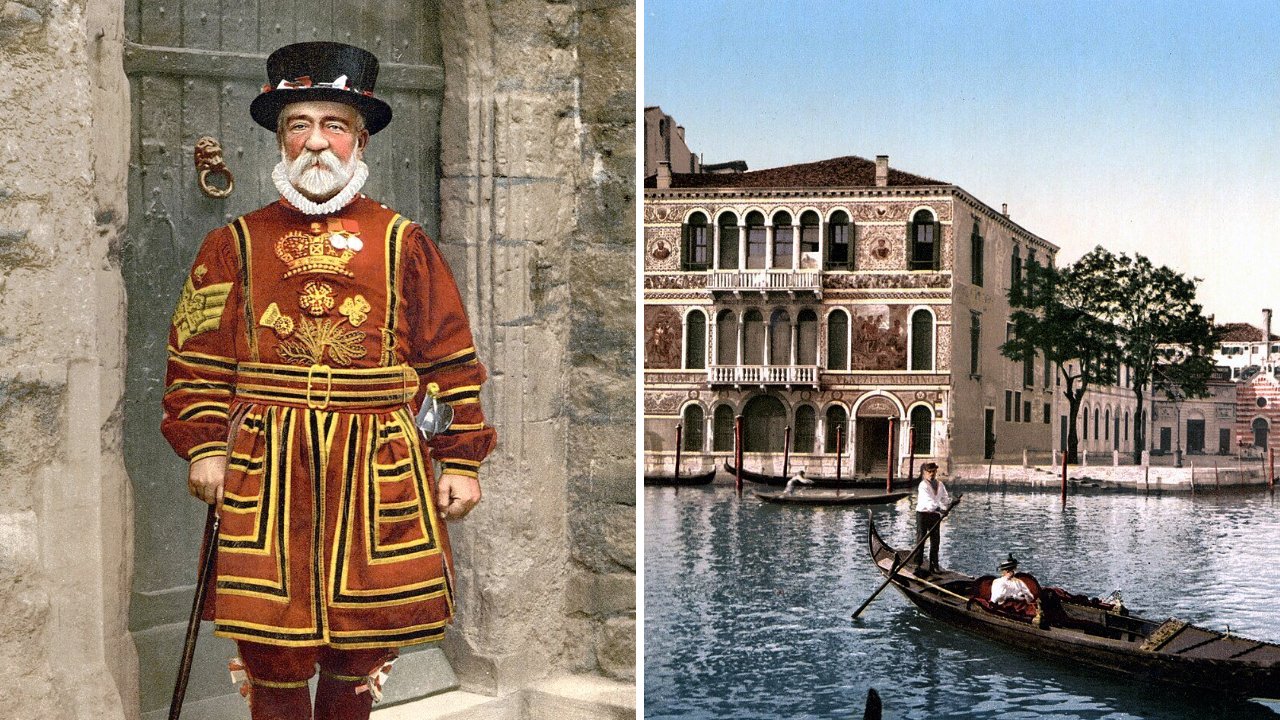
Photochrom prints look like color photographs, but they were printed from black-and-white negatives, with a separate lithographic stone for each tint. The process came from Switzerland in the 1880s, and from the mid-1890s the Detroit Photographic Company licensed it in the United States. These ten were made around 1900, and most come from the Library of Congress.
A Beefeater in Tudor state dress
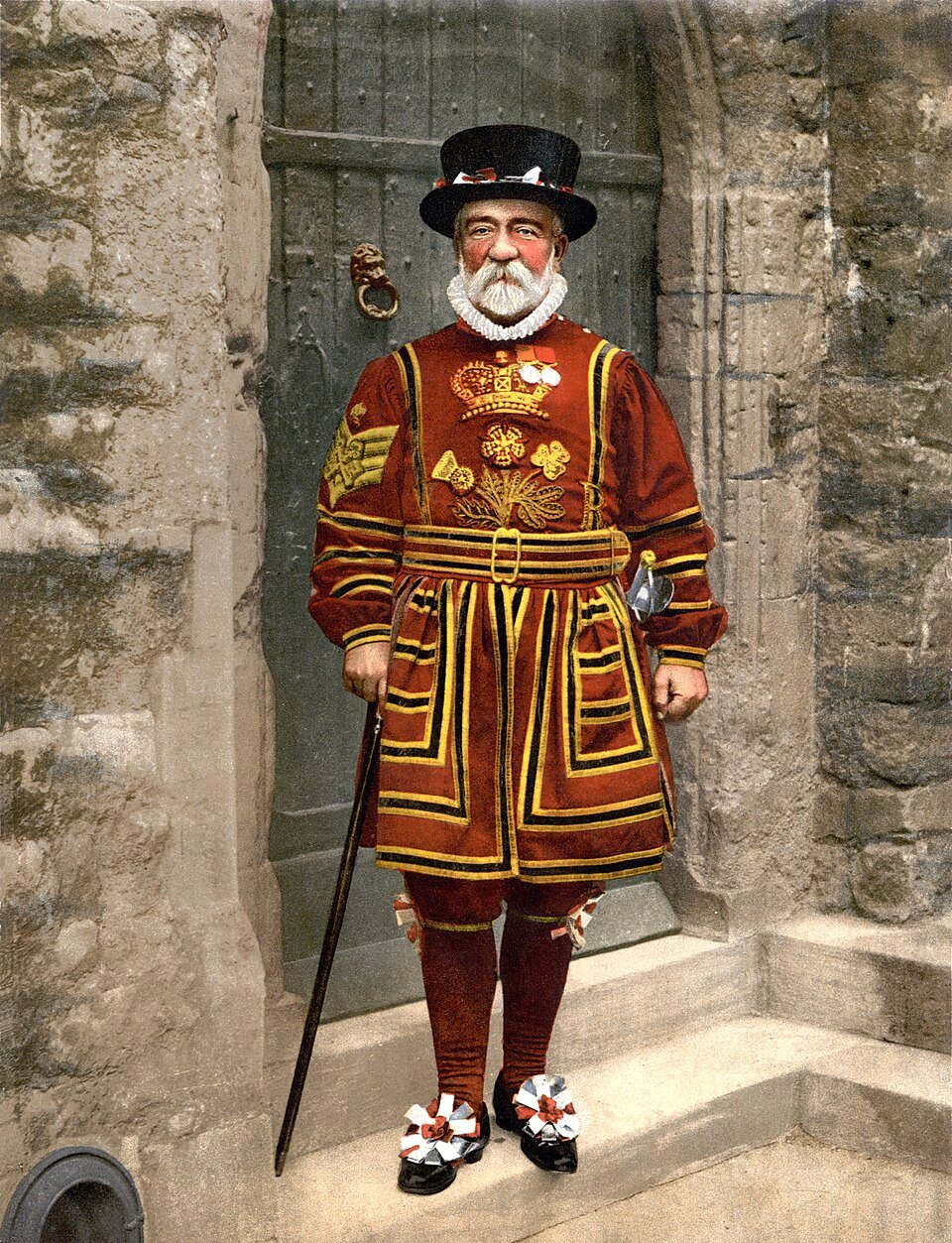
The print’s caption calls him a Yeoman of the Guard, but the Library of Congress clarifies that he is a Yeoman Warder, better known as a Beefeater. The Detroit Publishing Company printed it between about 1890 and 1900, and the red and gold coat is the loudest thing in the picture.
The Giant’s Causeway, County Antrim
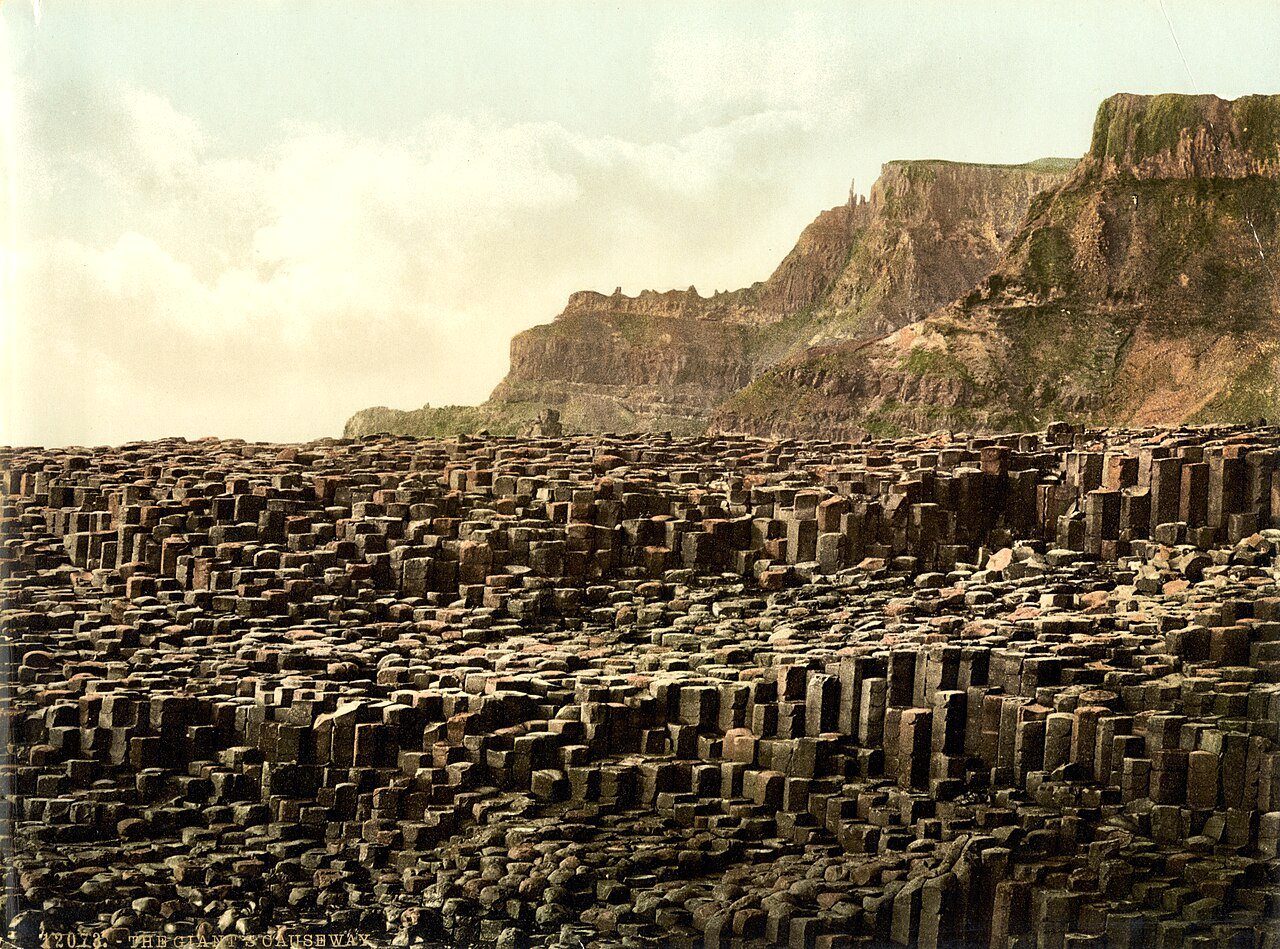
The Giant’s Causeway is a shore of interlocking basalt columns on the County Antrim coast, and this print dates from around 1895. The Detroit Publishing Company made it under license from Photoglob Zürich, the Swiss firm behind the process. The hexagonal tops look as if someone had laid them like tiles.
The Grande Roue, Paris
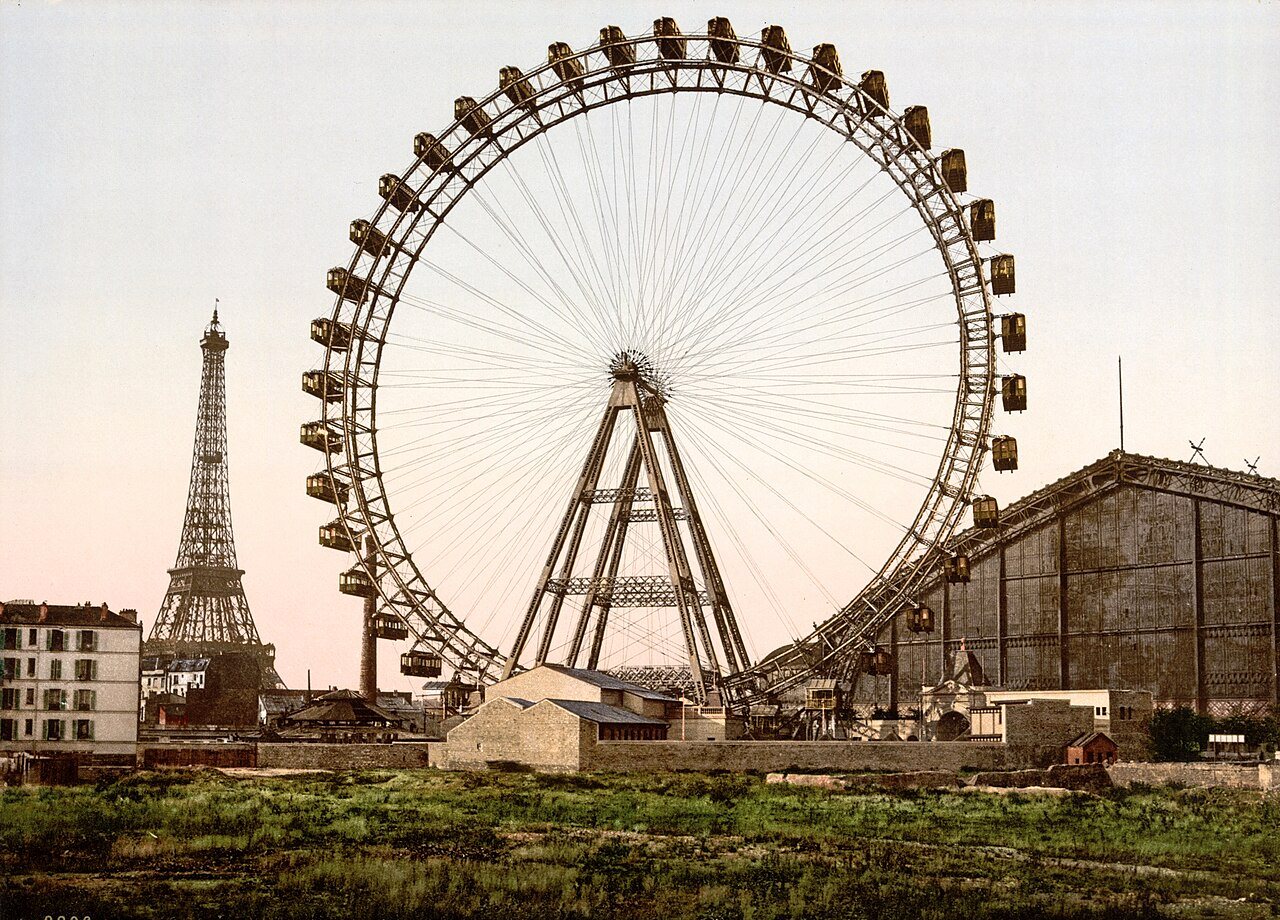
The Grande Roue de Paris was built in 1900 for the Exposition Universelle and stood about 96 meters (315 feet) tall. It was taken apart between 1920 and 1922. Here it rises over a patch of weedy ground, and perspective shrinks the Eiffel Tower into a small neighbor at the left.
Neuschwanstein Castle, Bavaria
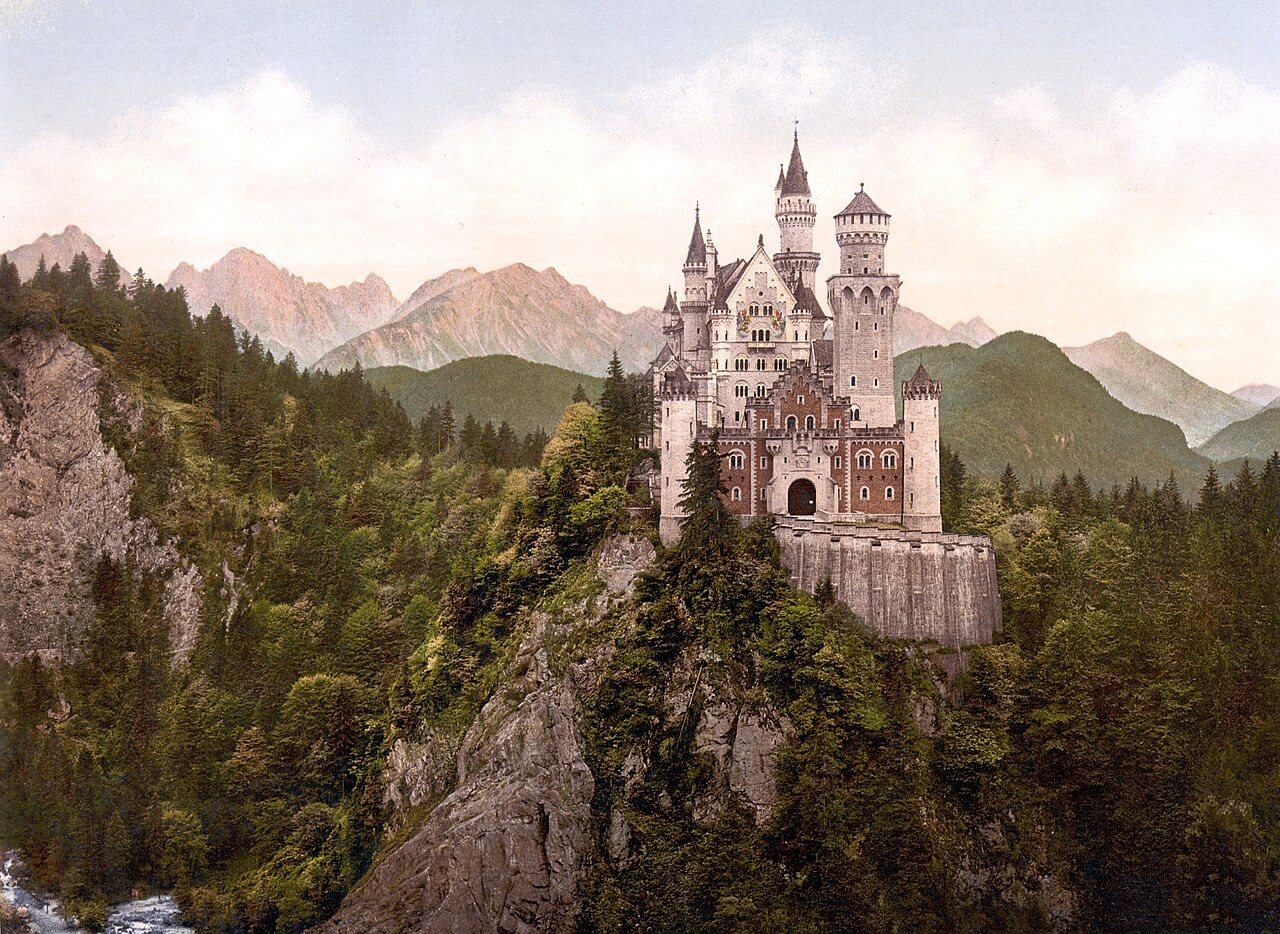
The Library of Congress record says this print was made as few as ten years after Neuschwanstein was completed. The castle was built for King Ludwig II of Bavaria and opened to visitors soon after his death in 1886, so by now it was already a place people traveled to see.
A palace on the Grand Canal, Venice
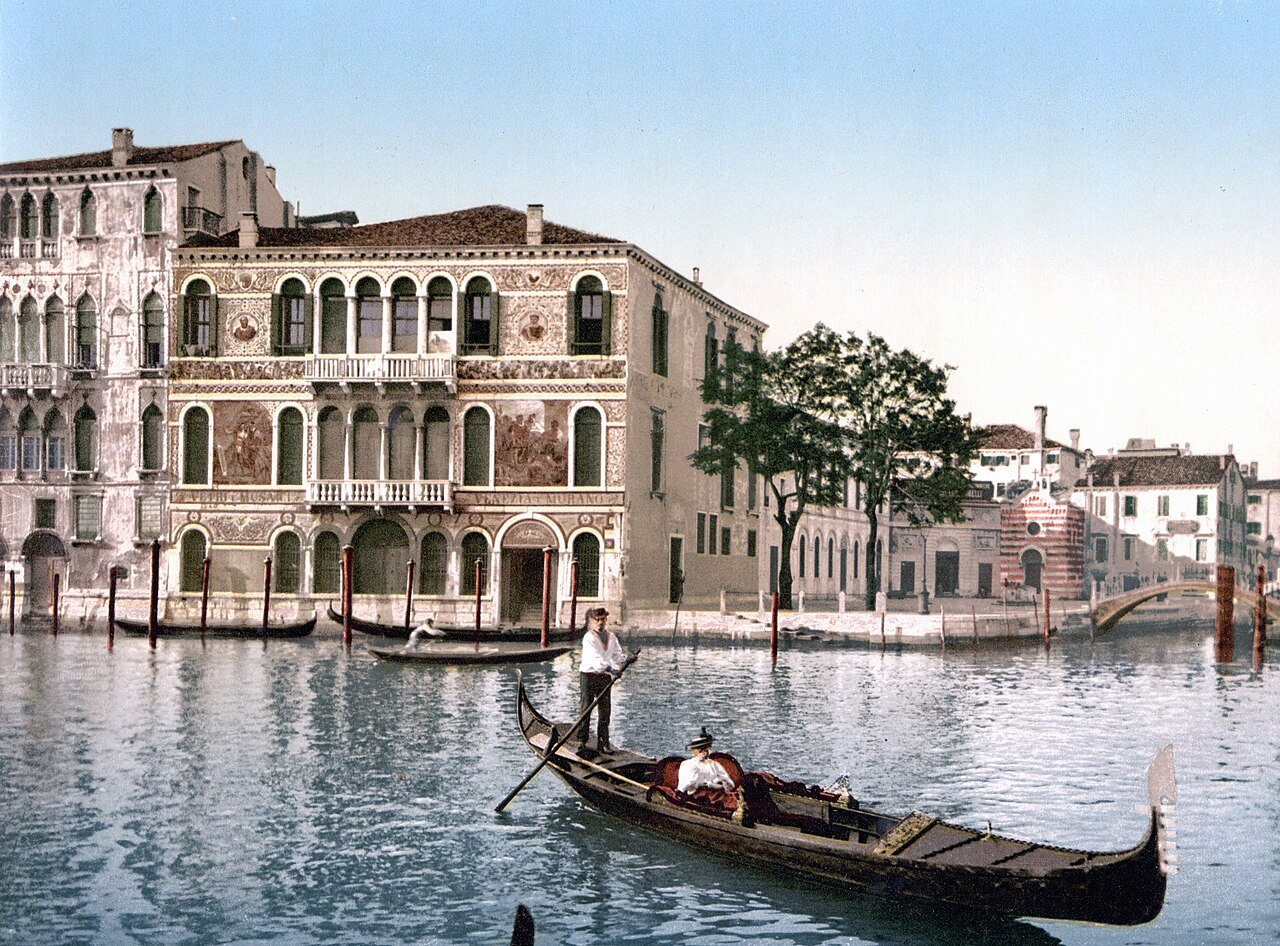
The Library of Congress record calls this the Da Mulla Palace on the Grand Canal. Photochrom colors were chosen from notes and sketches made at the scene, so the rosy palace and the green-blue water are someone’s careful memory. A gondolier stands at the stern of a passing gondola, in no hurry at all.
A Hardanger girl in traditional dress, Norway
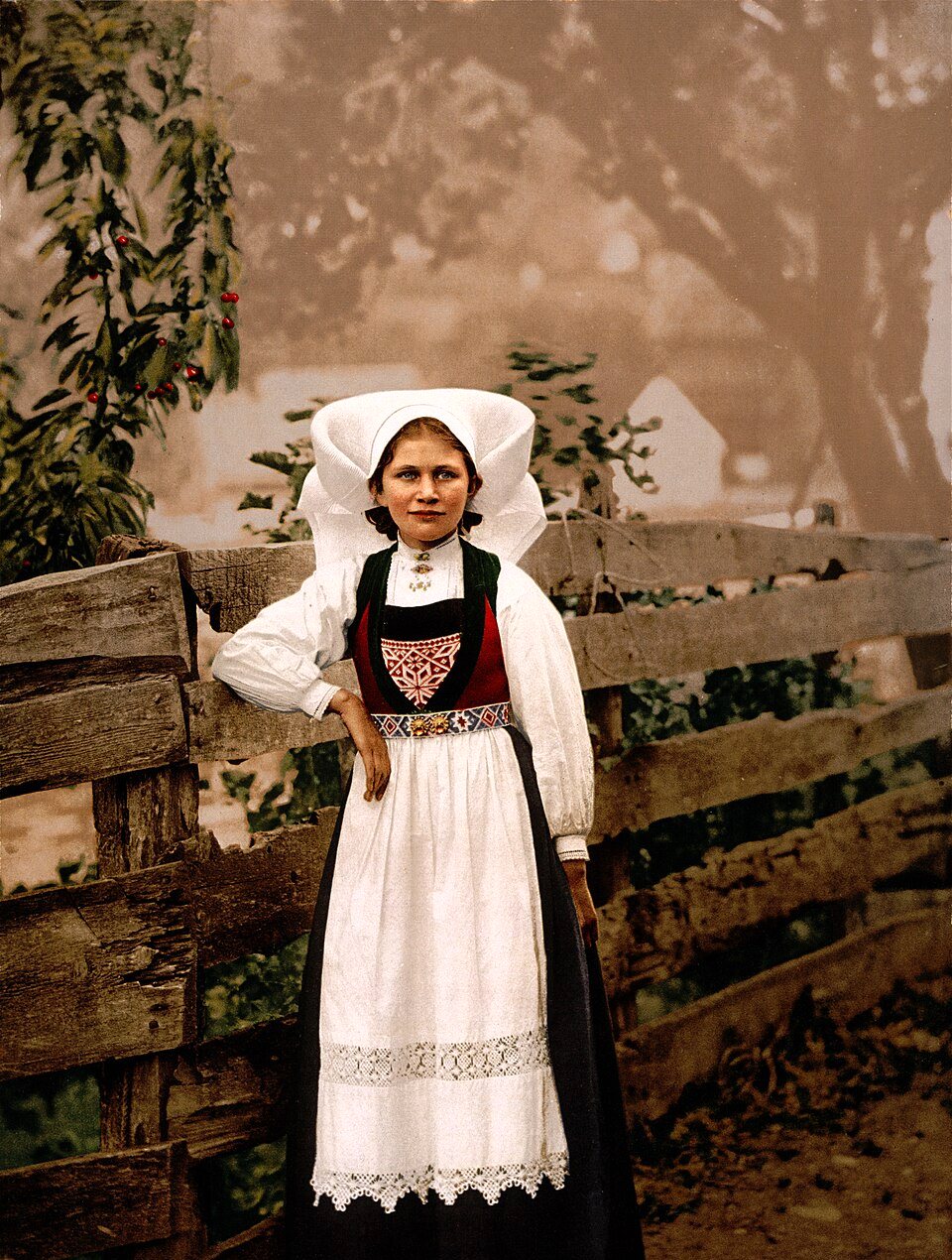
The record describes a young woman in traditional costume from Hardanger, Norway, and dates the print to about 1897. She wears a white headdress and a long apron over a dark bodice, and she looks at the camera as if she has been told to wait for the shutter.
The Zitouna Mosque, Tunis
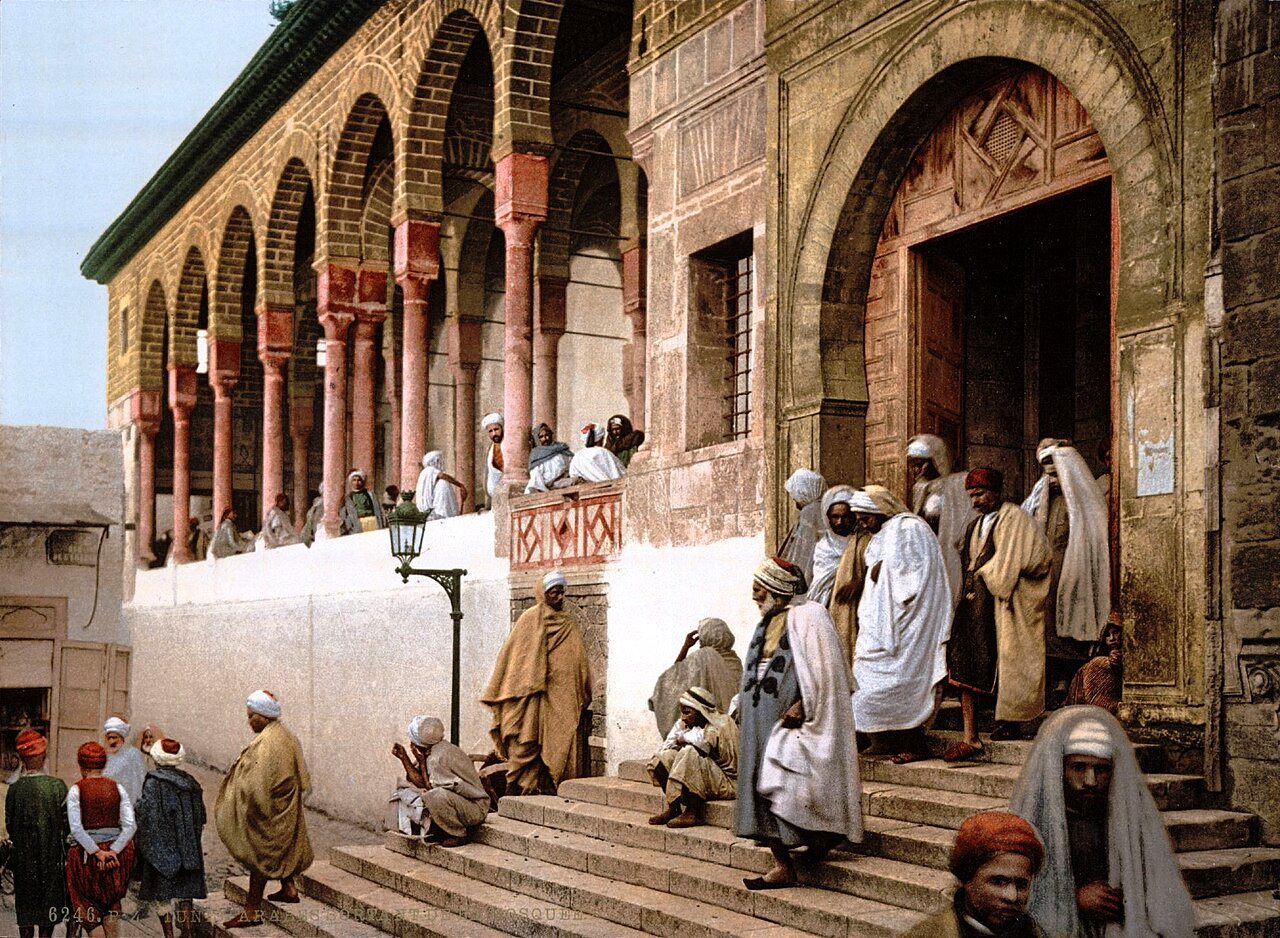
The record dates this view of a mosque in Tunis to 1899, and it is generally identified as the Zitouna Mosque. Men in robes and turbans sit on the wide steps under the colonnade, and a few look straight at the camera. The photochrom gives their robes soft cream, rust and blue tones.
Washerwomen, Mexico City
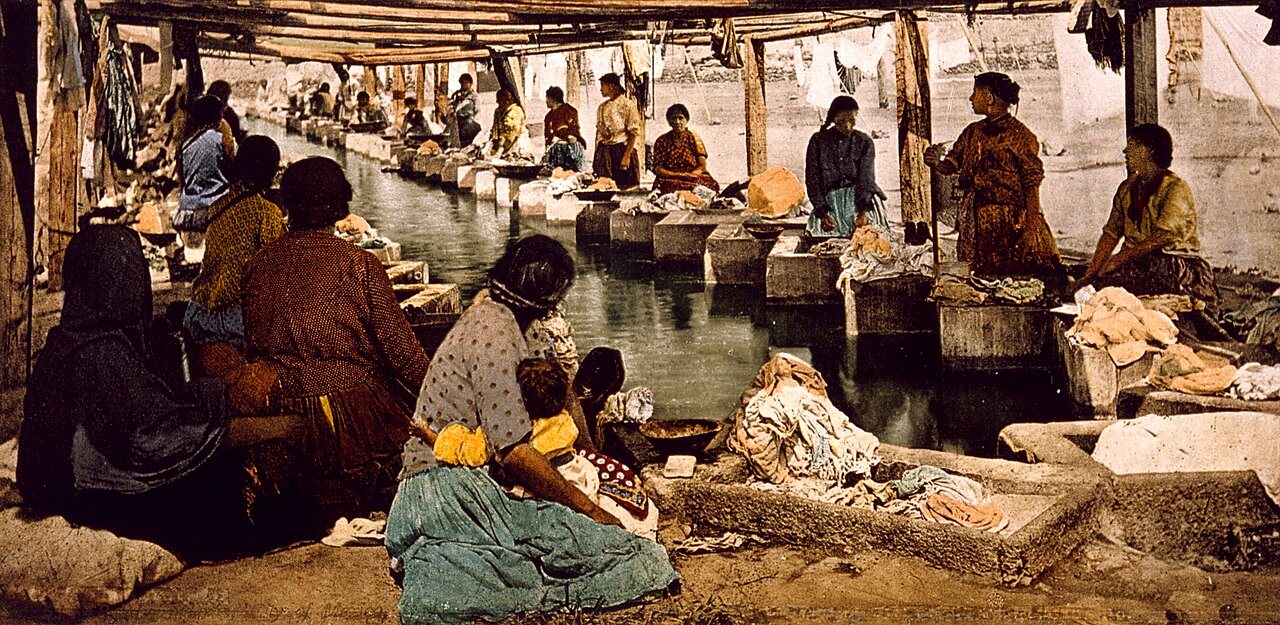
The photochrom shows lavanderas, or washerwomen, in Mexico City around 1900. The Detroit Publishing Company printed it from a photograph by William Henry Jackson, one of the company’s best-known photographers. The women crouch along a water channel under a shed roof, with laundry piled in heaps.
The beach at Atlantic City
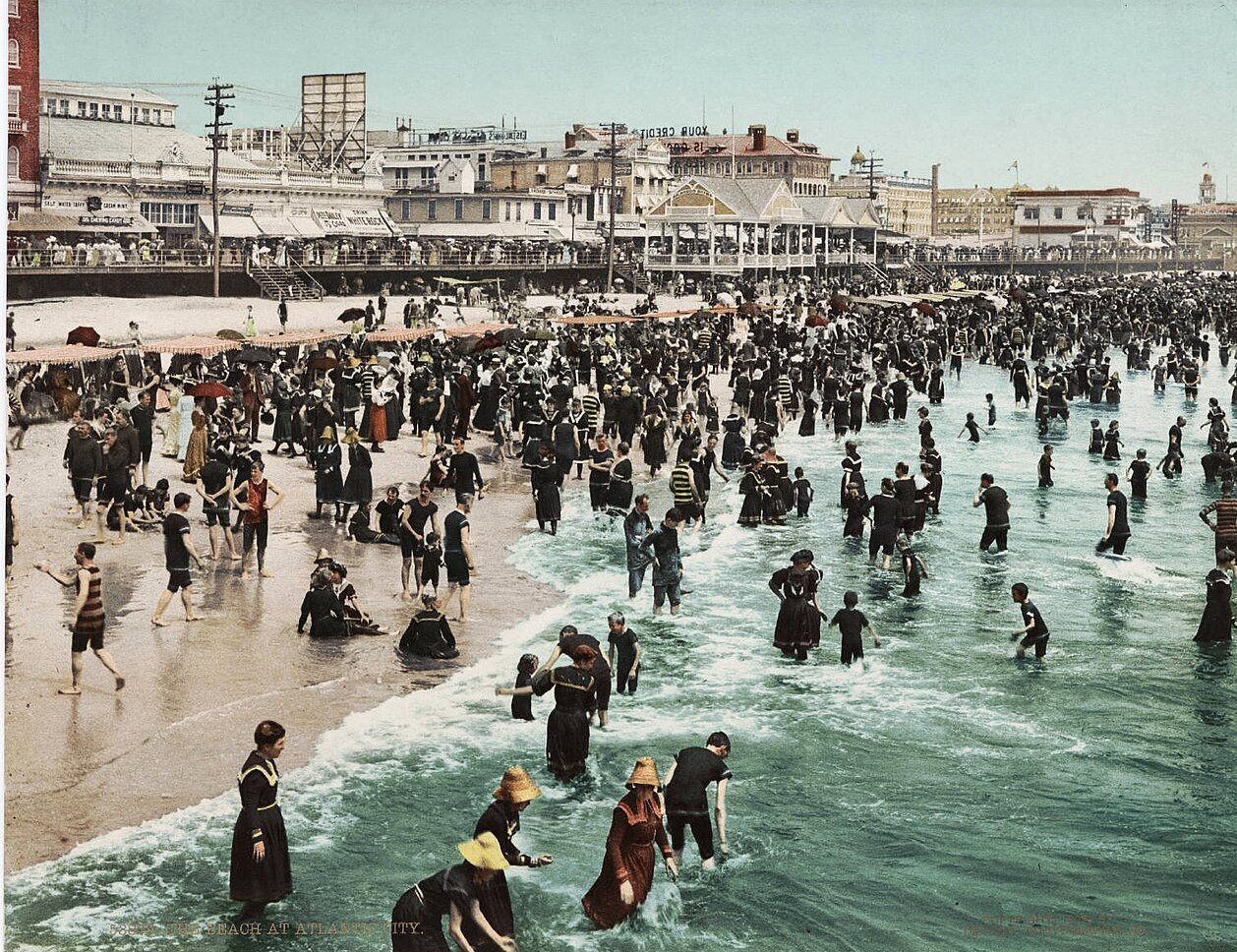
This photochrom postcard was published by the Detroit Photographic Company, and Yale’s Beinecke Library dates it between 1897 and 1924. The bathers wade out in dark bathing costumes that cover most of them, and the water is full of people who seem not to mind the crowd at all.
Mulberry Street, New York
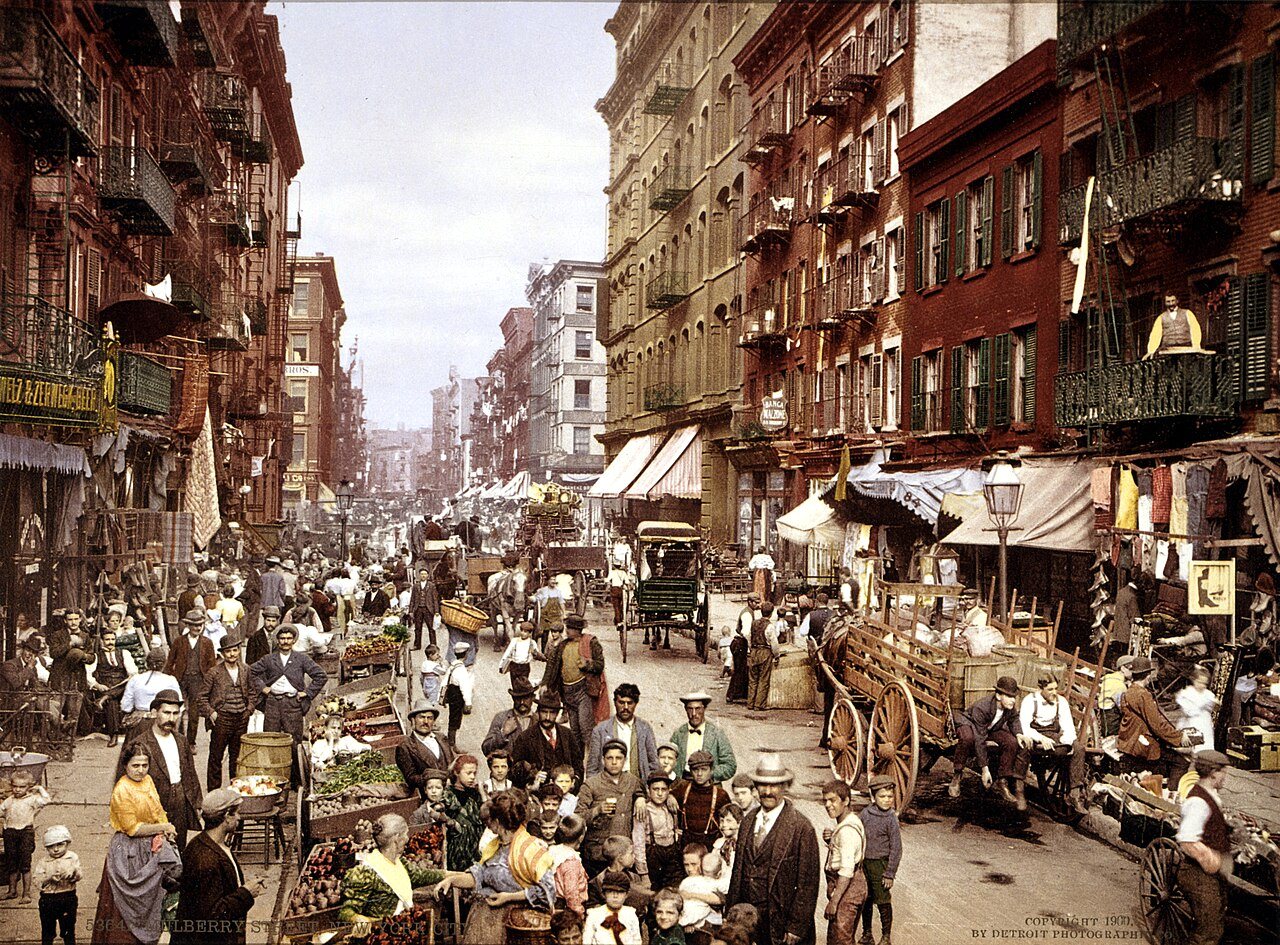
The Detroit Publishing Company published this view of Mulberry Street, in the Italian neighborhood of Lower Manhattan, around 1900. Pushcarts and awnings line the street, and the roadway is a crowd. Nearly everyone is facing a different direction, which is good proof that the street was busy.