Silent films had no spoken dialogue, so the scares came from faces, shadows and makeup. These ten stills run from a grimacing Moon in 1902 to a frozen grin in 1928. Every photograph is in the public domain or released under CC0.
The Moon with a capsule in its eye
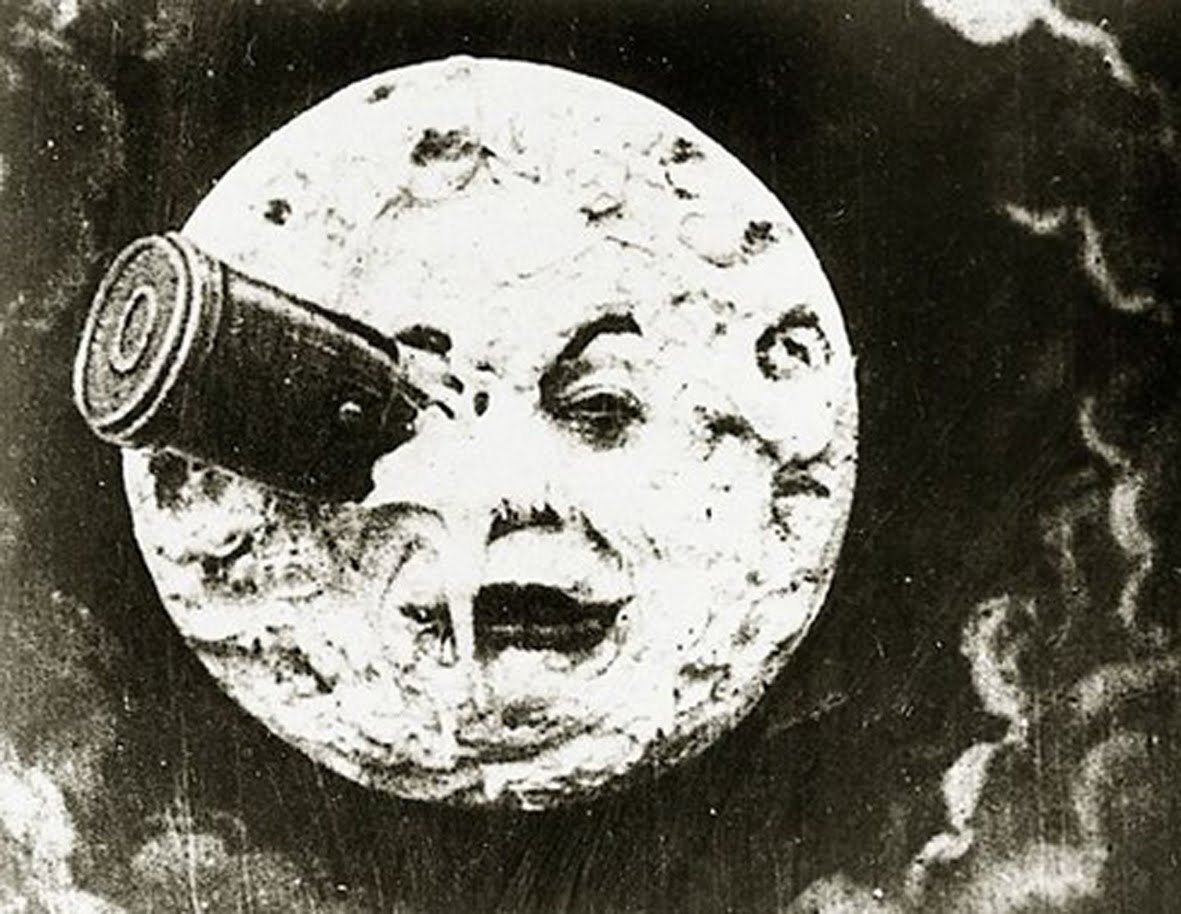
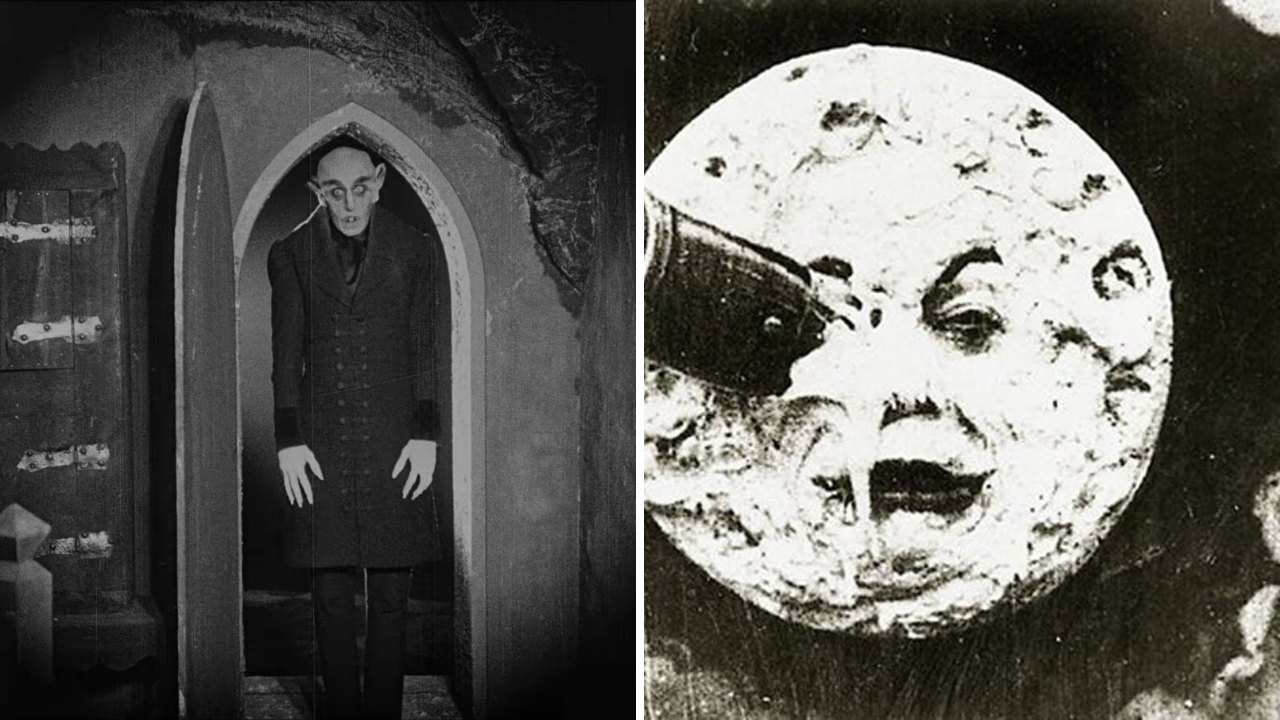
Georges Méliès wrote, directed, produced and edited A Trip to the Moon, released on September 1, 1902, and played its lead role himself. The capsule in the Moon’s eye is a pun on the French idiom for a bullseye. A hand-colored print found in 1993 was restored in 2011. The Moon does not look pleased.
The monster in Edison’s Frankenstein
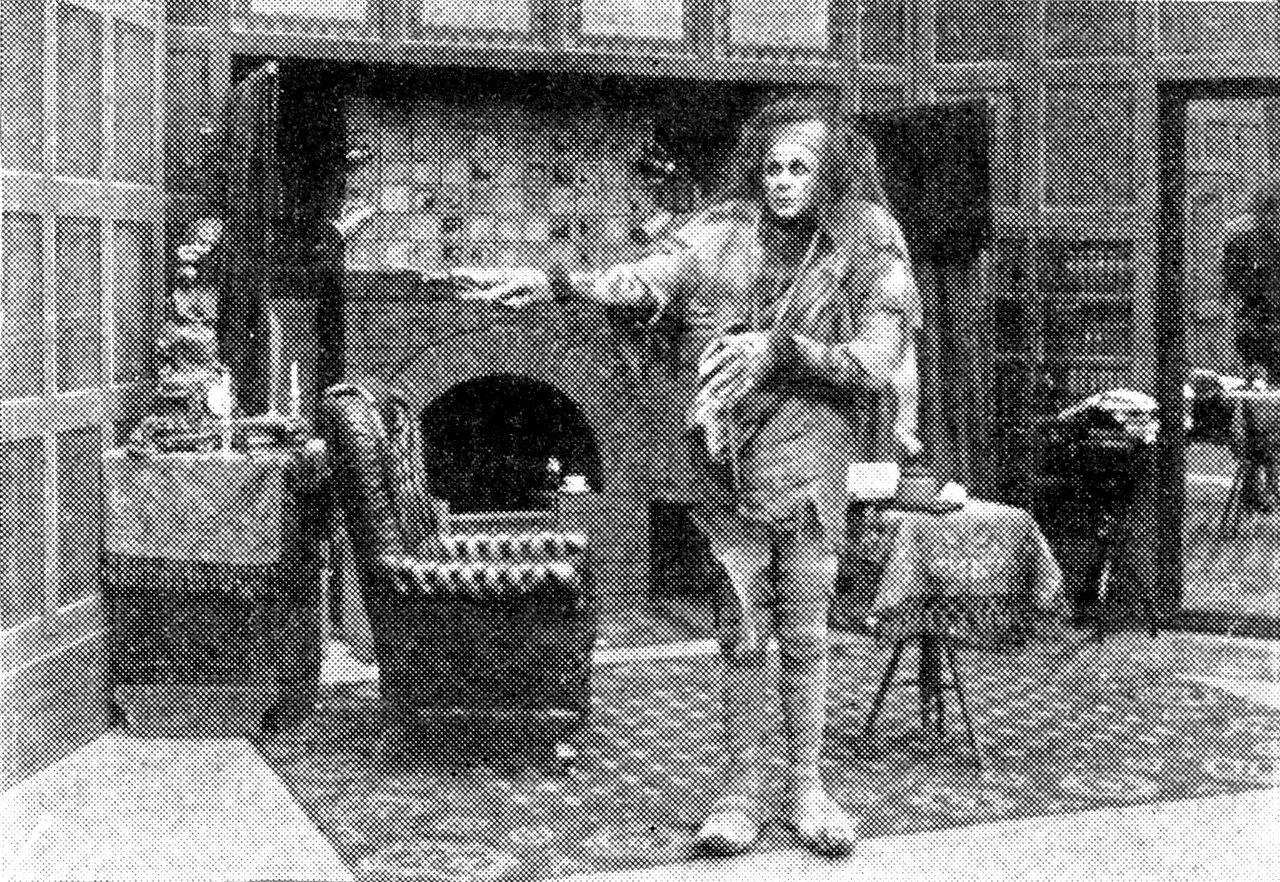
Charles Ogle plays the monster in this Edison film, regarded as the first screen version of Mary Shelley’s novel. Director J. Searle Dawley shot it in three days in the Bronx, in January 1910. The creation scene was made by burning a dummy and reversing the film. Long thought lost, the film resurfaced in the 1970s.
Cesare, the sleepwalker in Caligari
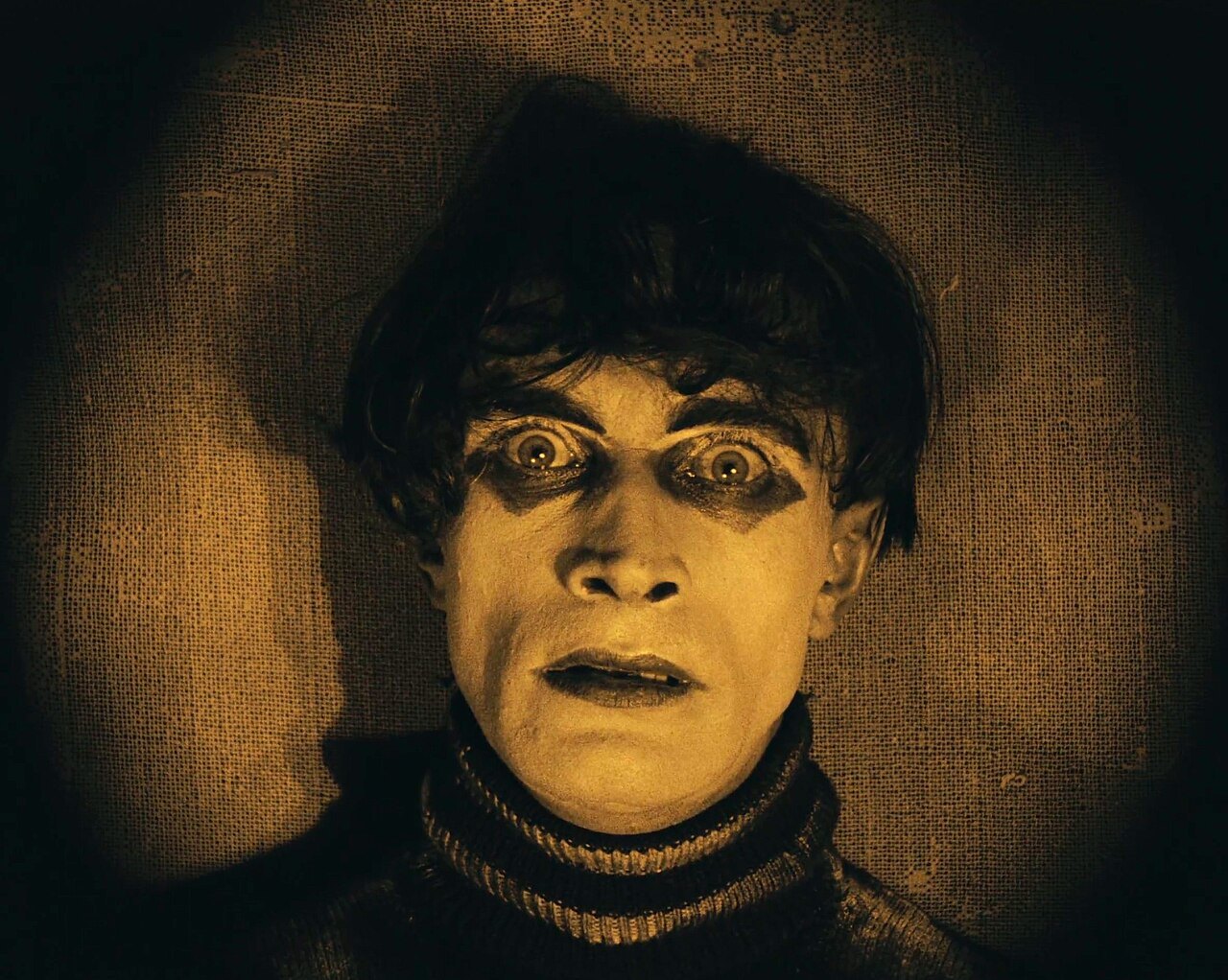
Conrad Veidt plays Cesare, a sleepwalker whom Dr. Caligari, played by Werner Krauss, uses to commit murders. The film opened at the Marmorhaus in Berlin on February 26, 1920. Its crooked sets were painted, shadows included, and it was shot entirely in a studio.
John Barrymore as Mr. Hyde
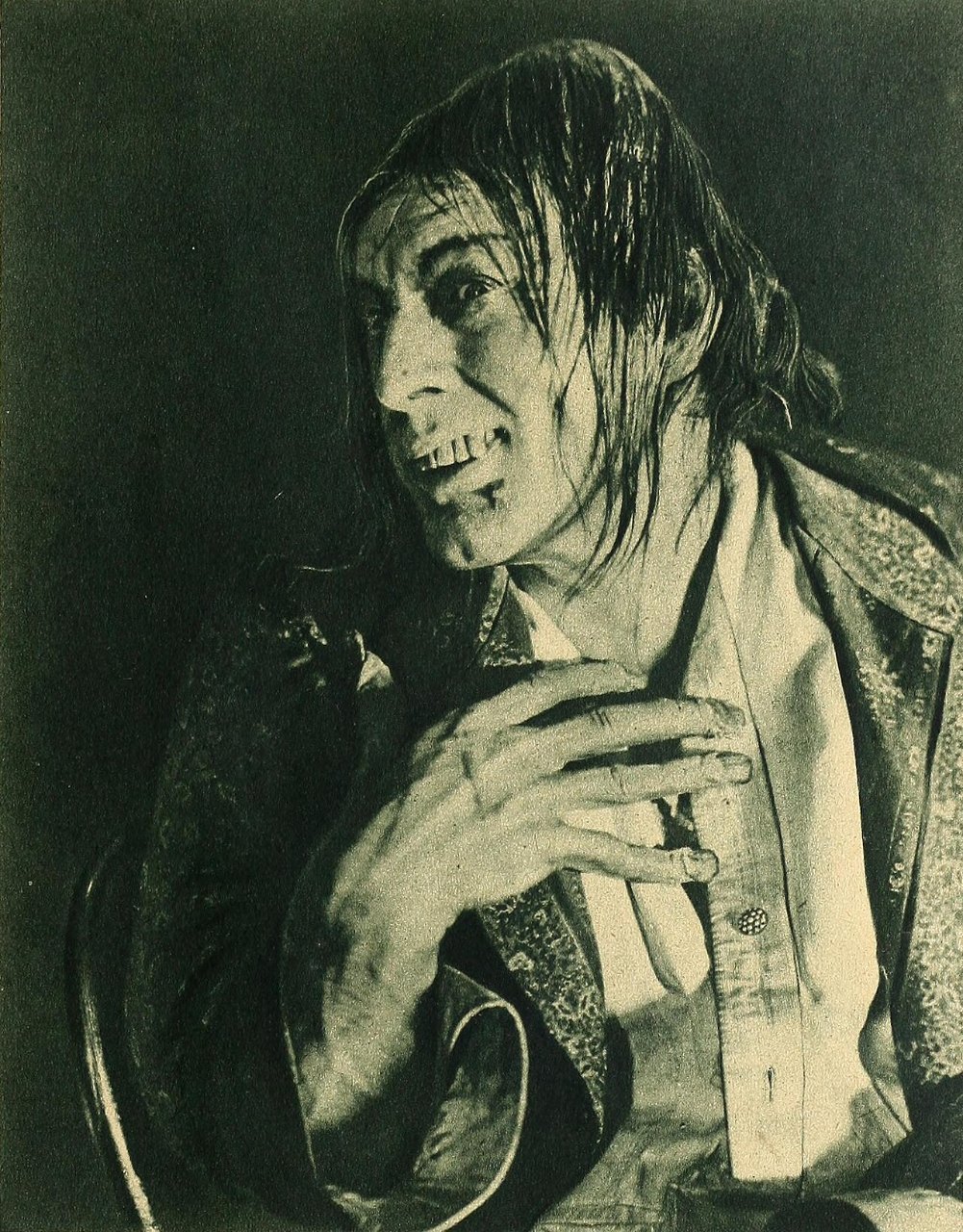
John Barrymore played both parts in this 1920 Paramount film, directed by John S. Robertson. The first change into Hyde used no makeup, only Barrymore contorting his face and body. Photoplay reported that crowds broke a door and two windows at the first New York showing.
Count Orlok waits in the doorway
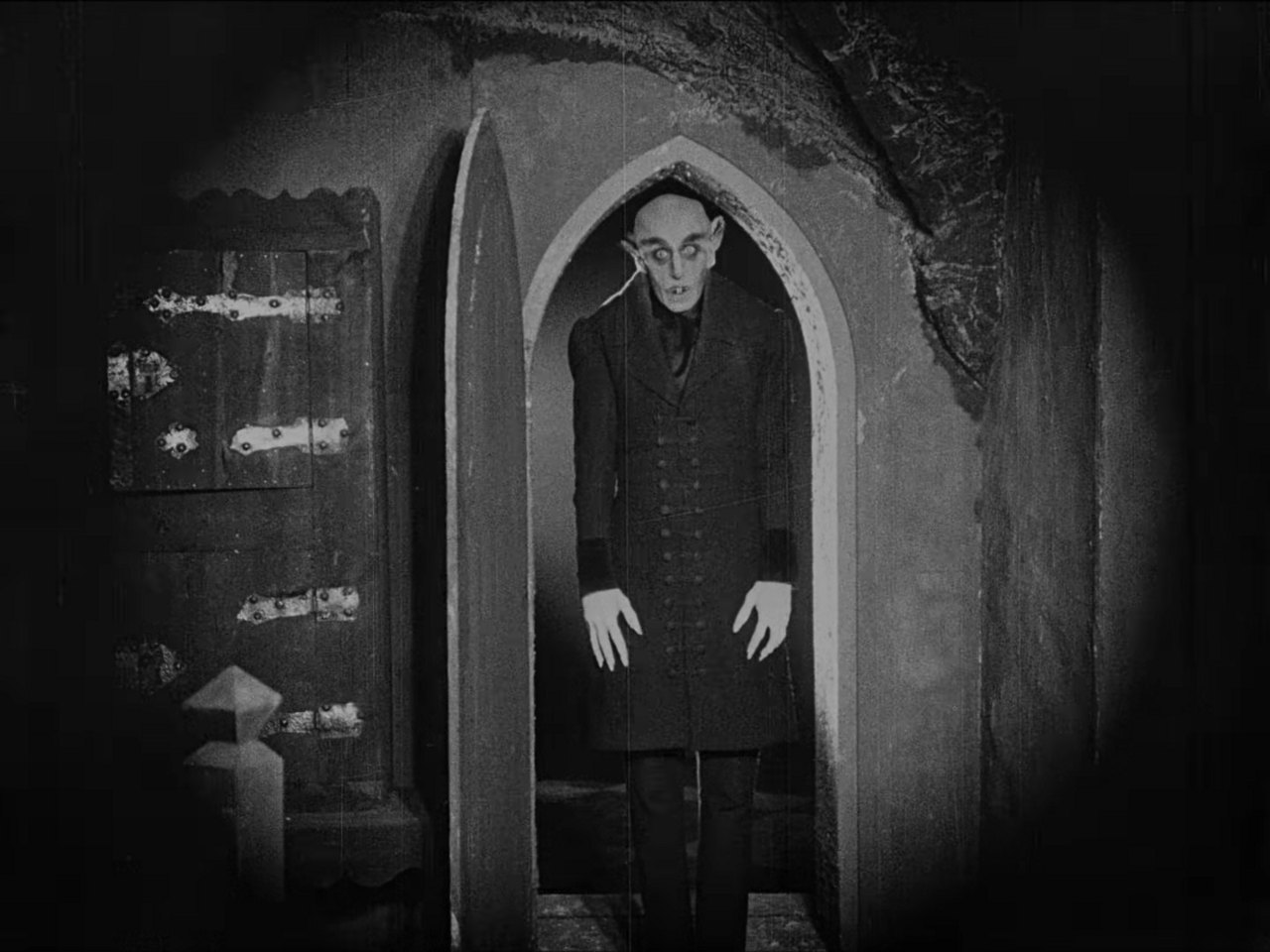
Max Schreck plays Count Orlok in Nosferatu, directed by F. W. Murnau and first shown in Berlin on March 4, 1922. It was an unauthorized adaptation of Dracula, and Bram Stoker’s widow sued. A court ordered every copy destroyed, but several prints survived, and so did Orlok.
The devil appears before a monk
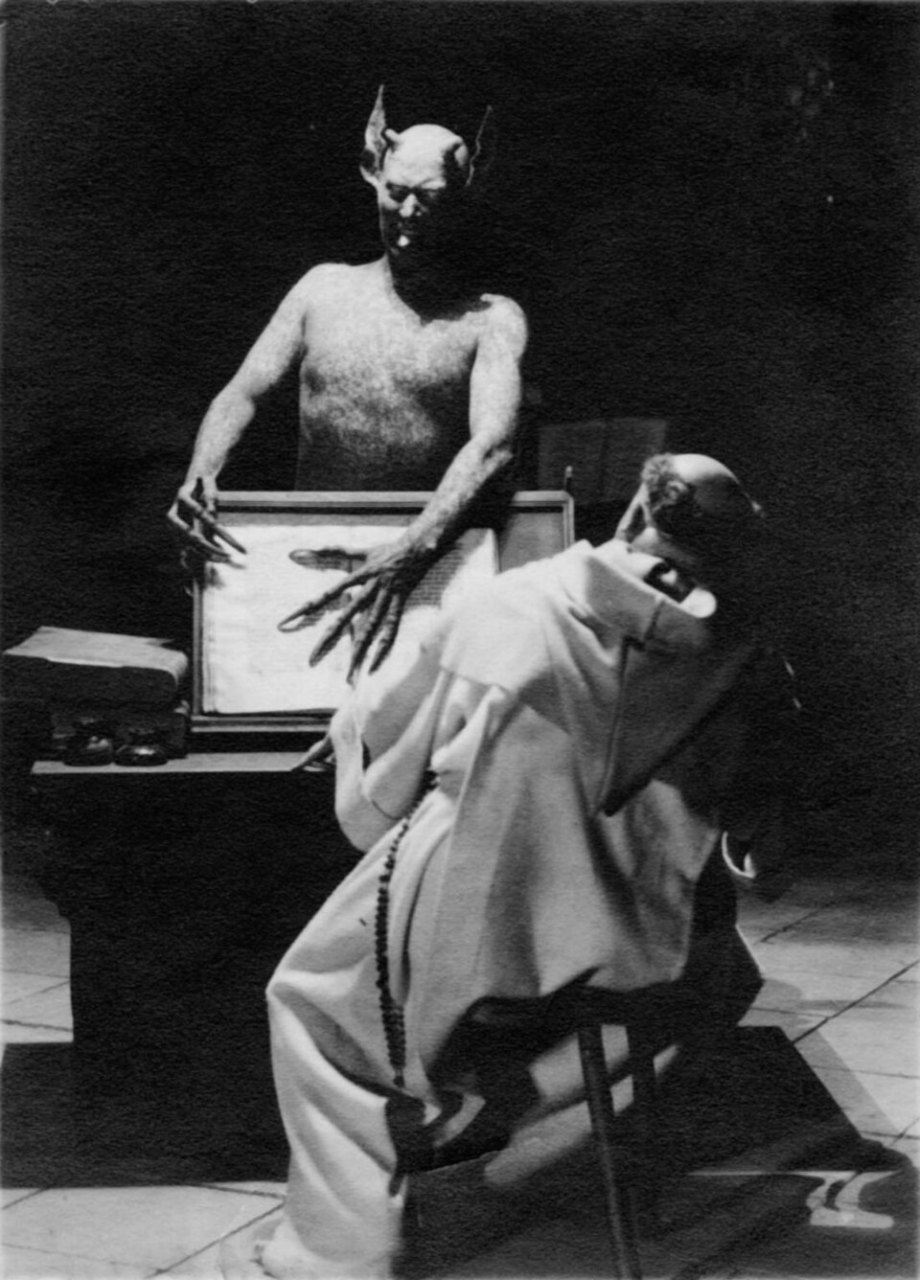
Benjamin Christensen directed Häxan, a Swedish-Danish film about witchcraft, and played the Devil himself. It was released in Sweden on September 18, 1922, at a cost of about two million kronor, the most expensive Scandinavian silent film of its time. A 1968 re-release added narration by William S. Burroughs.
Lon Chaney as the Phantom
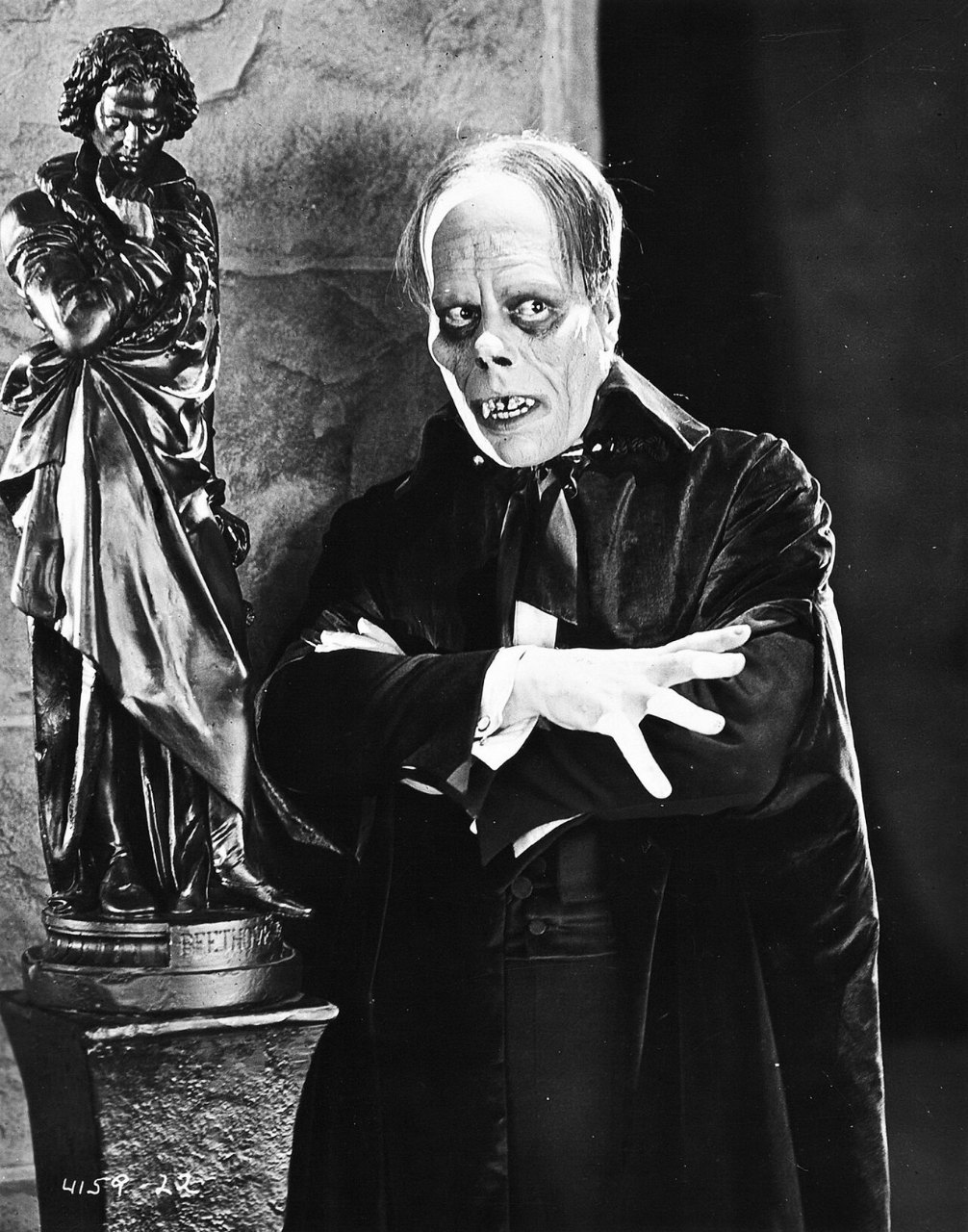
Lon Chaney designed his own makeup for the Phantom and kept it secret until the premiere on September 6, 1925. It used a skullcap, false teeth, cheek padding and wire loops that pulled his nostrils upward. The film cost $632,357 and grossed about $2 million.
The robot Maria in Metropolis
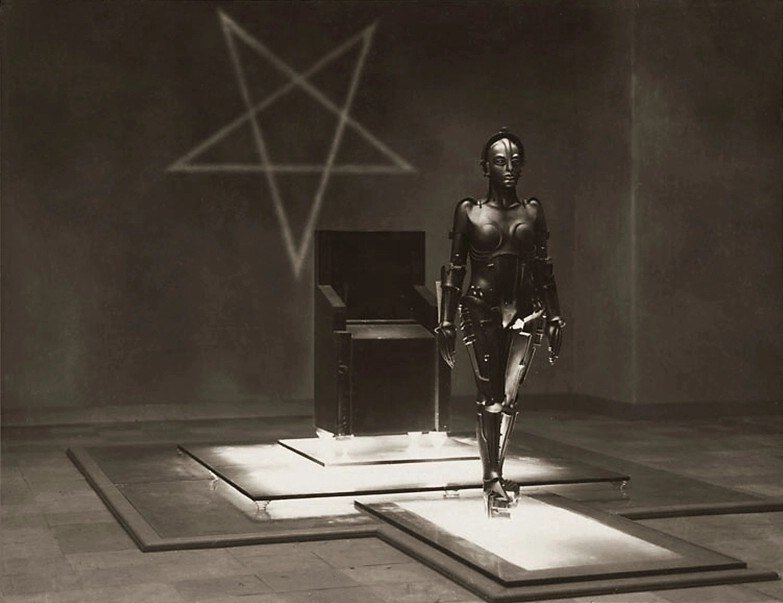
Brigitte Helm played the robot Maria in Fritz Lang’s Metropolis, which premiered in Berlin on January 10, 1927. Sculptor Walter Schulze-Mittendorff built the robot’s suit from a plaster cast of Helm, and it was stiff enough to leave her cut and bruised. In 2008 a print found in Buenos Aires turned up about 25 minutes of lost footage.
Lon Chaney as a vampire in a lost film
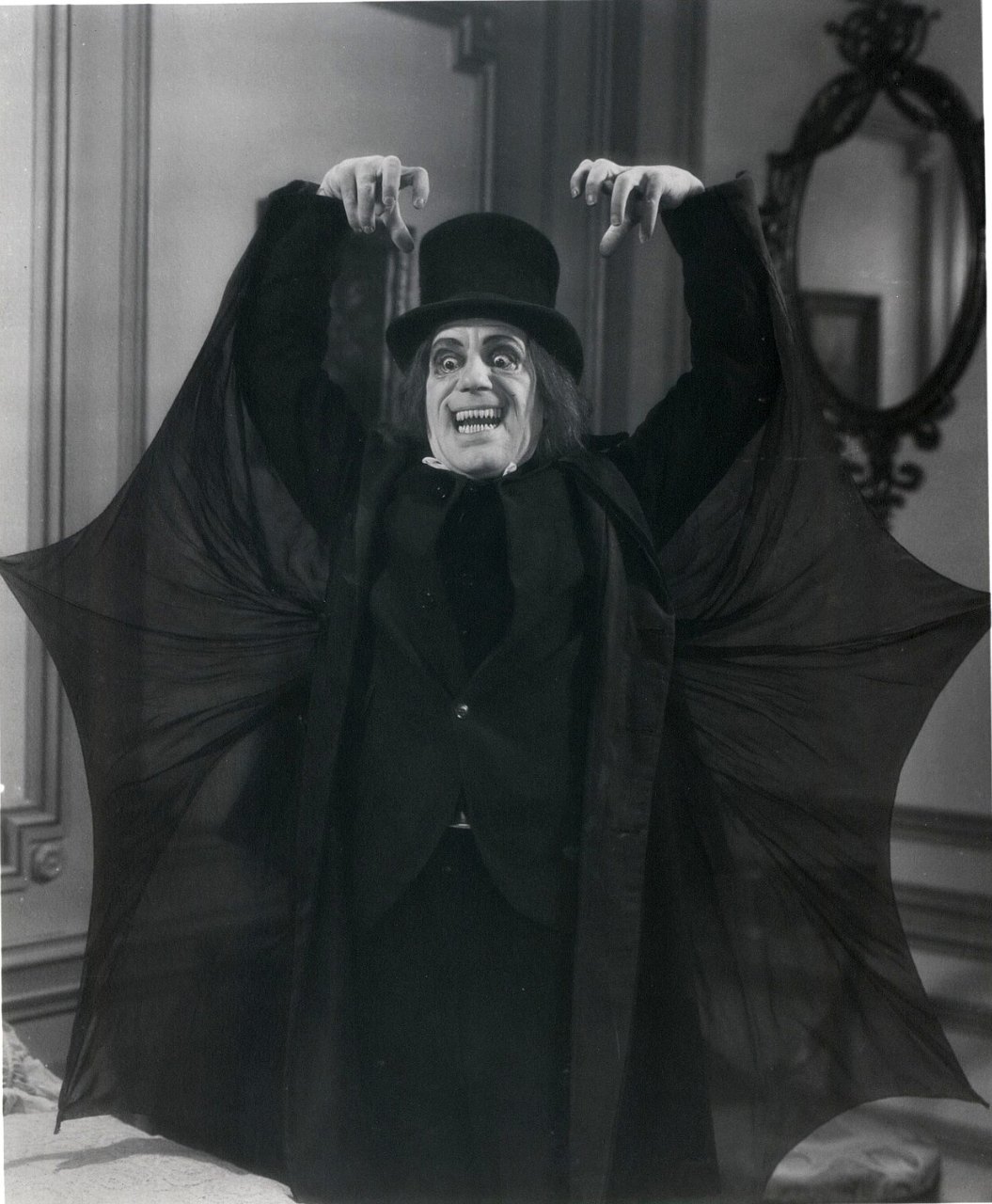
Lon Chaney plays a vampire-like figure, the Man in the Beaver Hat, in this 1927 MGM film directed by Tod Browning. His makeup included sharpened teeth and wire fittings, worn like monocles, to create a hypnotic stare. The last known print burned in an MGM vault fire in the 1960s, so the film is known mainly from stills.
Conrad Veidt’s frozen grin
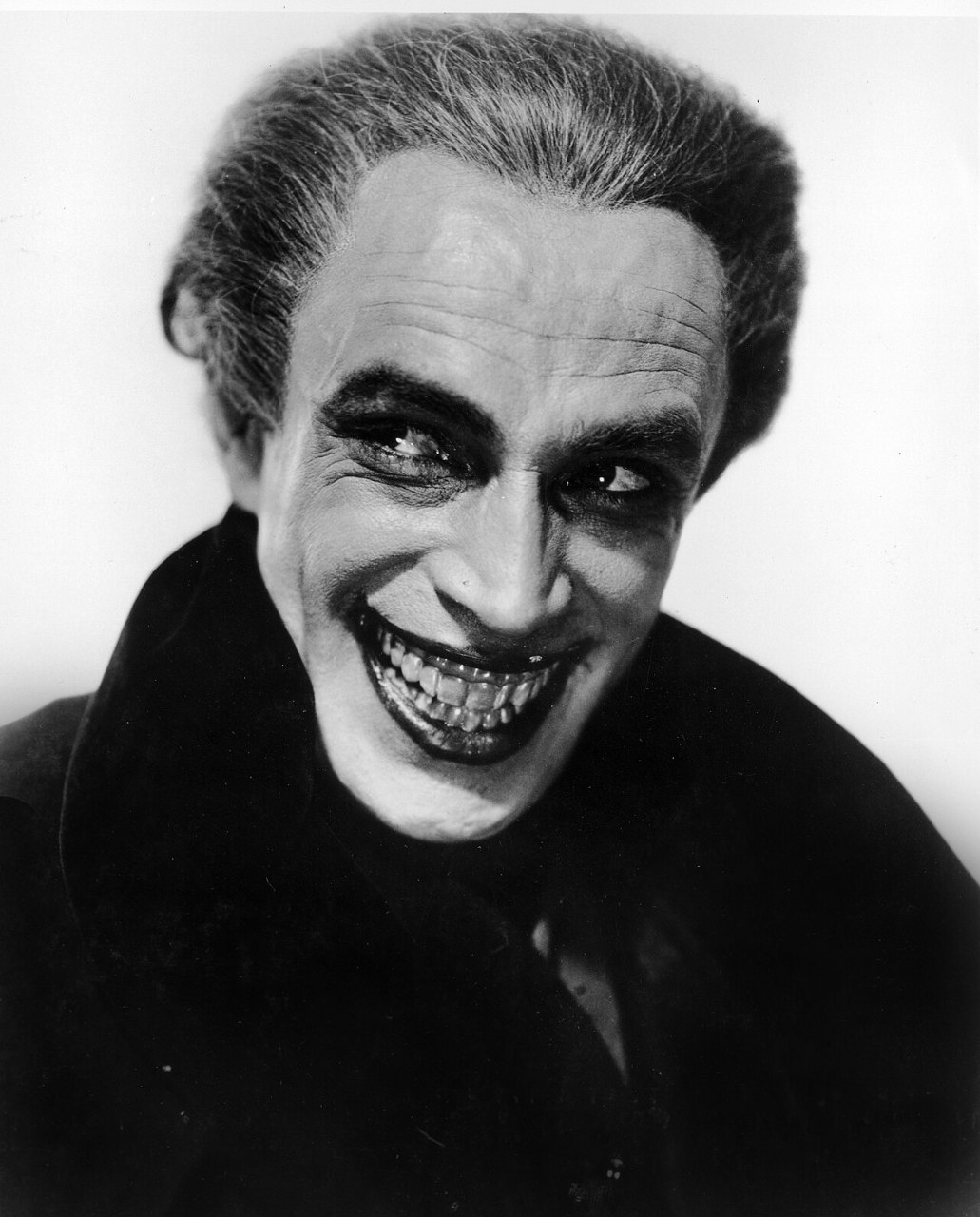
Conrad Veidt plays Gwynplaine, a nobleman’s son whose face was carved into a permanent grin, in Paul Leni’s 1928 Universal film from a Victor Hugo novel. Makeup artist Jack Pierce was responsible for the look. The Joker’s creators disagreed about who did what, but agreed his grin was influenced by a photograph of Veidt from this film.