These ten pictures follow Charlie Chaplin from about 1915, when he was making short comedies, to 1965, when a European prize honored his career. Along the way he meets Sousa, Einstein and Gandhi, eats a boot and mocks a dictator. Every photograph is in the public domain or released under CC0.
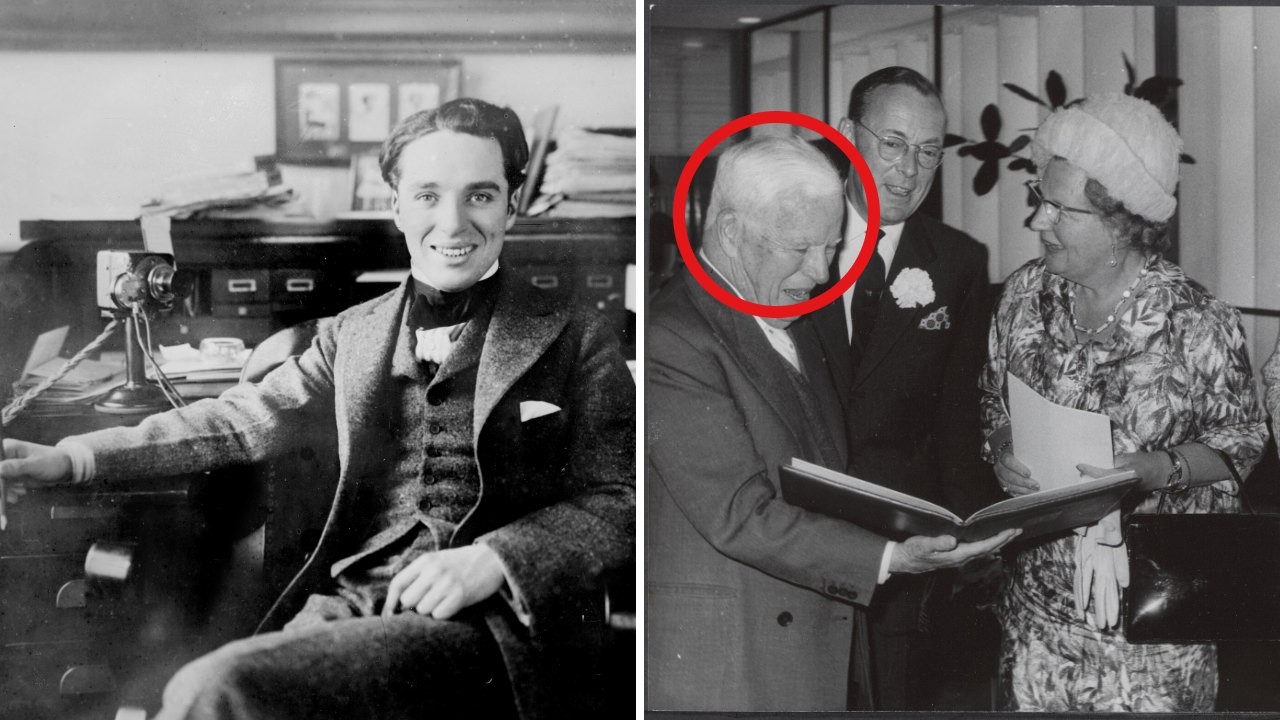
A young star at his desk
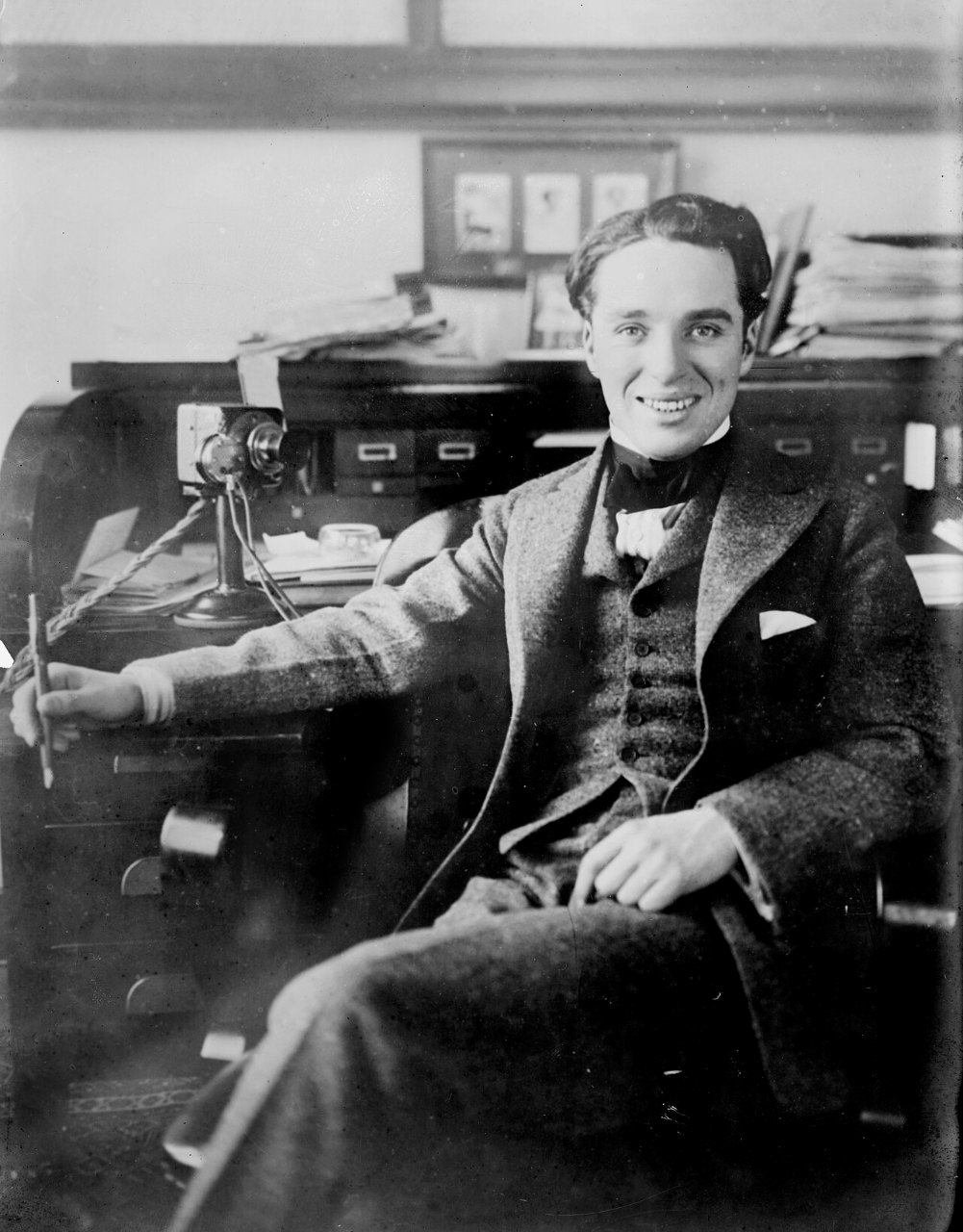
Bain News Service photographed Chaplin at a desk about 1915, with no mustache or bowler hat in sight. He had joined Essanay at the end of 1914 for $1,250 a week plus a $10,000 bonus. The Tramp, released that April, is widely seen as a turning point, when his character grew gentler.
Standing with John Philip Sousa
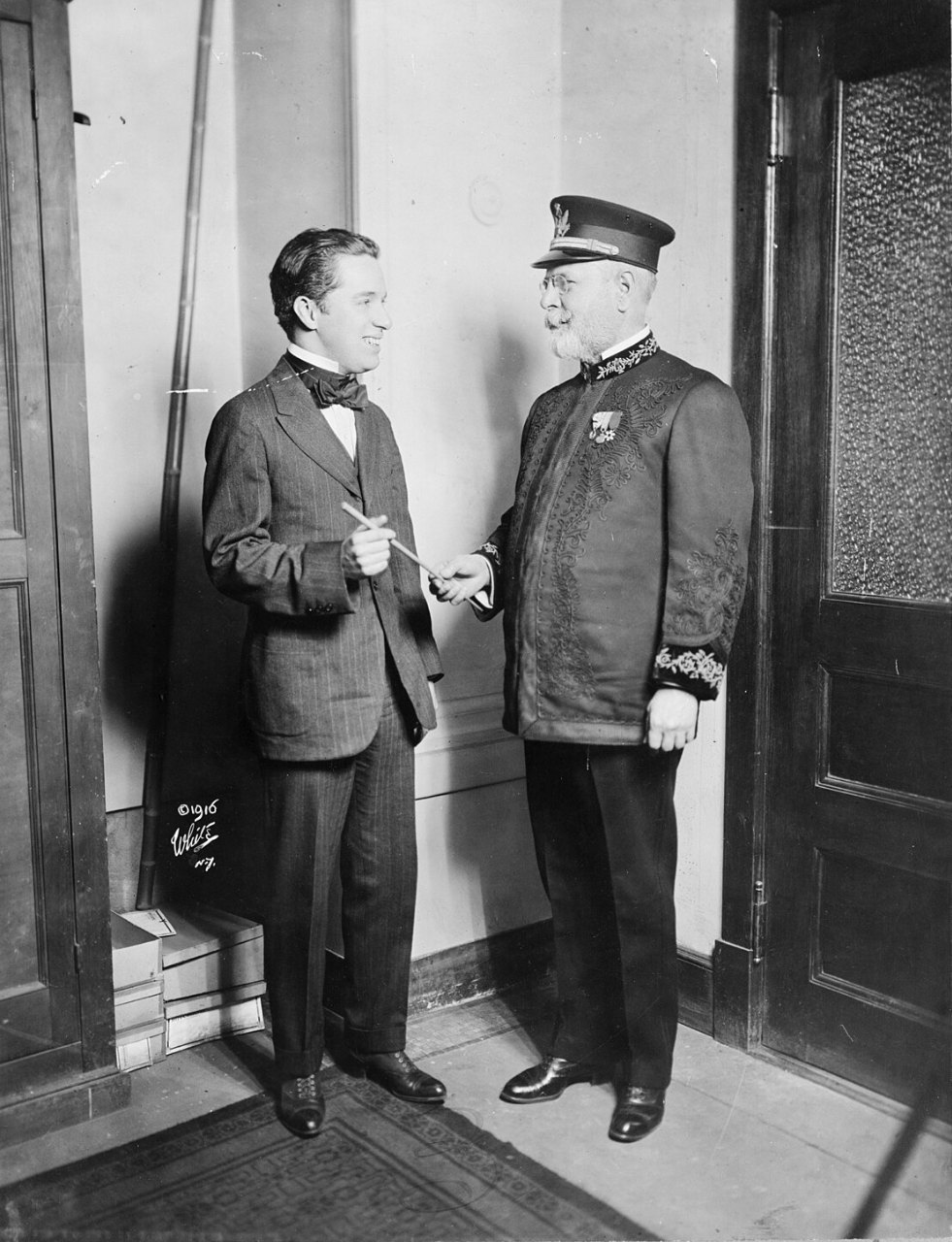
The Library of Congress dates this print to 1916 and says it shows bandleader John Philip Sousa, in uniform, standing with Chaplin. That year Chaplin signed with the Mutual company for $670,000 a year. Sousa, then in his early sixties, was a bandleader famous across America.
On the boat in The Immigrant
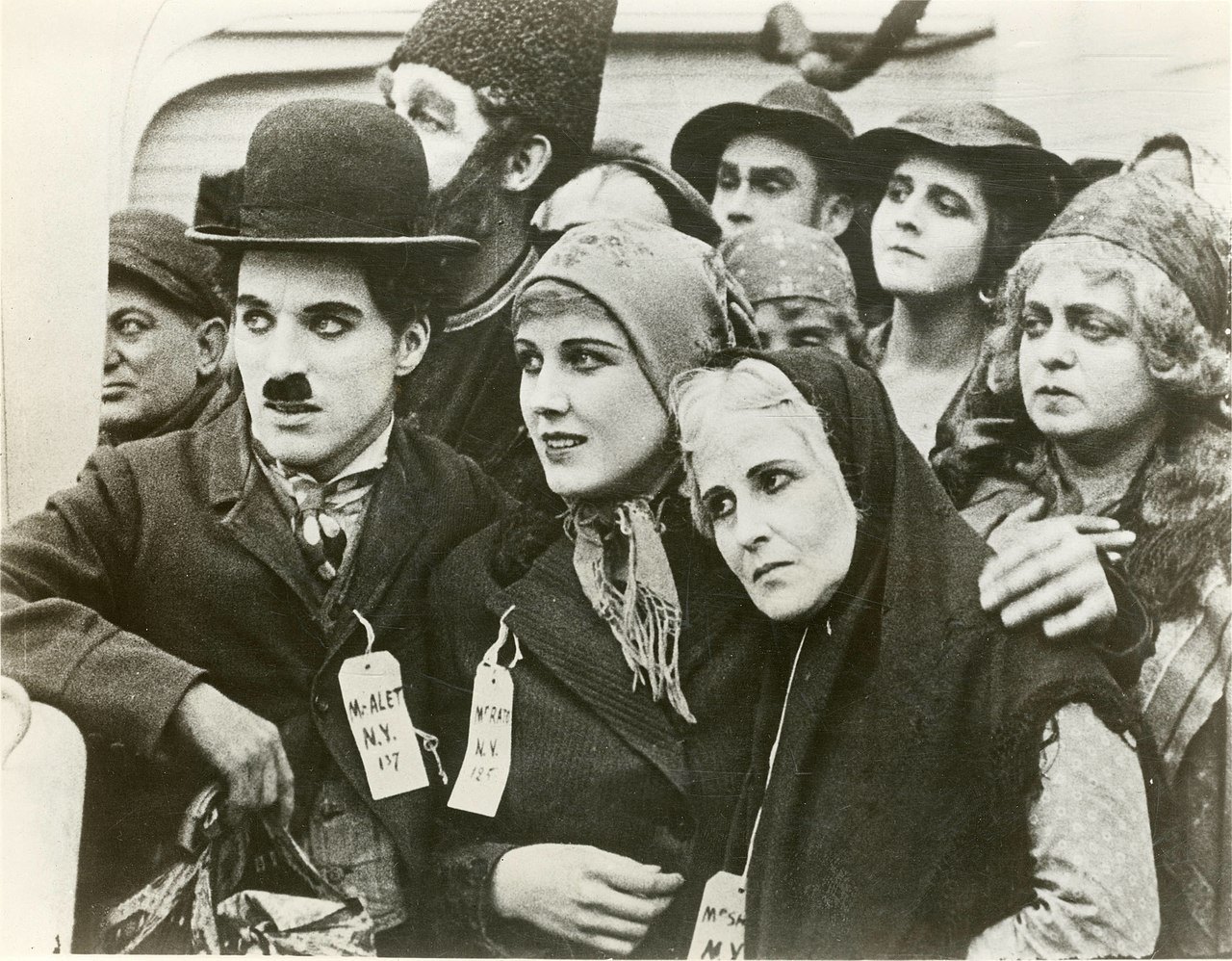
The Immigrant was one of four films Chaplin released in 1917 for Mutual, along with Easy Street, The Cure and The Adventurer. Scholars rank that group among his finest work. In this scene the Tramp is packed into steerage on a ship bound for America.
Chaplin and Harry Lauder in costume
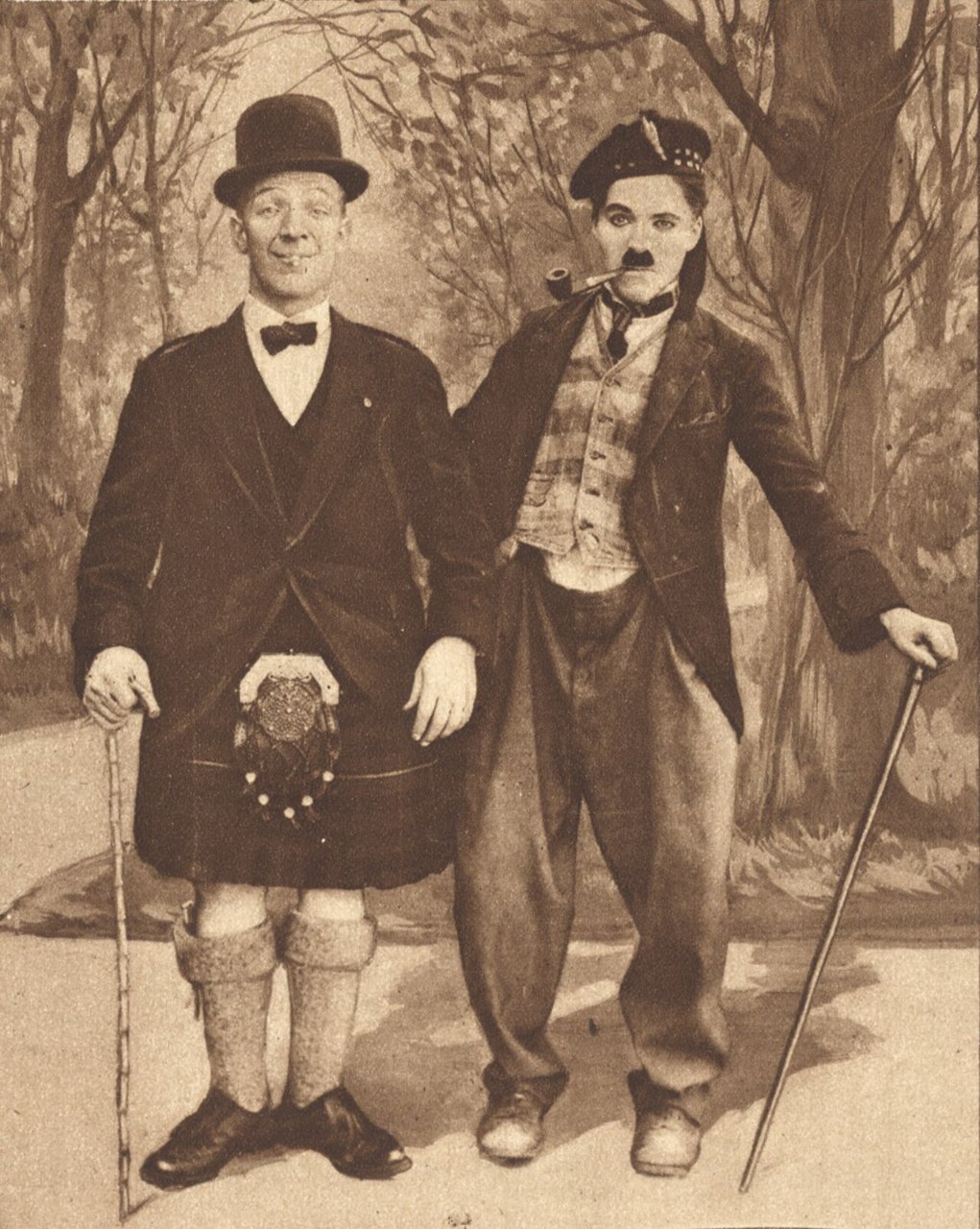
The New York Times ran this photograph on February 10, 1918. It pairs Scottish entertainer Harry Lauder, on the left, with Chaplin in his Tramp outfit. That spring Chaplin toured for a month to sell Liberty Bonds, and Shoulder Arms came out in October.
The Kid and his tramp
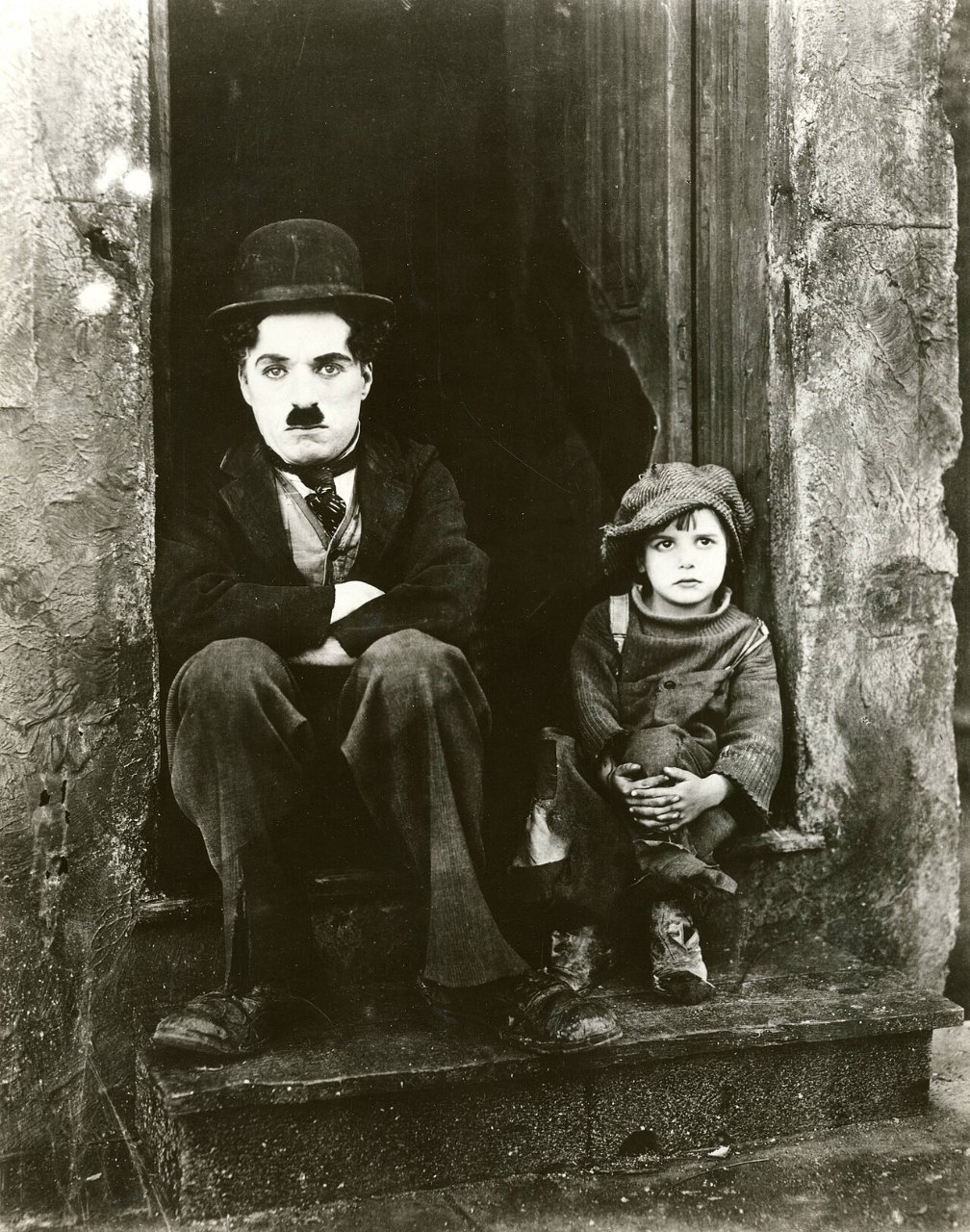
The Kid was Chaplin’s first feature-length film, released in January 1921 and running 68 minutes. Jackie Coogan was four years old when filming began in August 1919, and production took nine months. Chaplin plays a tramp who finds an abandoned baby and raises him.
Eating a boot in The Gold Rush
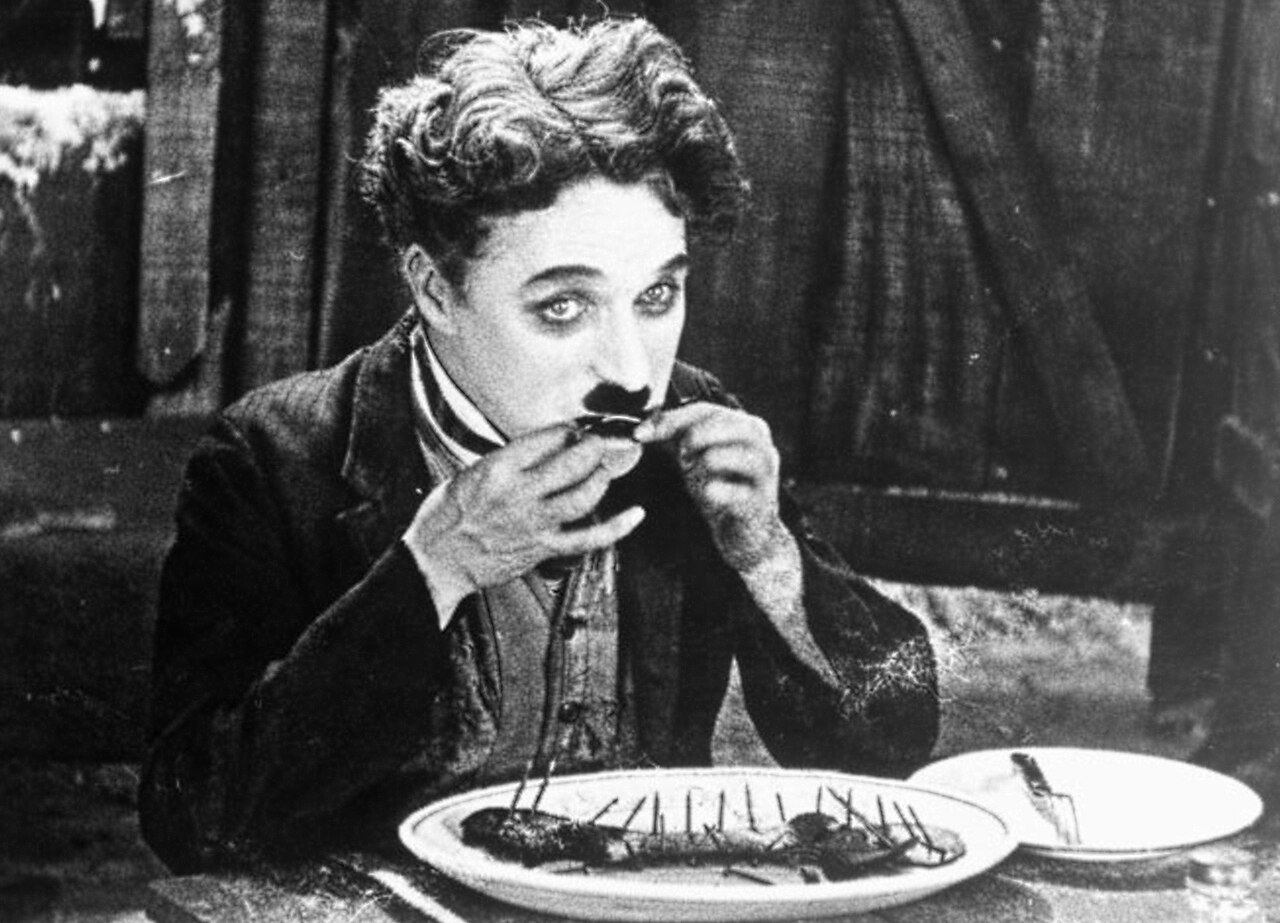
In The Gold Rush, which premiered on June 26, 1925, a starving prospector boils his boot and eats it like a fine dinner. Chaplin shot the mountain scenes with 600 extras near Truckee. At the film’s release he said it was the picture he wanted to be remembered by.
Einstein at the City Lights premiere
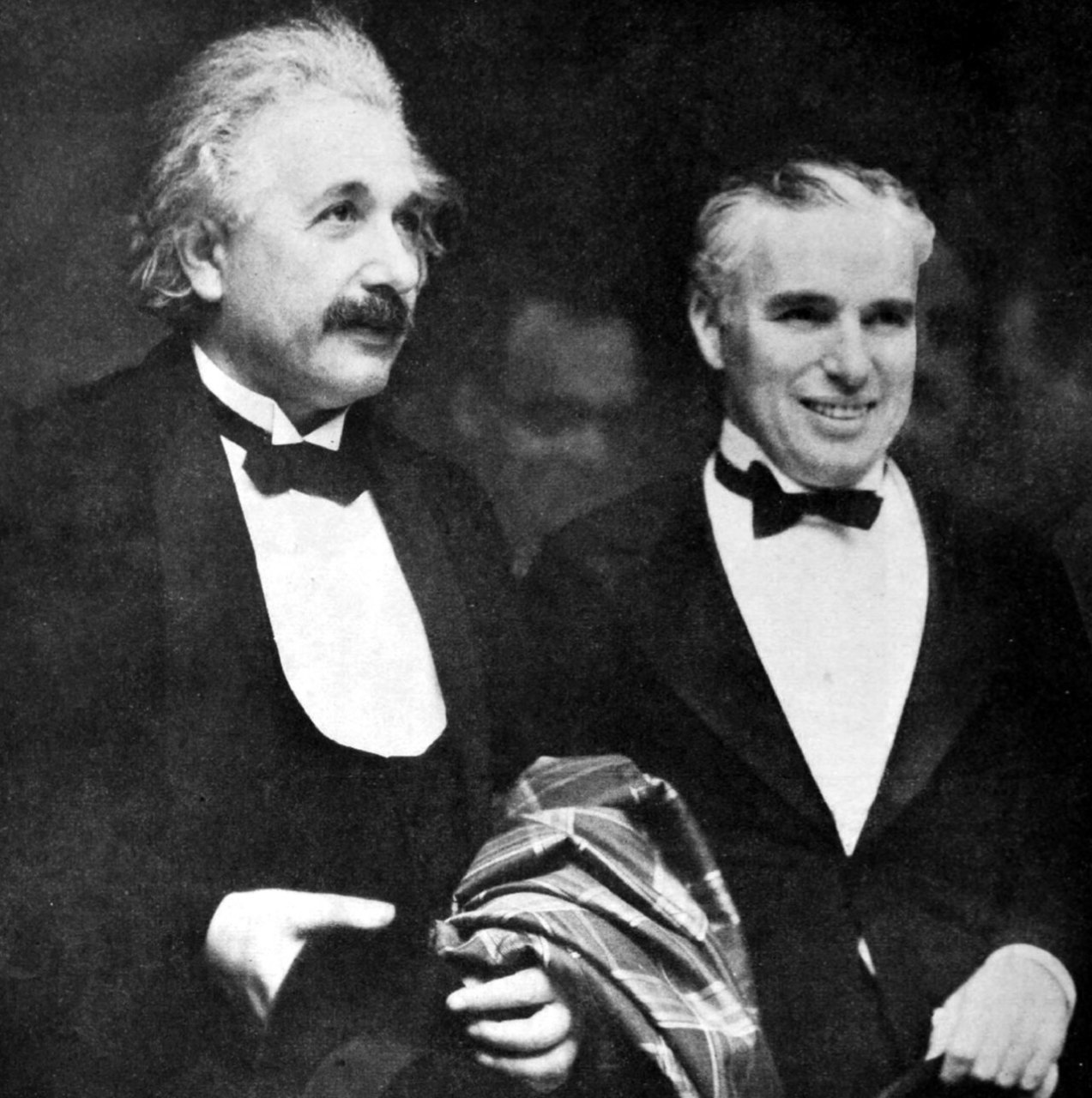
Albert Einstein and his wife attended the Los Angeles premiere of City Lights on January 30, 1931, as Chaplin’s personal guests. Photoplay printed this picture in its April 1931 issue. City Lights had no spoken dialogue, even though sound films had taken over by then.
Meeting Gandhi in East London
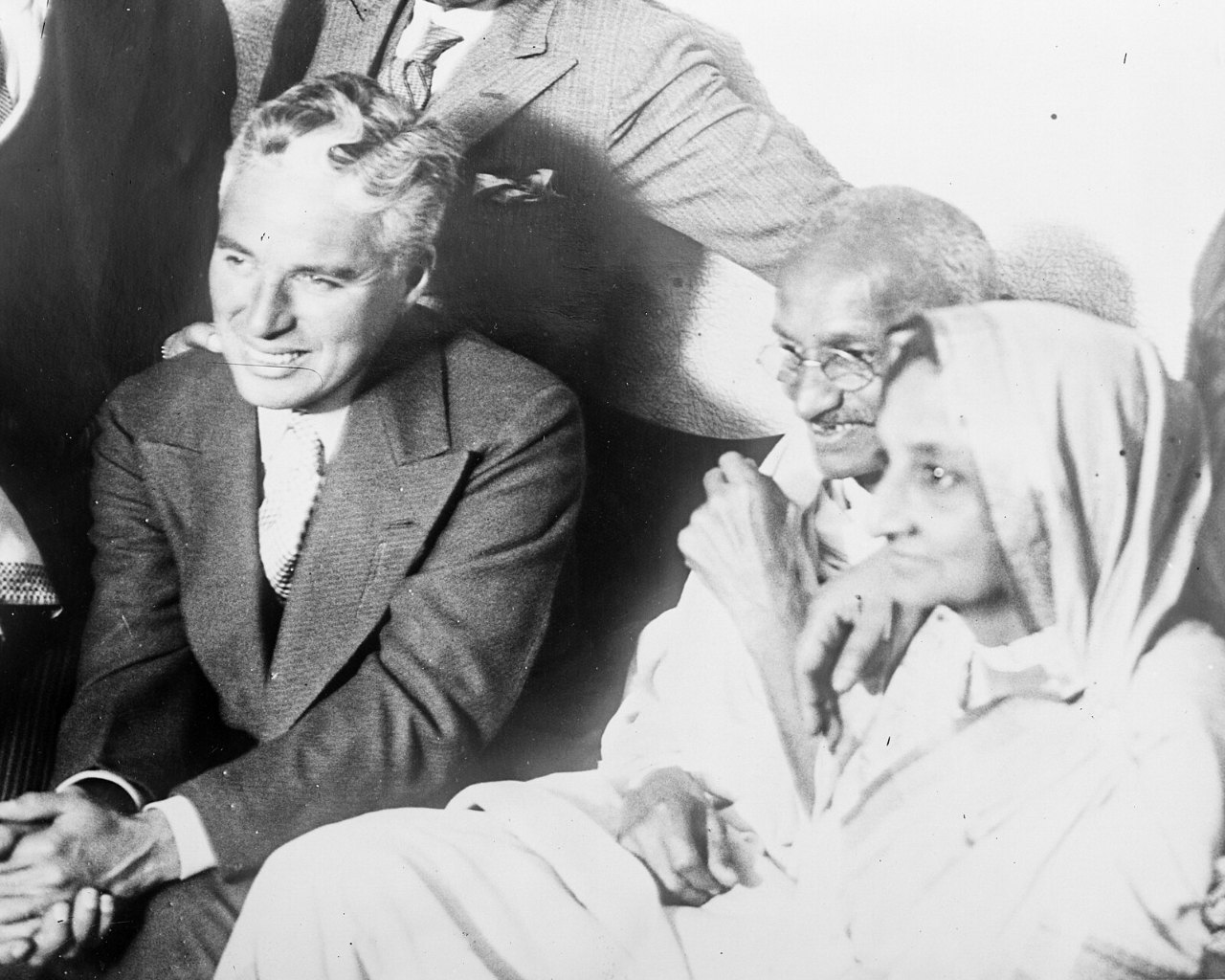
On September 22, 1931, Chaplin met Mahatma Gandhi at a friend’s house in Canning Town, East London, during Gandhi’s visit for the Round Table Conference on India’s future. Chaplin asked about machinery. Gandhi said machines had made India dependent on England and that he would still oppose them after independence.
Hynkel and his globe
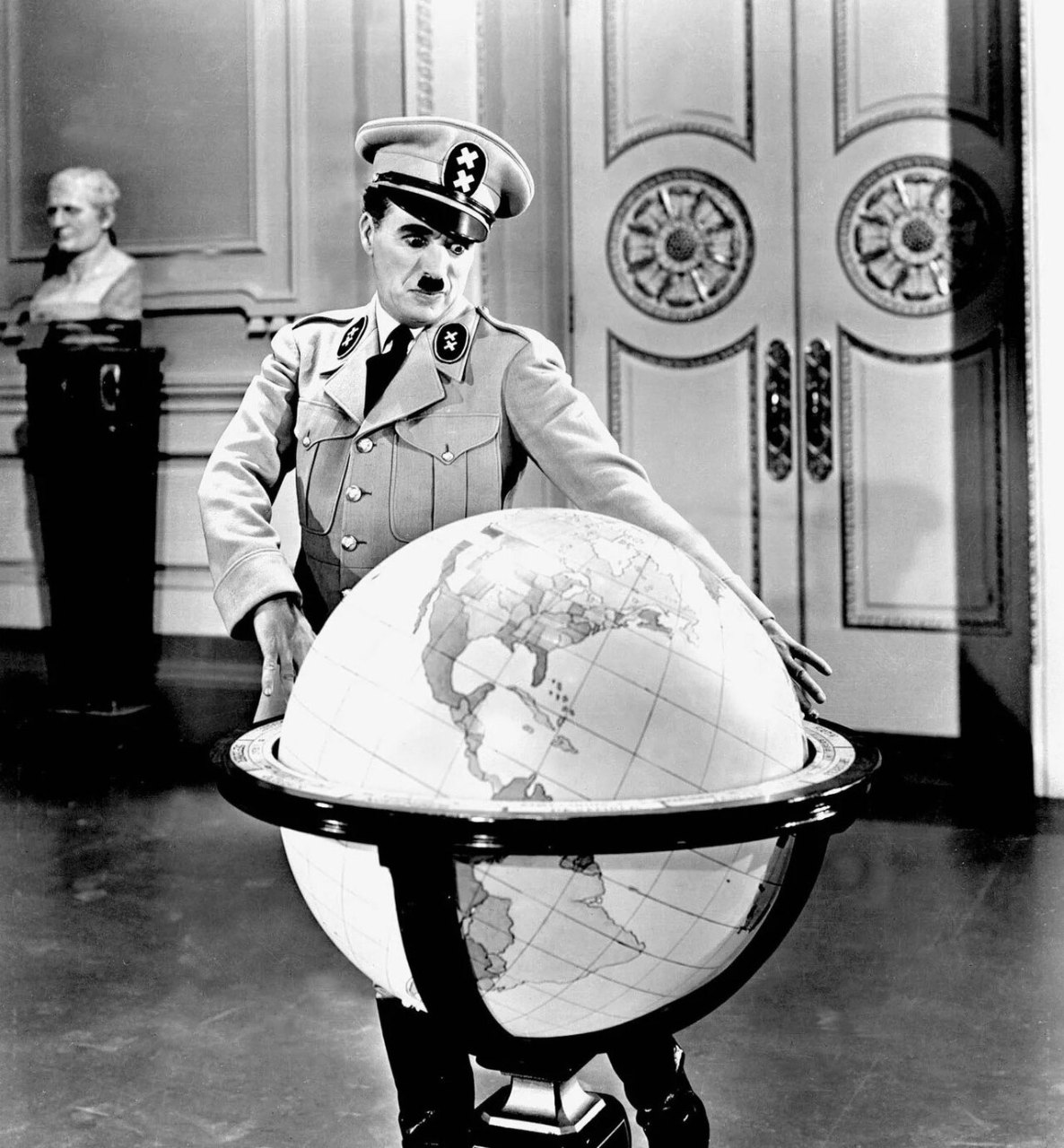
The Great Dictator, Chaplin’s first sound film, opened in New York on October 15, 1940, in two theaters at once. He plays both a Jewish barber and Adenoid Hynkel, a dictator who parodies Hitler. This still shows Hynkel and his globe of the world.
Receiving the Erasmus Prize
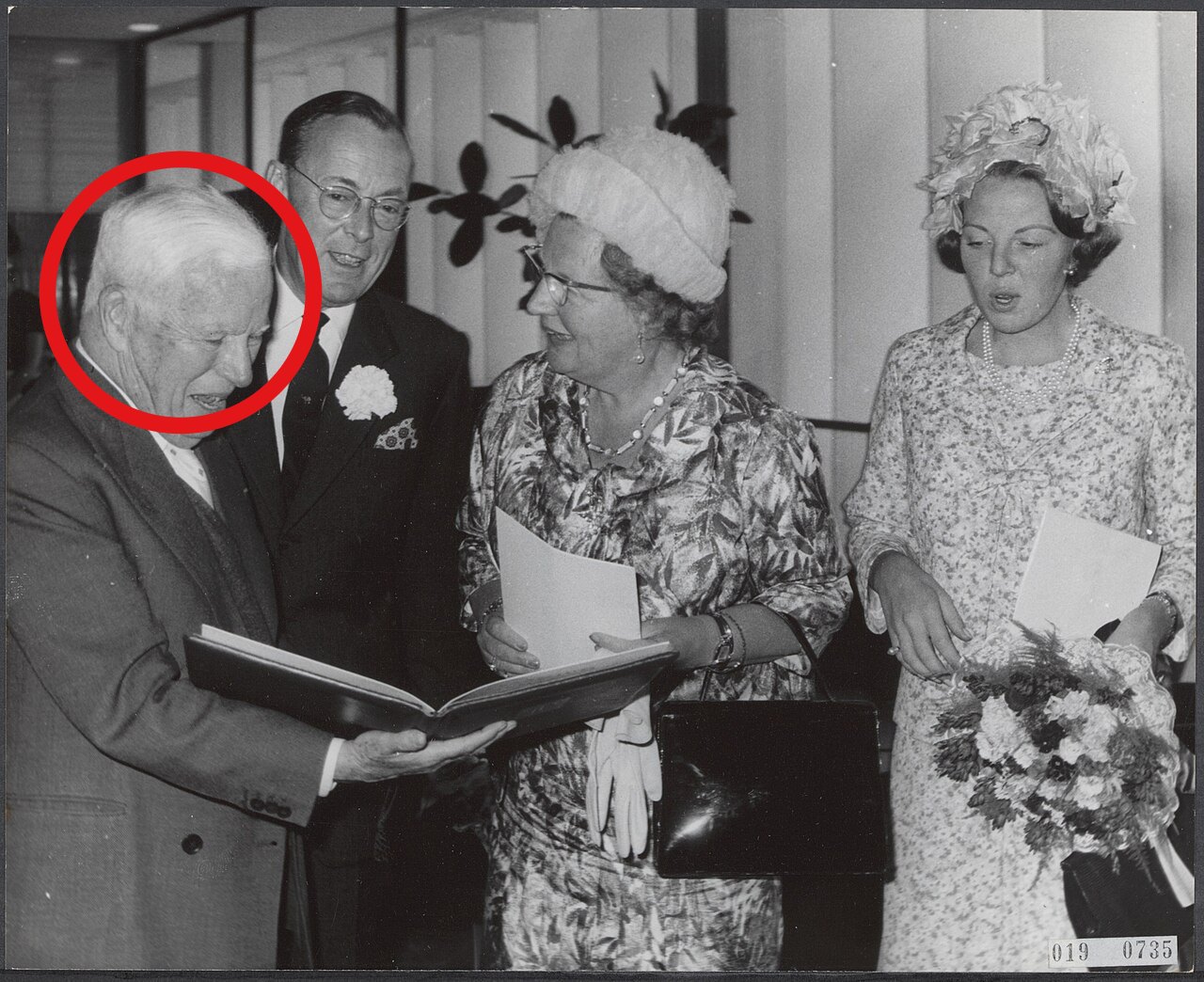
On June 24, 1965, Chaplin received the Erasmus Prize in the Netherlands, with Prince Bernhard, Queen Juliana and Princess Beatrix beside him. He shared it with the Swedish director Ingmar Bergman. The jury praised how his films joined seriousness, humor and social compassion. Chaplin, circled in red, was 76.