In 1942 and 1943, Alfred T. Palmer and Howard R. Hollem photographed American aircraft plants in color for the U.S. government. These ten pictures, taken in California, Kansas, Tennessee and Texas, show the people who built the bombers. Every photograph is in the public domain.
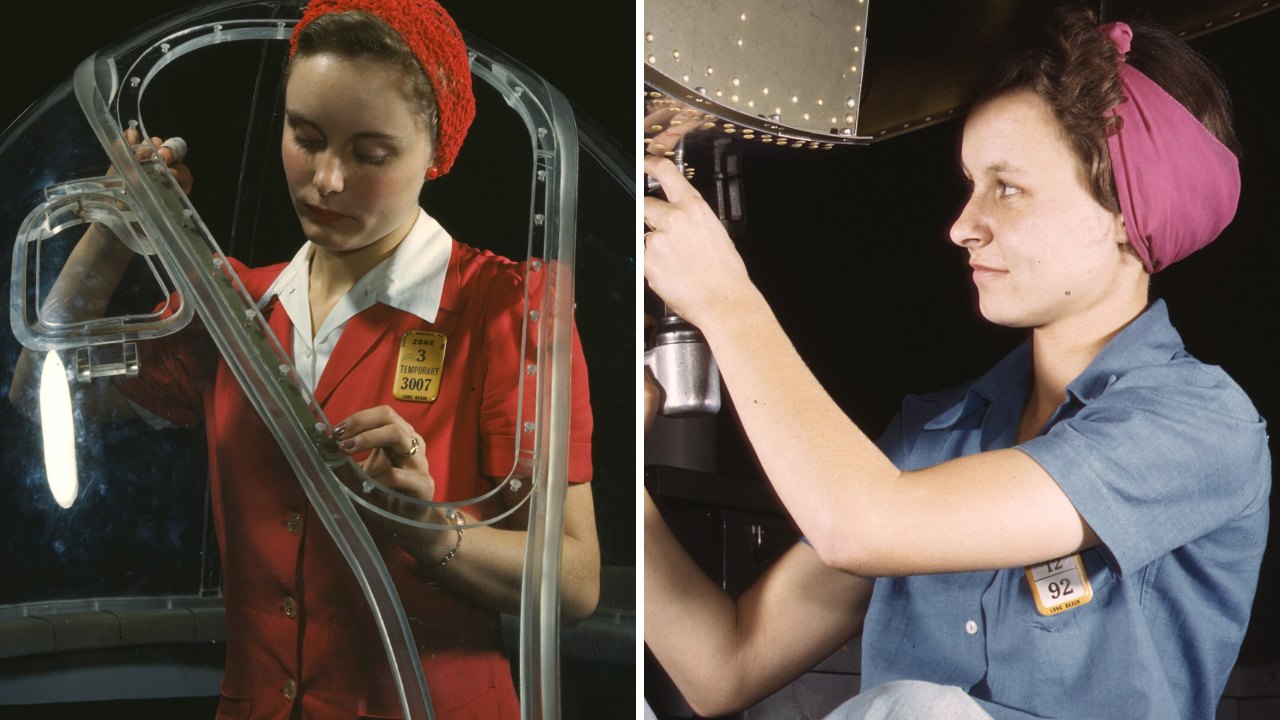
A woman in a glass house at Douglas
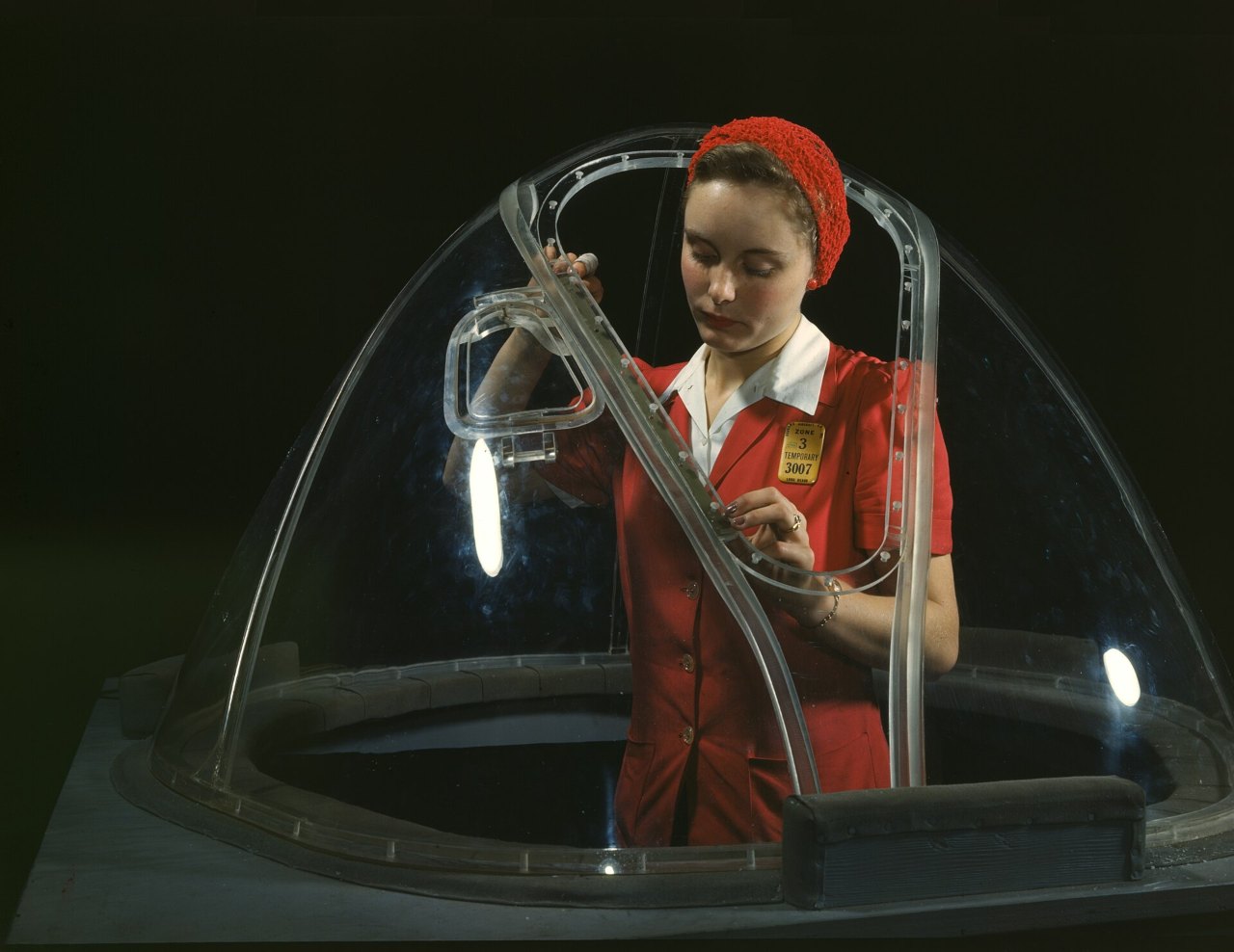
The Library of Congress caption calls her “this girl in a glass house.” She is putting finishing touches on the clear bombardier nose section of a B-17F at the Douglas plant in Long Beach, California, in October 1942. Douglas built 3,000 of the 12,731 B-17s, alongside Boeing and Lockheed-Vega.
Women at work on a bomber at Douglas
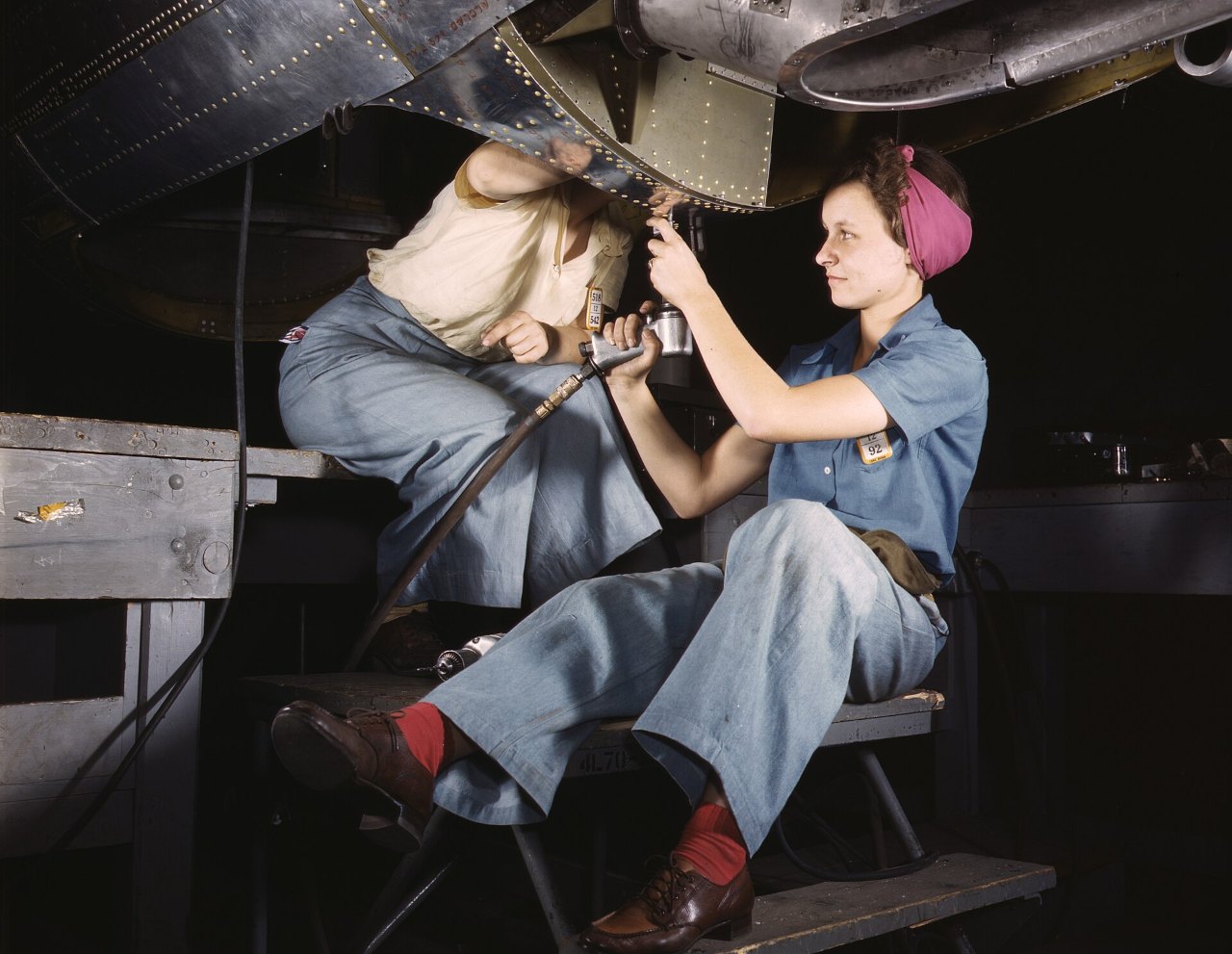
The Library of Congress caption begins “Women at work on bomber.” Alfred T. Palmer took the picture at the Douglas plant in Long Beach in October 1942. By 1943, women made up 65 percent of the U.S. aircraft industry’s workforce, up from about 1 percent before the war.
A real-life Rosie the Riveter in Nashville
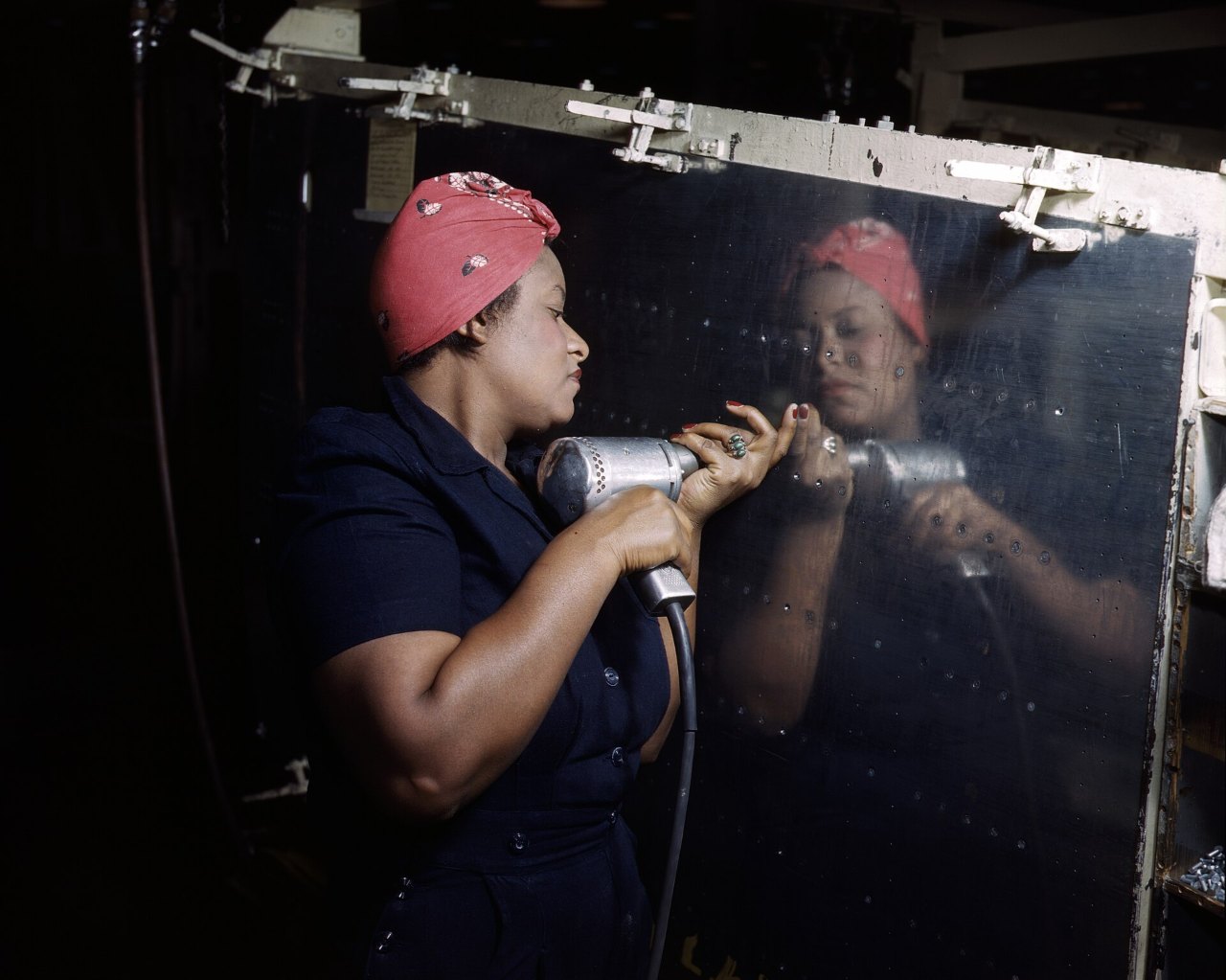
The Library of Congress caption calls her “a real-life ‘Rosie the Riveter,’” at work with a hand drill at Vultee-Nashville on an A-31 Vengeance dive bomber. Alfred T. Palmer took the picture in February 1943. The dark panel gives the photograph a second Rosie, reflected beside the first.
B-25 Mitchells in yellow at Kansas City
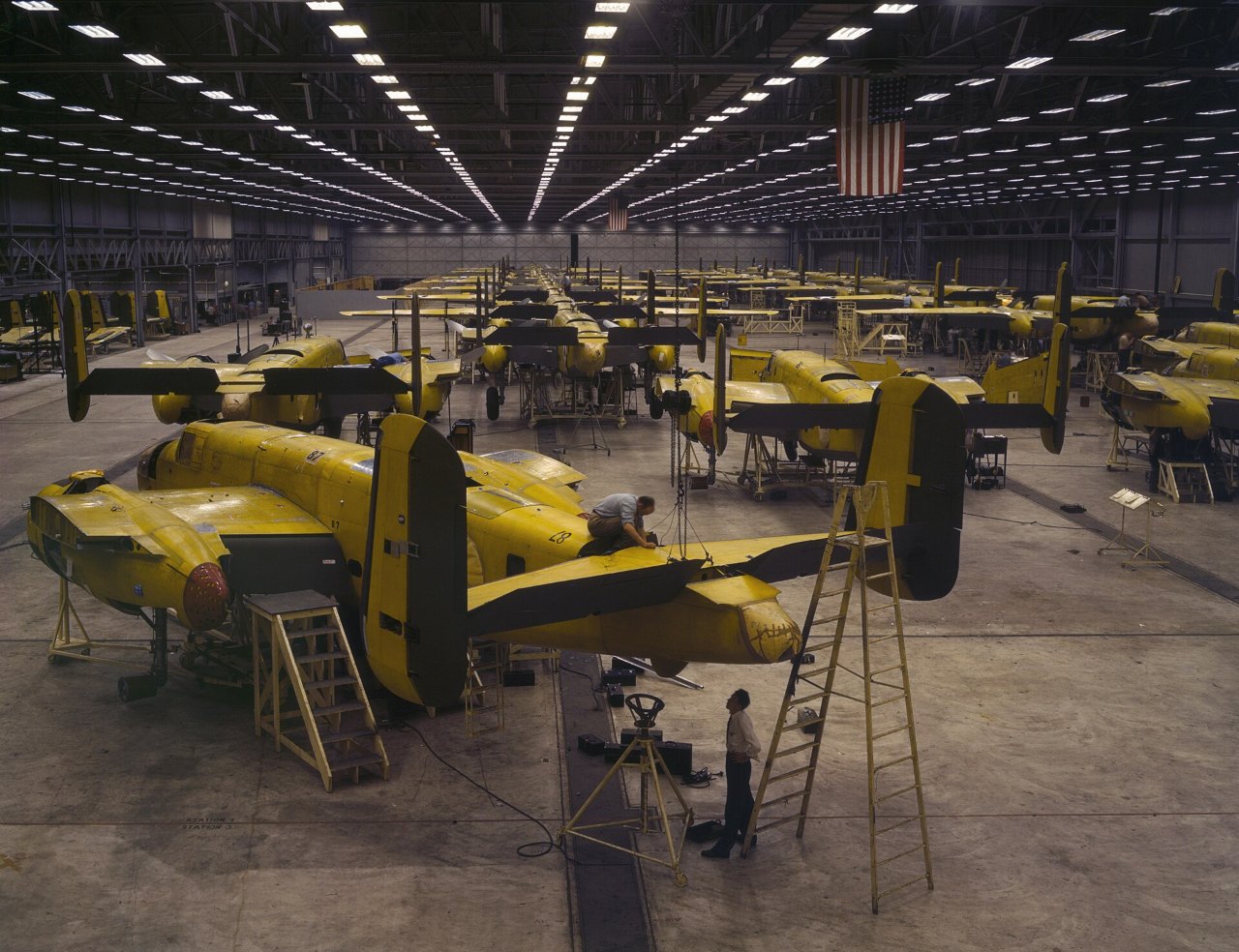
Alfred T. Palmer photographed B-25 Mitchell bombers under assembly at North American Aviation’s Kansas City plant in October 1942. The yellow is probably zinc chromate, a corrosion-resistant primer used widely on U.S. military aircraft. The plant went on to build 2,290 B-25Ds and 4,318 B-25Js. A flag hangs far down the hall.
Drilling on a Liberator in Fort Worth
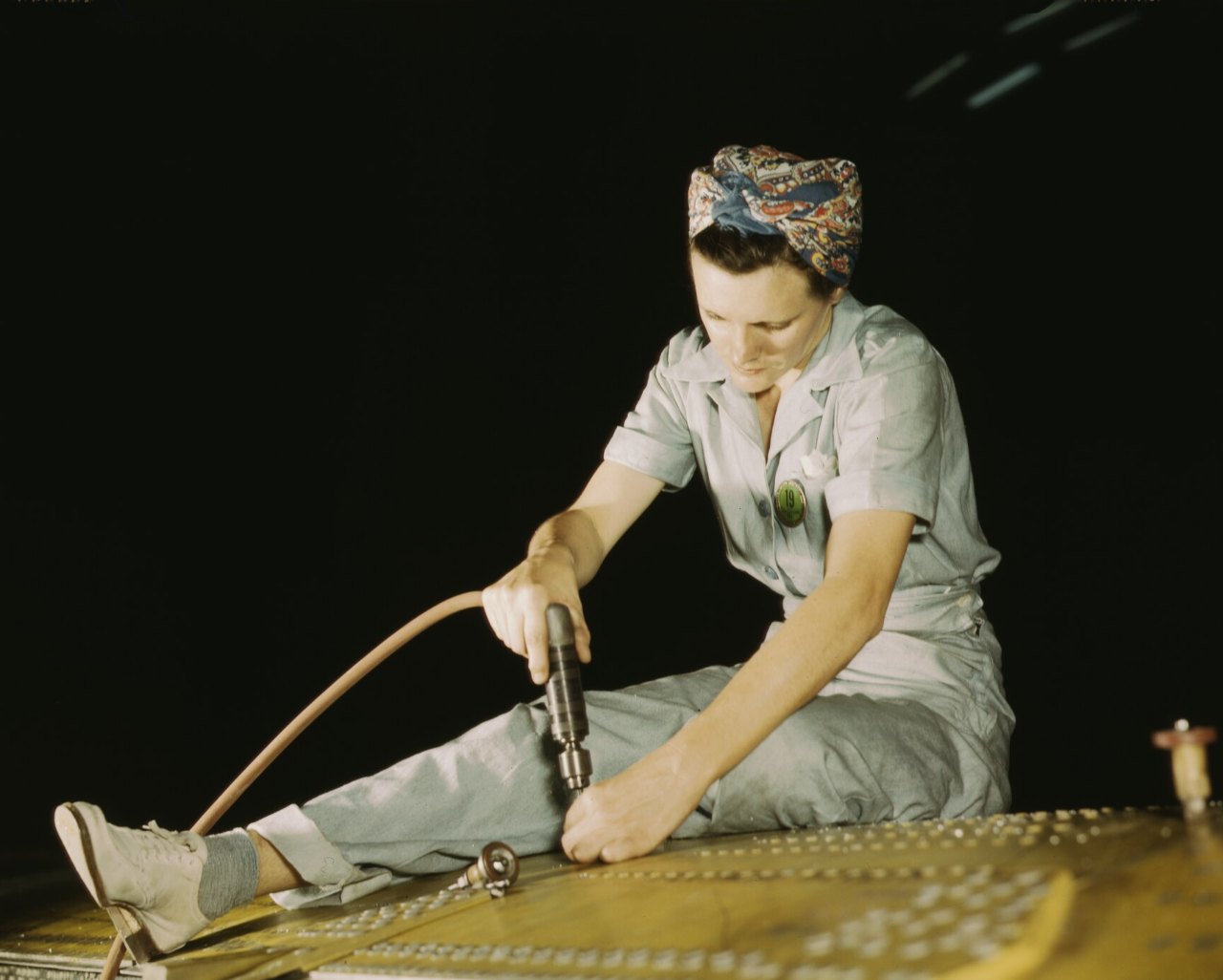
Howard R. Hollem photographed this woman drilling on a B-24 Liberator at the Consolidated Aircraft plant in Fort Worth, Texas, in October 1942. The plant began operations that April. More than 3,000 B-24s were built, assembled or modified there during the war.
Three women inside a B-17 tail
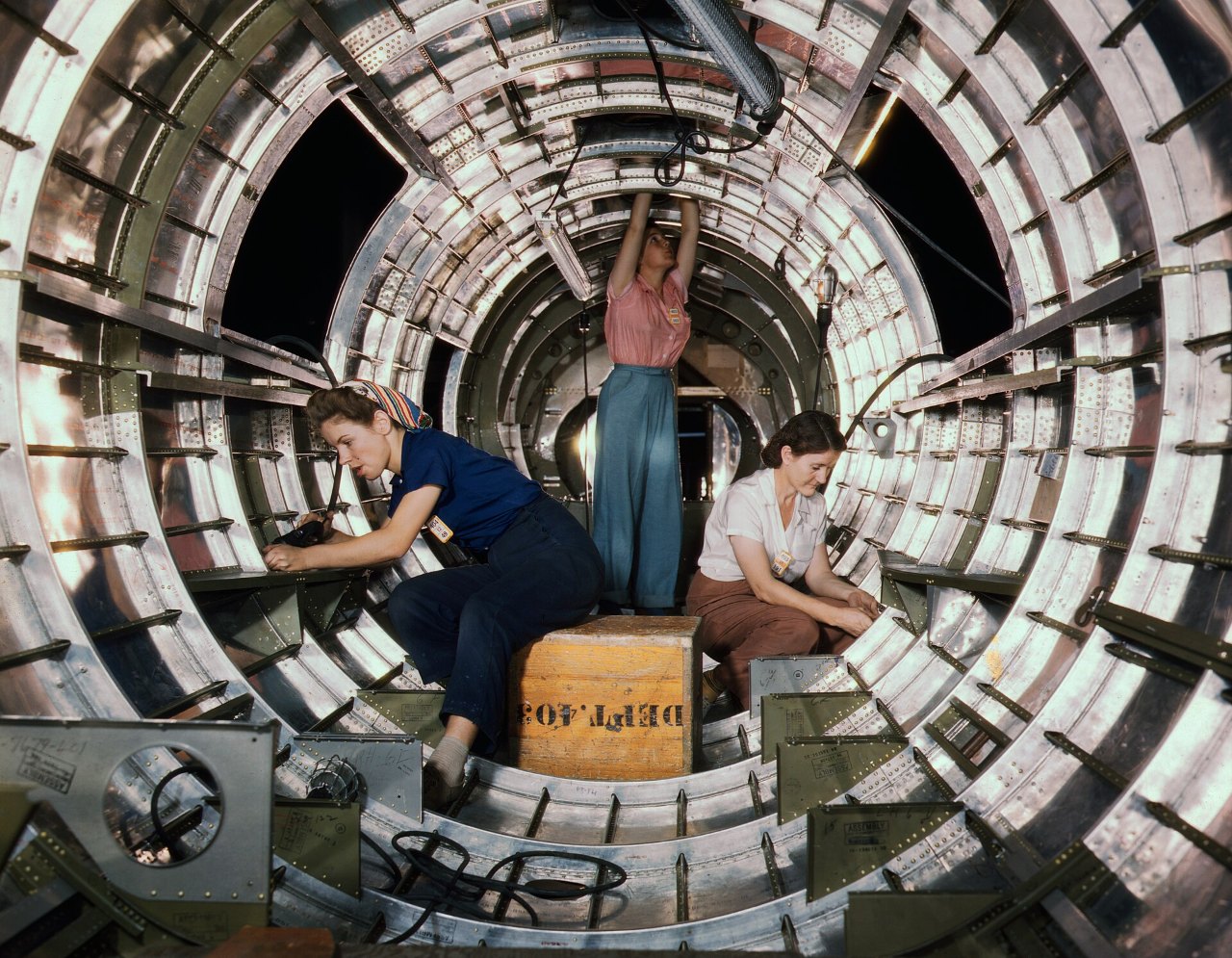
Women workers install fixtures and assemblies in a B-17 tail fuselage section at the Douglas plant in Long Beach, according to the caption of this October 1942 photograph. The Library of Congress adds that the B-17F carried a crew of seven to nine. The ribbed tunnel glows around them.
Touching up the star on a Vengeance
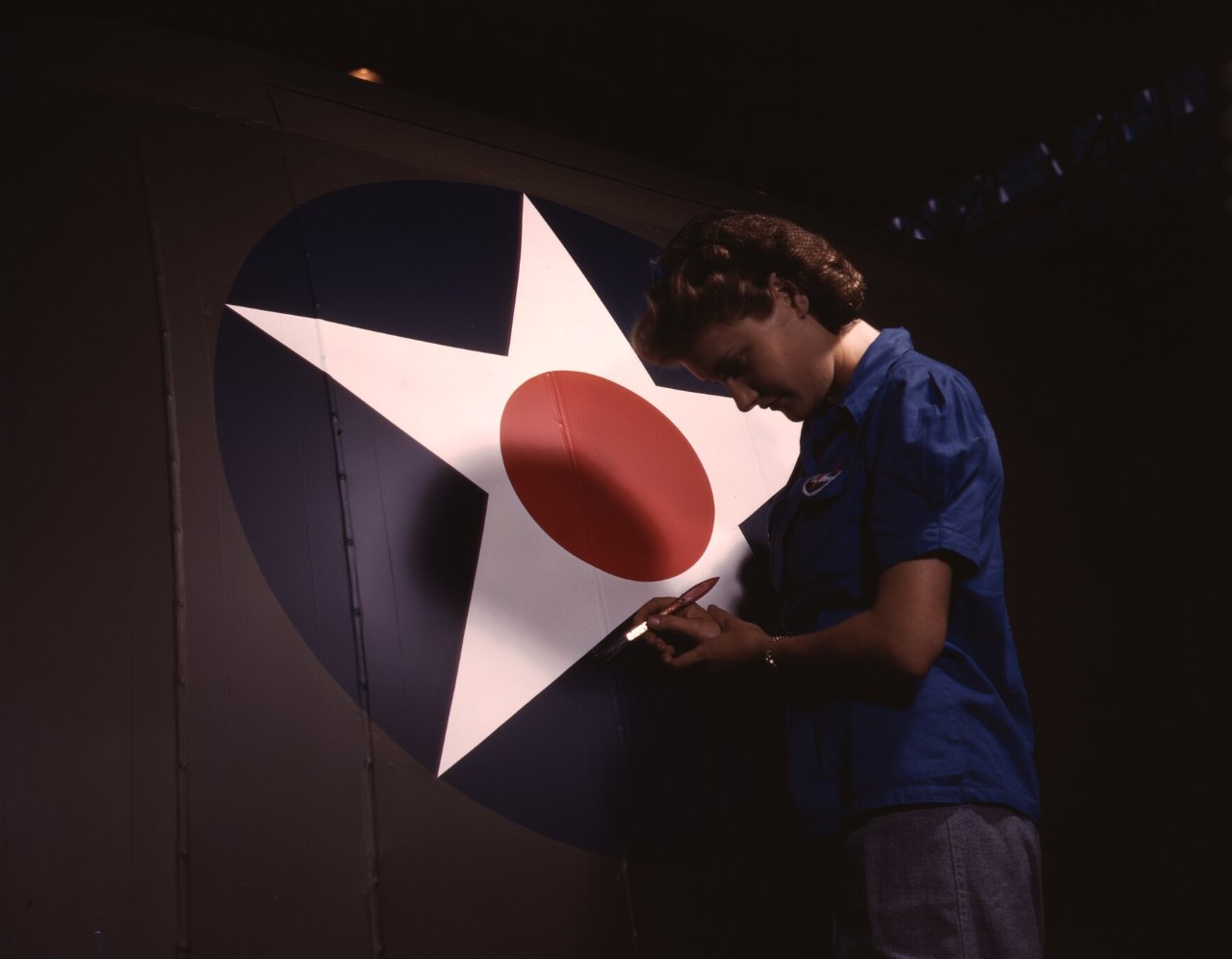
A woman touches up the U.S. Army Air Forces insignia on a Vengeance dive bomber at Vultee’s Nashville plant, in a candid view Alfred T. Palmer took in February 1943. Vultee designed the plane in 1940 for the French air force. The Army Air Forces mostly used it as a target tug and trainer.
A sea of workers at Consolidated
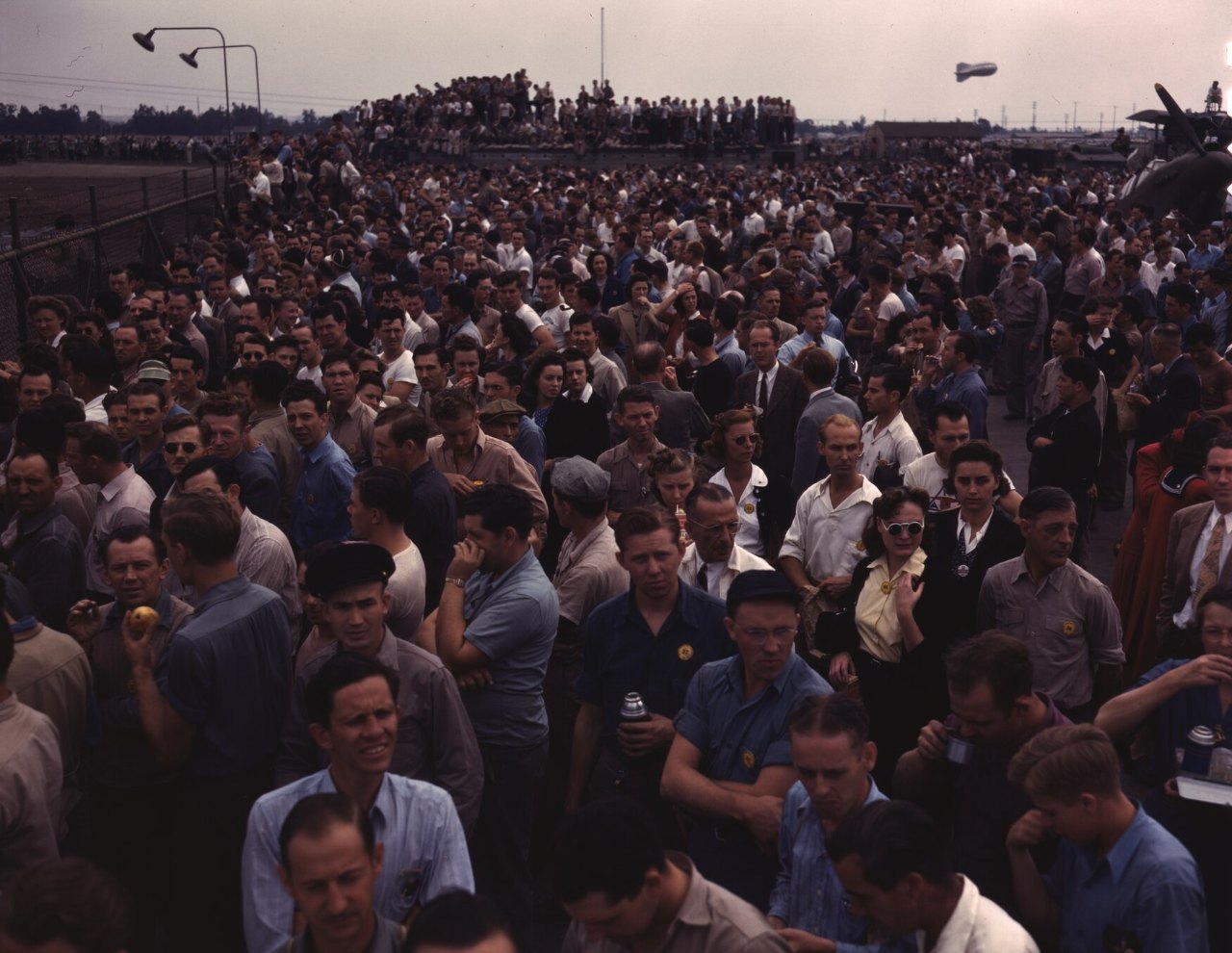
The Library of Congress title for this October 1942 picture begins “Workers on the Liberator Bombers.” Officials planning the Fort Worth plant estimated it would need 14,000 workers to cover three shifts. About 23 percent of its wartime workers were women, according to the Fort Worth Star-Telegram.
A row of B-25 engines at Inglewood
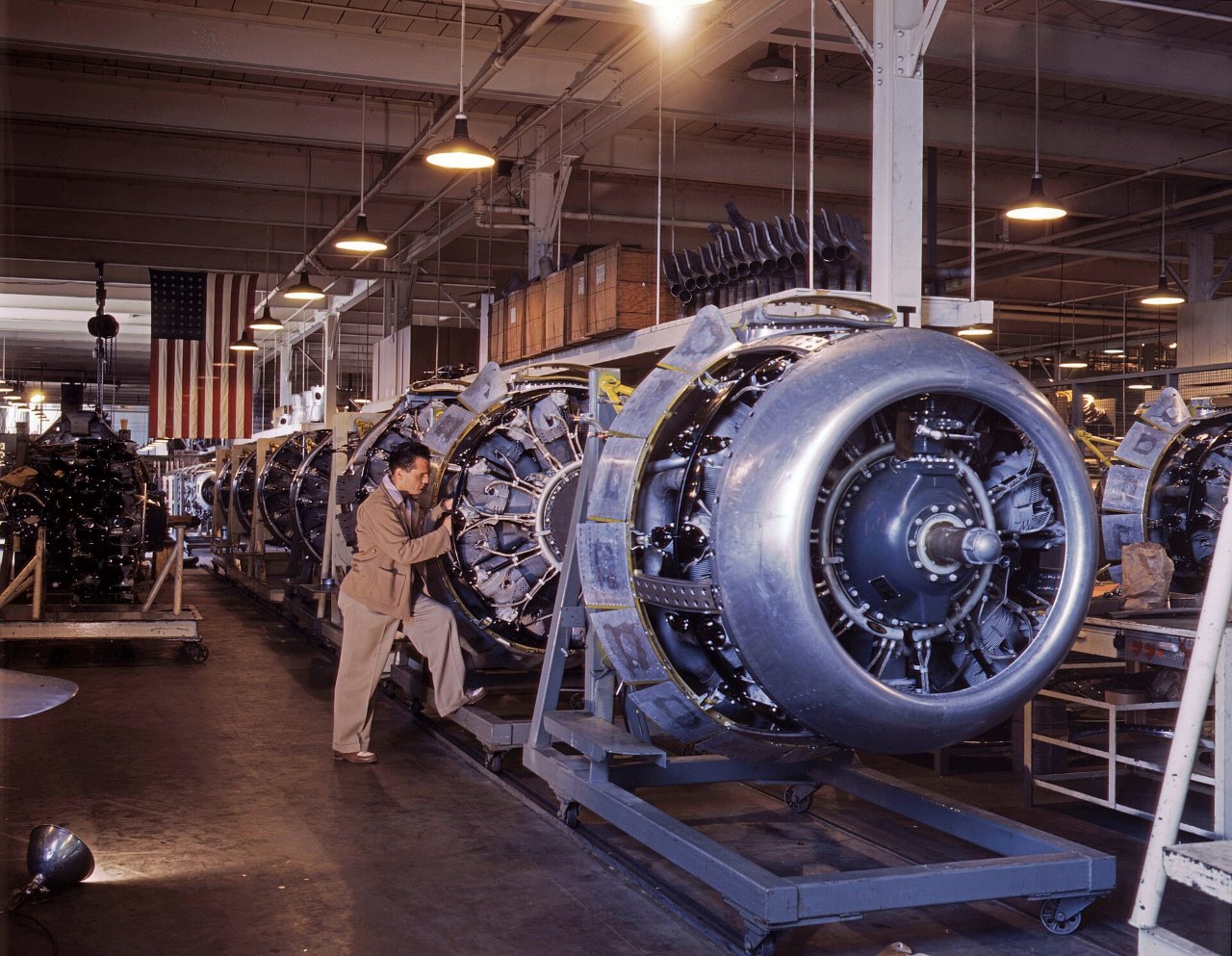
The Library of Congress record says cowling and control rods are added to these motors for North American B-25 bombers as they move down the assembly line in Inglewood, California, in October 1942. They are Wright R-2600 engines, with 14 cylinders and 1,700 horsepower, and each B-25 carried two.
Two women inspecting tubing at Vultee
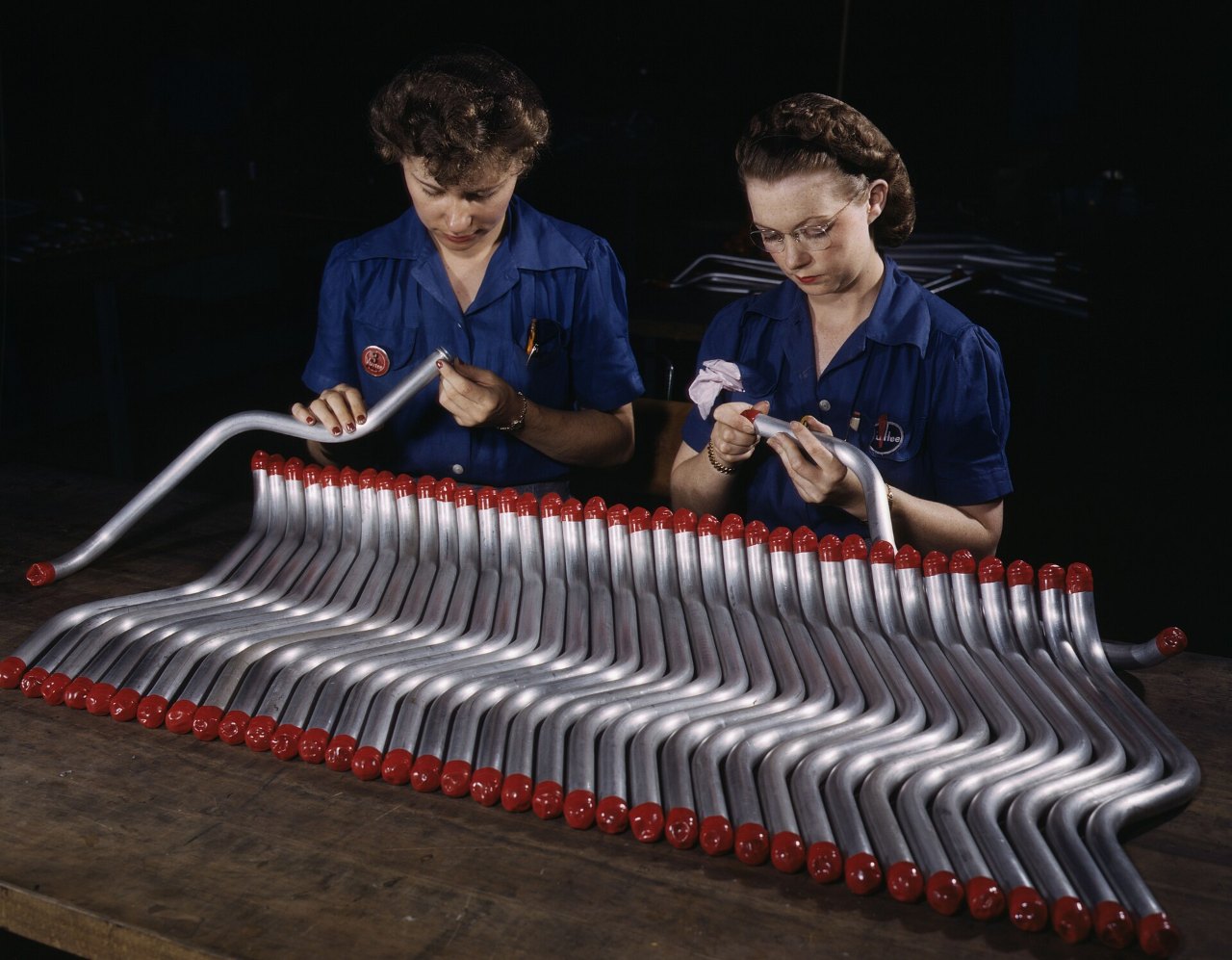
Two women cap and inspect tubing for the Vengeance dive bomber at Vultee’s Nashville division in a picture Alfred T. Palmer took in February 1943. Most of the 1,931 Vengeances built came out of the Nashville plant. The red caps on the tubes make a neat row across the bench.