All ten photographs come from NOAA, and most were taken by remotely operated vehicles on research cruises, deep below the surface. They include a dumbo octopus, a stingray with six gill slits and a fish with a see-through head. Every photograph is in the public domain.
A dumbo octopus with coiled arms
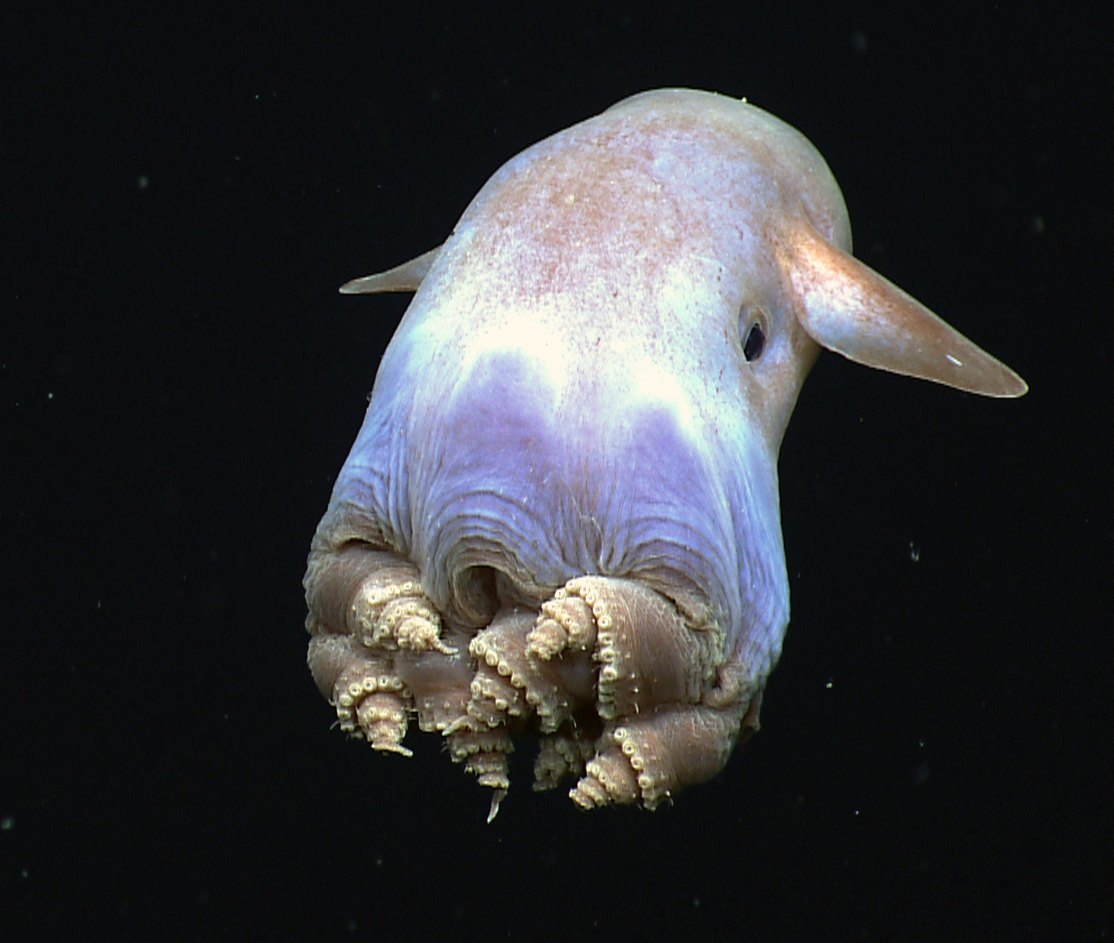
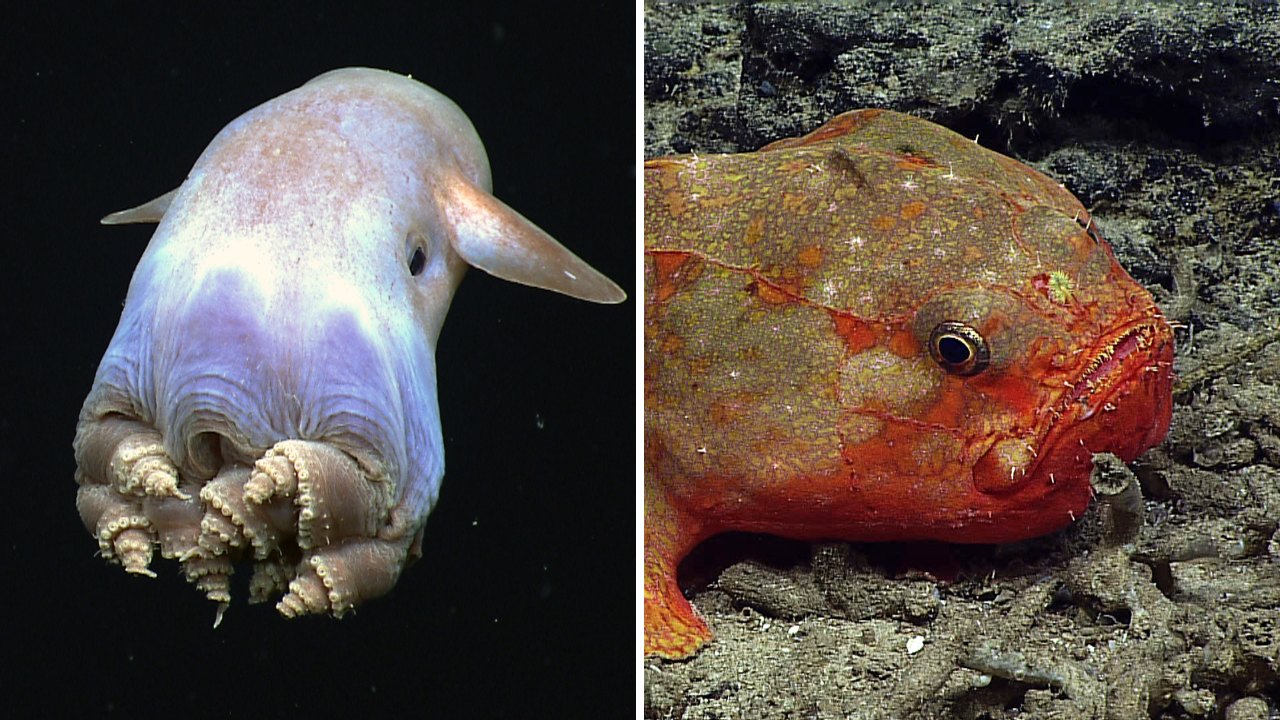
A NOAA dive log describes this dumbo octopus hovering above a rock ledge about two kilometers down in the Gulf of Mexico. Its arms were coiled, a posture never seen before in the species. The name comes from the ear-like fins, and what looks like a head is the mantle, a muscular bag for the organs and gills.
A sea toad, a deep-sea anglerfish
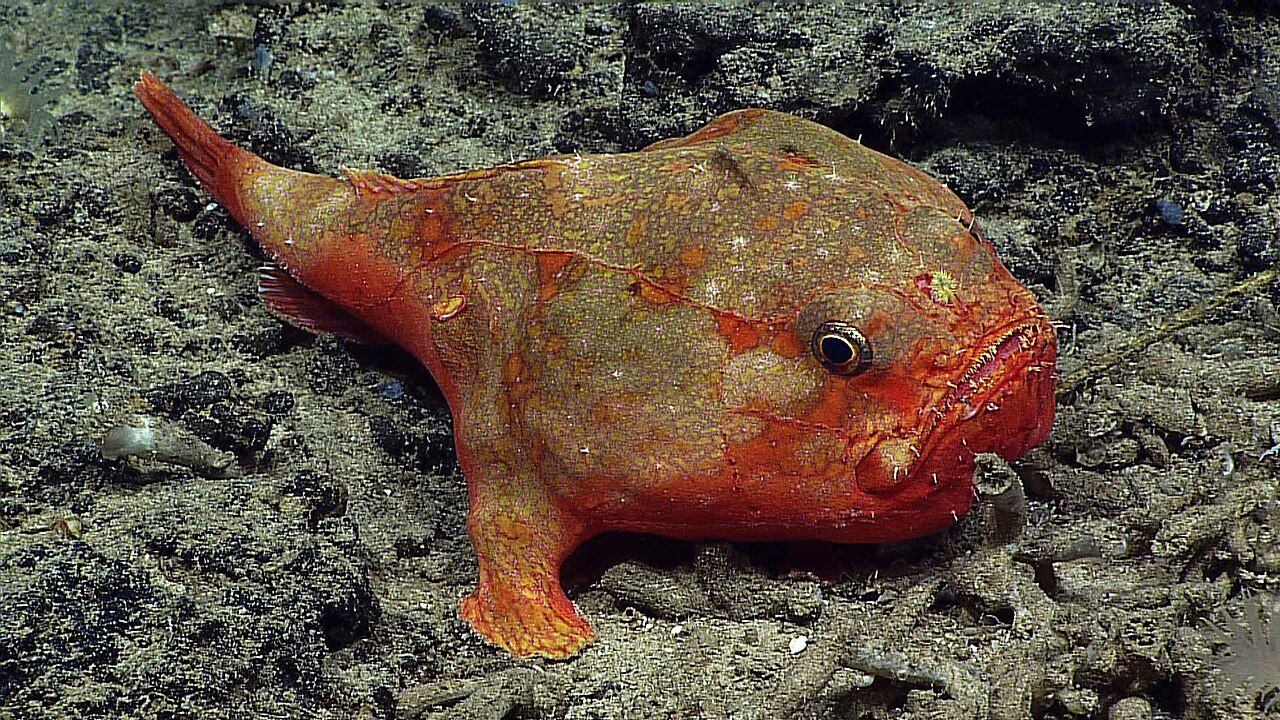
NOAA says this sea toad, Chaunax umbrinus, was seen at 328 meters off the southwest tip of Niʻihau, Hawaii. Sea toads are a type of deep-sea anglerfish, and the yellowish frilly structure on the forehead is a lure, though it is hard to see in this view. The fish looks like a lumpy orange rock with a face.
A young vampire squid in Monterey Bay
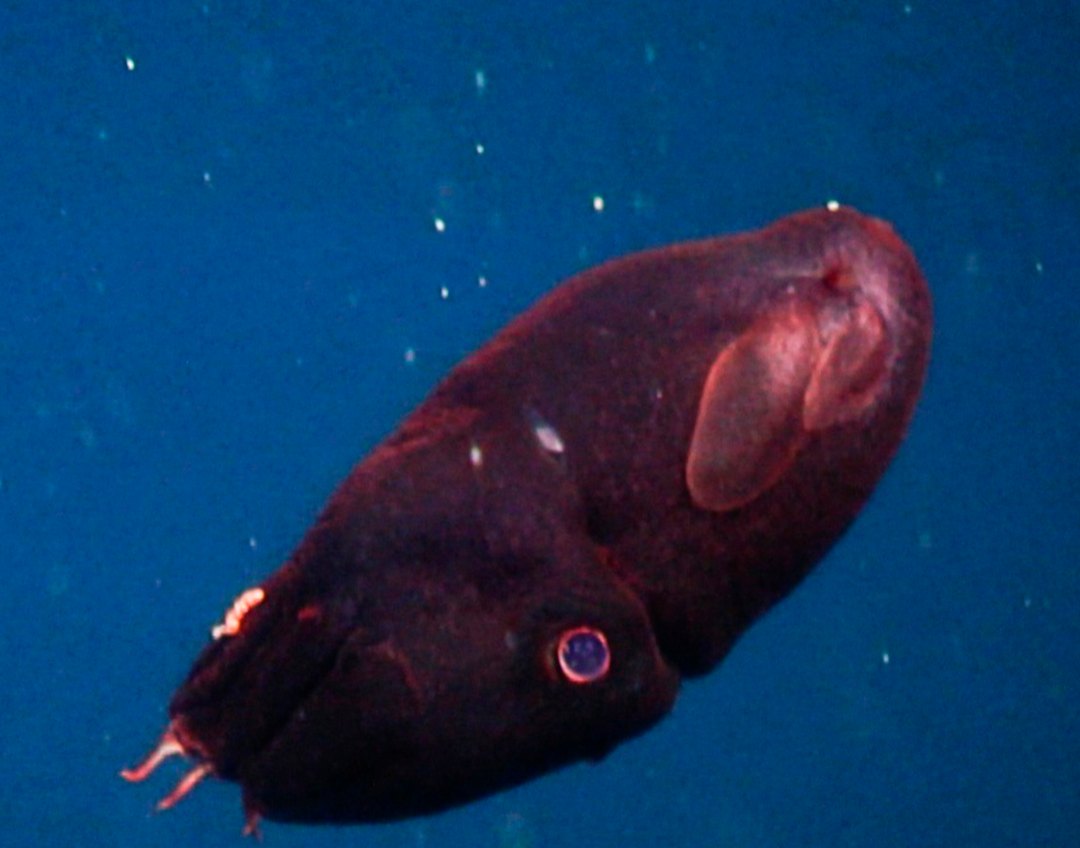
Vampyroteuthis infernalis means the vampire squid from hell, but it is neither a true squid nor an octopus. It feeds on marine snow, the debris that sinks from above, which it collects with two long, sticky filaments. This juvenile was photographed in Monterey Bay National Marine Sanctuary, with white specks drifting around it.
A giant isopod beside a whip coral
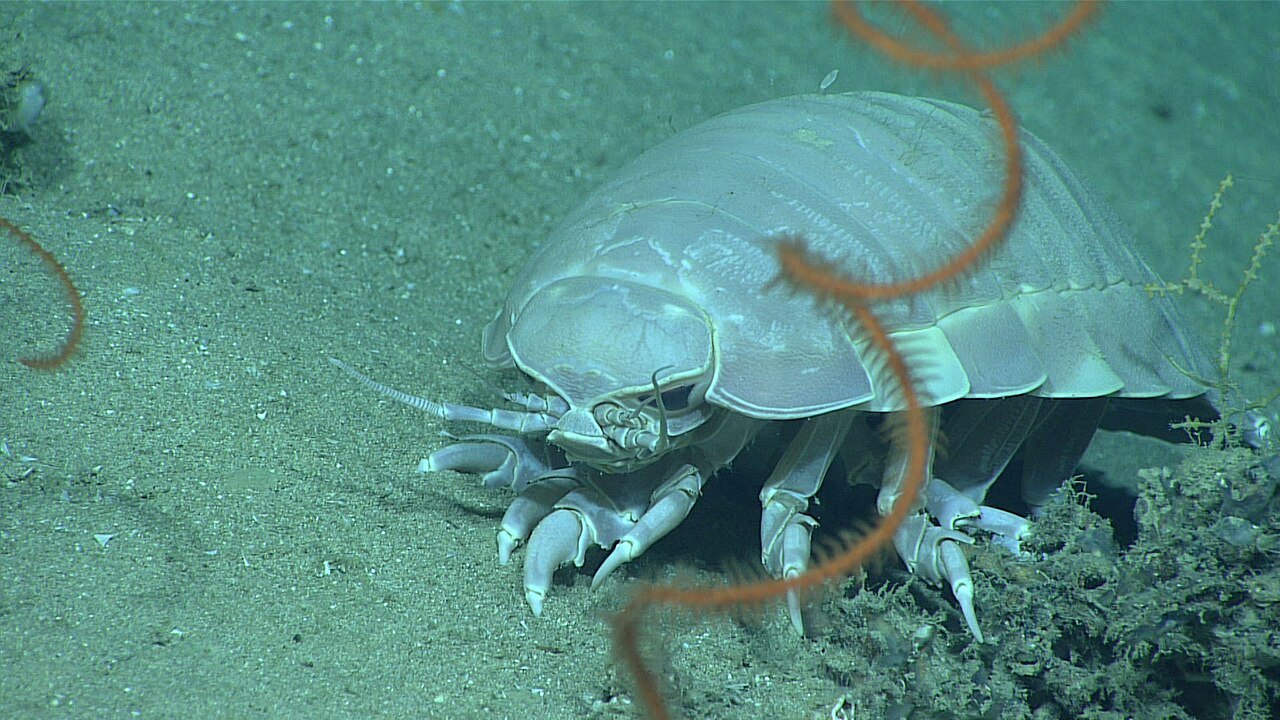
Giant isopods are relatives of the pill bugs under garden stones, and the genus Bathynomus holds the largest isopods. NOAA’s 2017 Gulf of Mexico expedition saw several and filmed one swimming. One seen on the first dive was nearly 30 centimeters, almost a foot, long.
A stingray with six gill slits
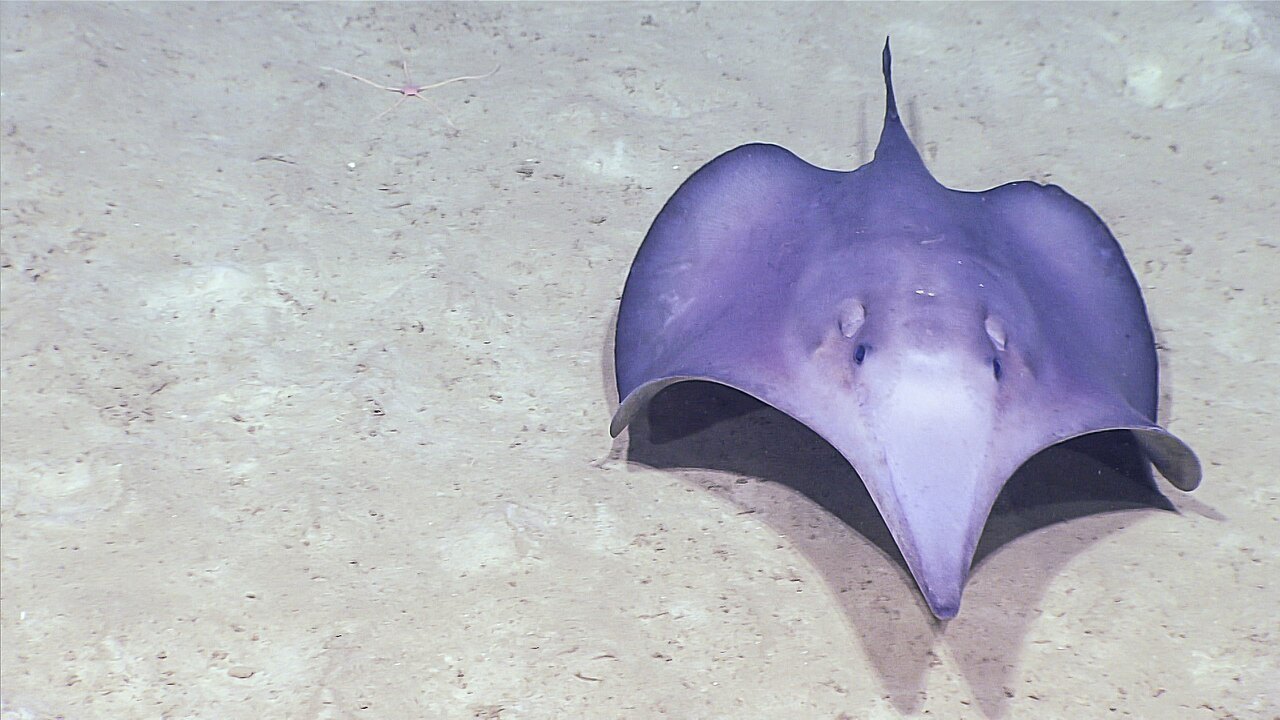
Most rays have five pairs of gill slits, but this one, Hexatrygon bickelli, has six. NOAA says scientists know almost nothing about its biology, and this sighting at about 835 meters could be the first live one. Its long, flexible snout is filled with clear gel.
A barreleye with a see-through head
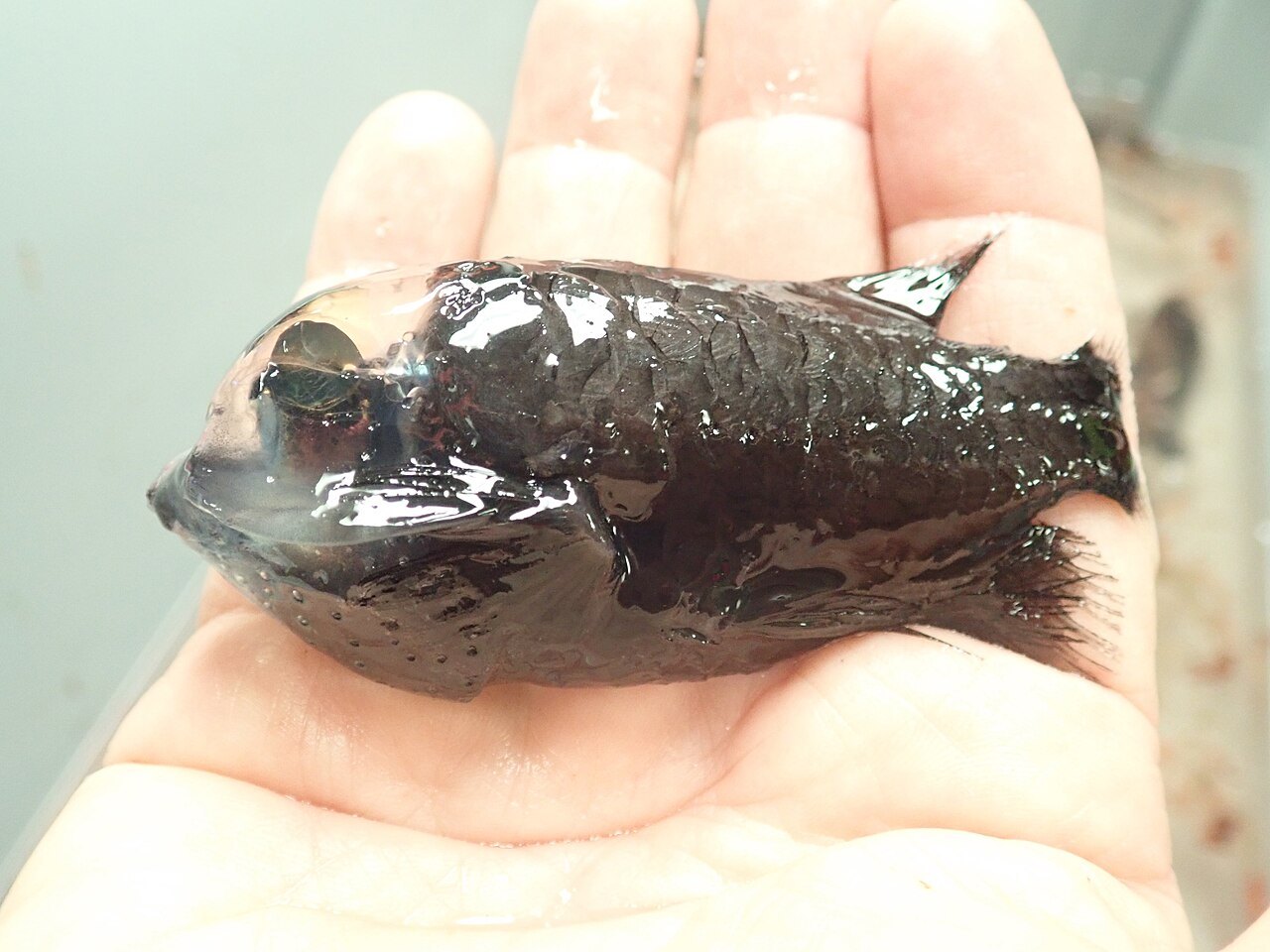
NOAA says this barreleye was collected in a trawl in the Gulf of Alaska in 2024. Barreleyes have tubular eyes that rotate, and the best-studied species has a clear, fluid-filled shield over its head, which nets often destroy. This one fits in an open palm, with the dome intact.
The giant anemone behind the golden orb
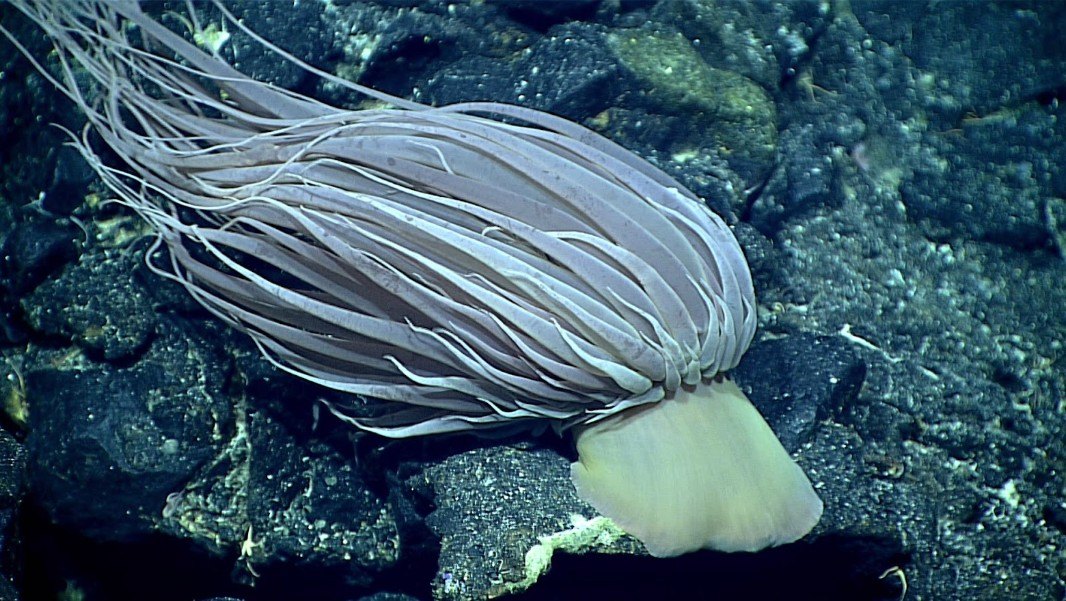
In 2023 NOAA collected a mysterious golden orb from 3,250 meters in the Gulf of Alaska. It turned out to be the remnant of the base of a deep-sea anemone, Relicanthus daphneae. This one, photographed off the Mariana Islands in 2016, shows a similar base at the bottom of the picture. Its tentacles can reach two meters.
A cusk eel with a long pale tail
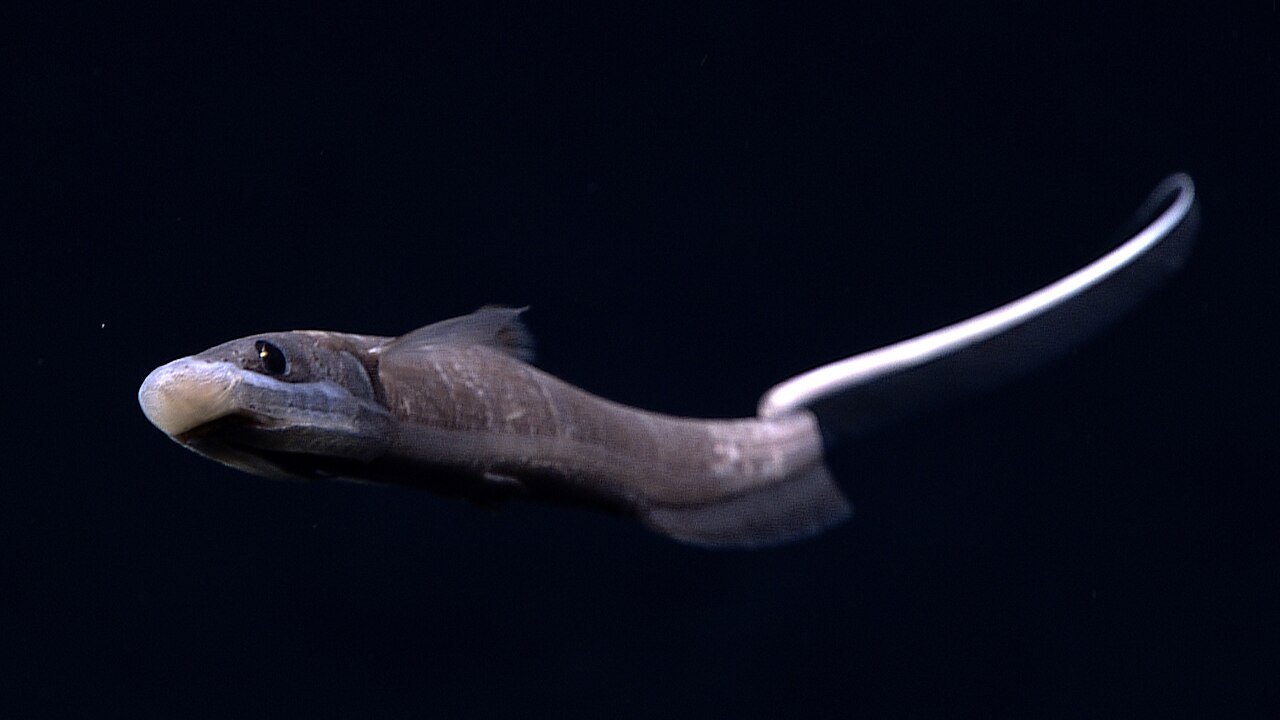
NOAA imaged this ophidiid fish, genus Bassozetus, on a ridge off Salmon Bank in the Northwestern Hawaiian Islands during the 2015 Hohonu Moana expedition. Cusk eels look like eels but are not true eels, and they live close to the sea bottom. This one hangs in black water with its pale tail curled up behind it.
A shrimp that vanishes in the dark
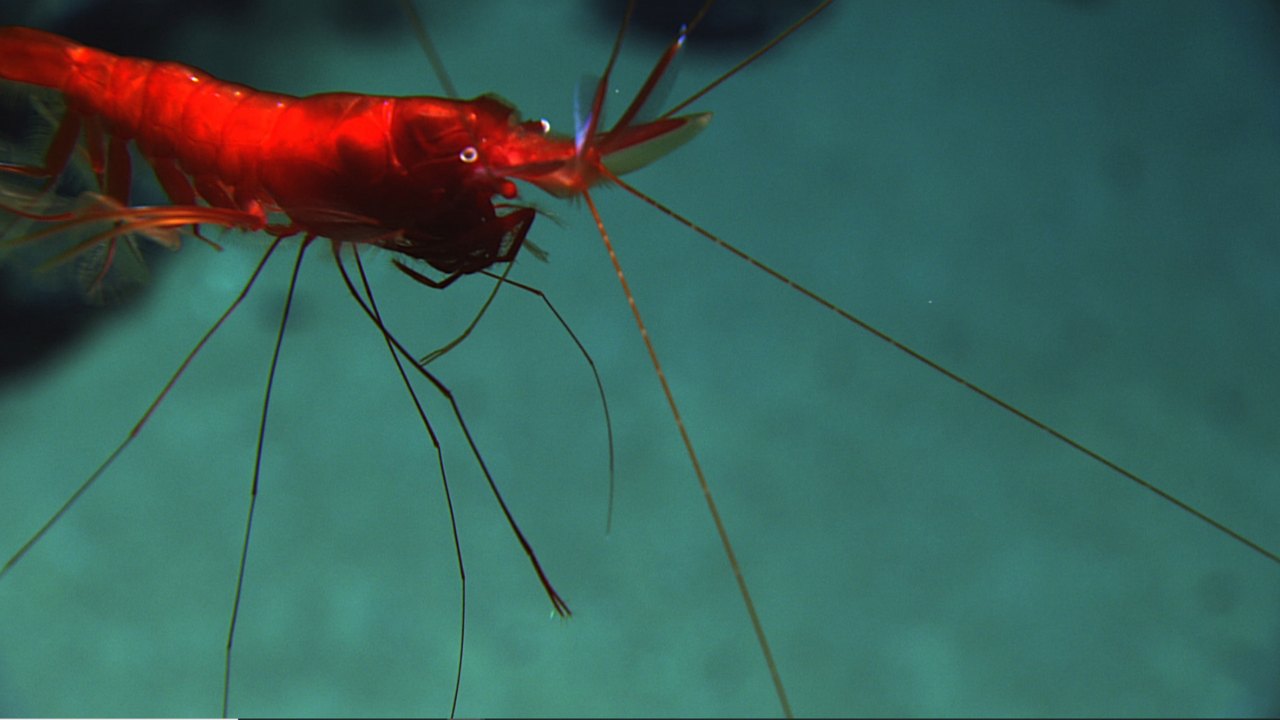
NOAA captioned this shrimp, filmed near Puerto Rico in April 2015, to explain a trick of the deep. Red is one of the first colors of light to disappear with depth, so several animals use it to vanish. The vehicle’s lights make this shrimp look red, but in the dark of the deep sea it would appear black.
Three blob sculpins on a steel table
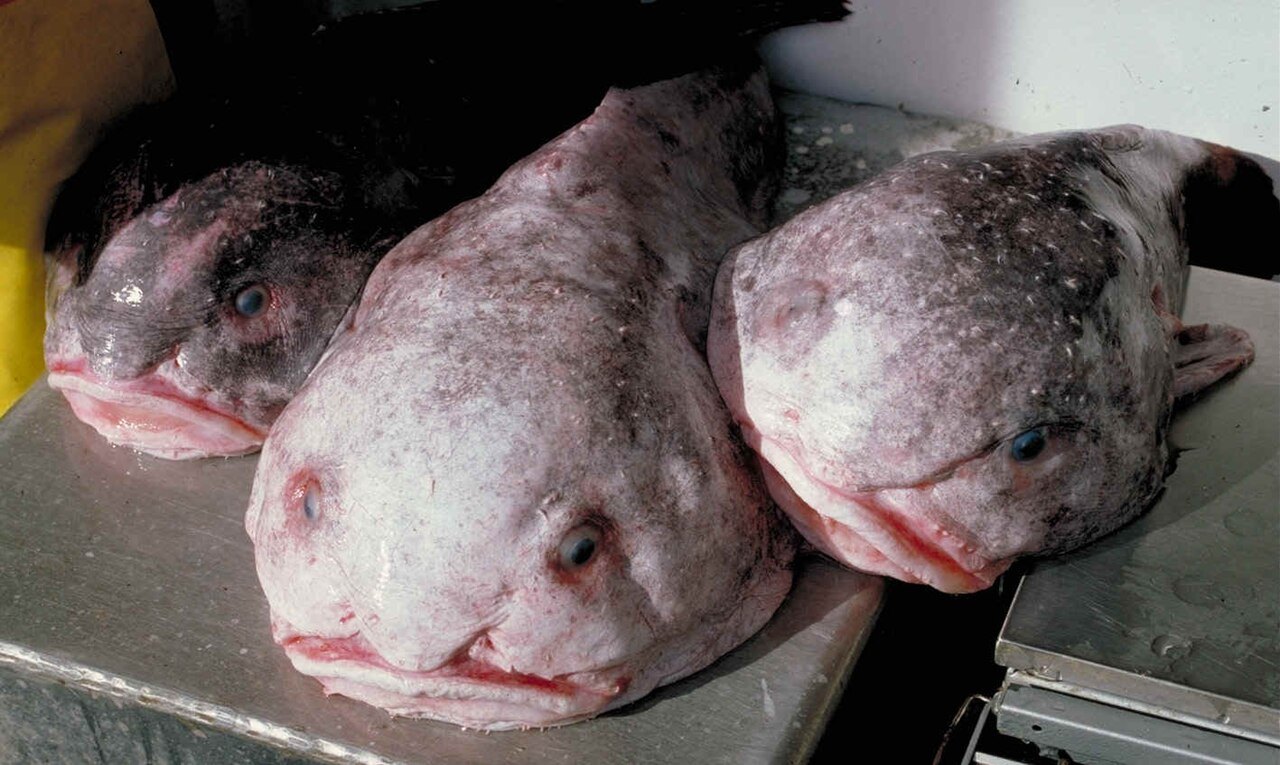
These blob sculpins, Psychrolutes phrictus, belong to the same genus as the blobfish. The Smithsonian says they live in deep water along the Pacific coast, from the Bering Sea to Southern California, and eat small invertebrates. They have no scales, and their large heads taper to a small, flat tail.