In the early 1970s the Environmental Protection Agency hired photographers to document American life and its surroundings, and about 80,000 pictures came back. The National Archives keeps almost 22,000 of them in the public domain. These twelve were taken between 1972 and 1974, and most are about gas, graffiti and where people went to have fun.
A hand-lettered apology, Lincoln City, Oregon
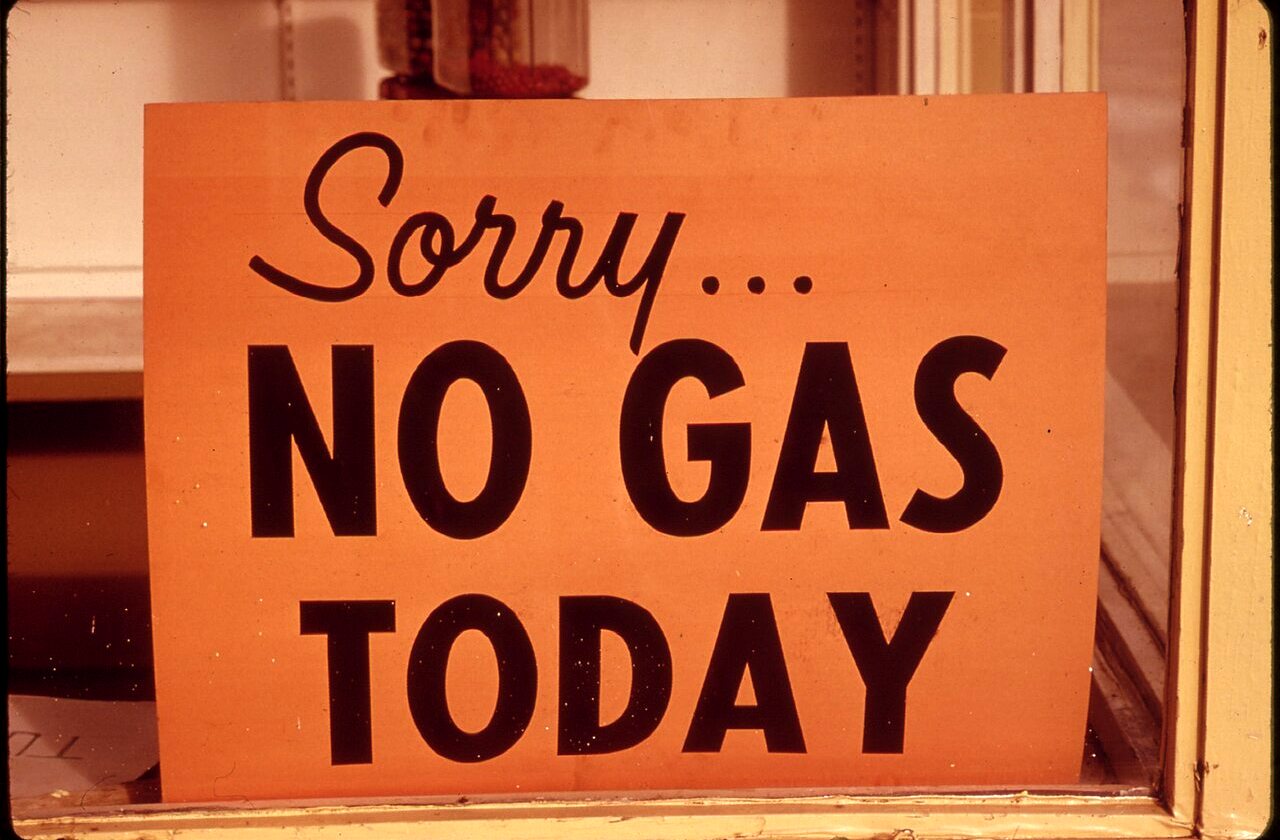
In the fall of 1973 many stations on the Oregon coast closed early, opened late and shut down on weekends, according to the National Archives record. Whoever made this sign took care with the lettering, even while delivering bad news.
Cut-rate gas, Marshall, Texas
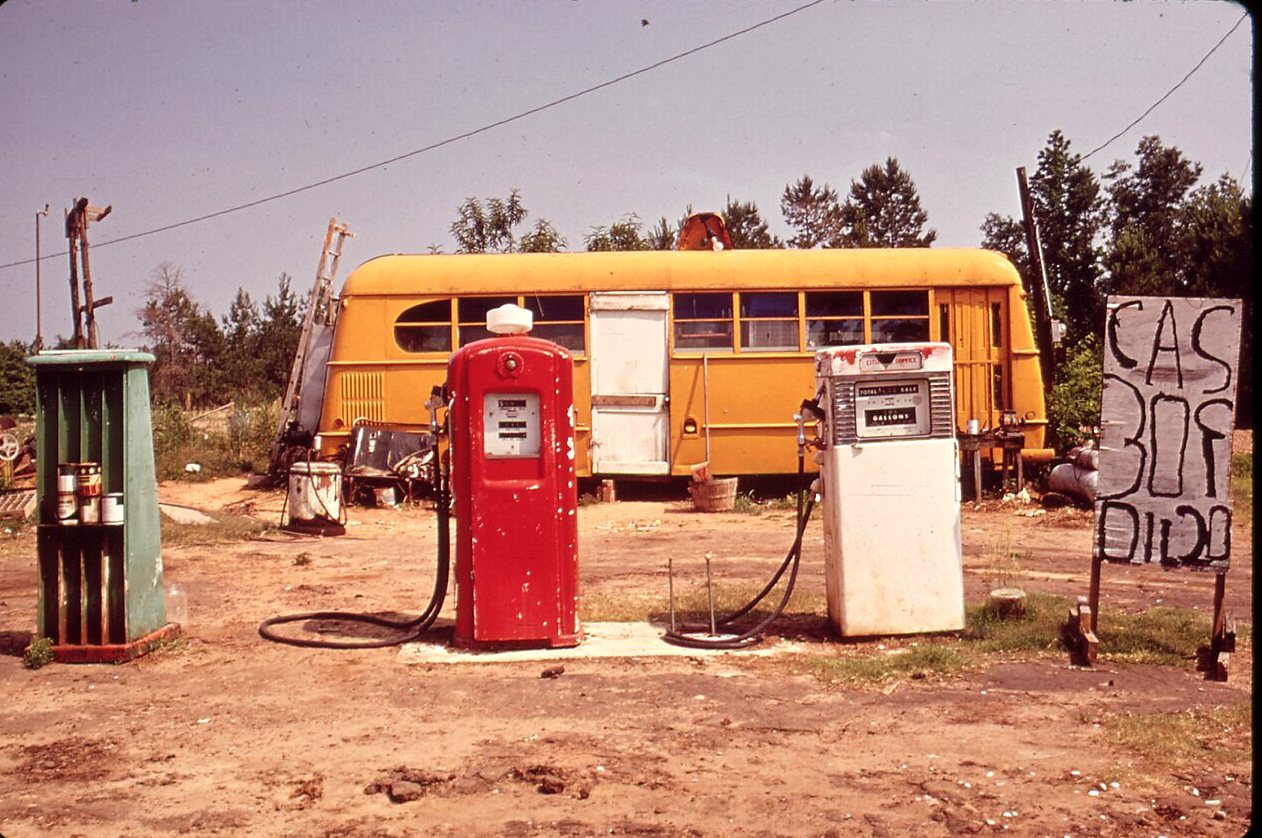
The National Archives caption describes a cut-rate gas station that operated out of a bus in Marshall, Texas. In June 1972 that meant three pumps on bare dirt, a hand-painted sign and the bus parked behind them. It is a business plan with very little overhead.
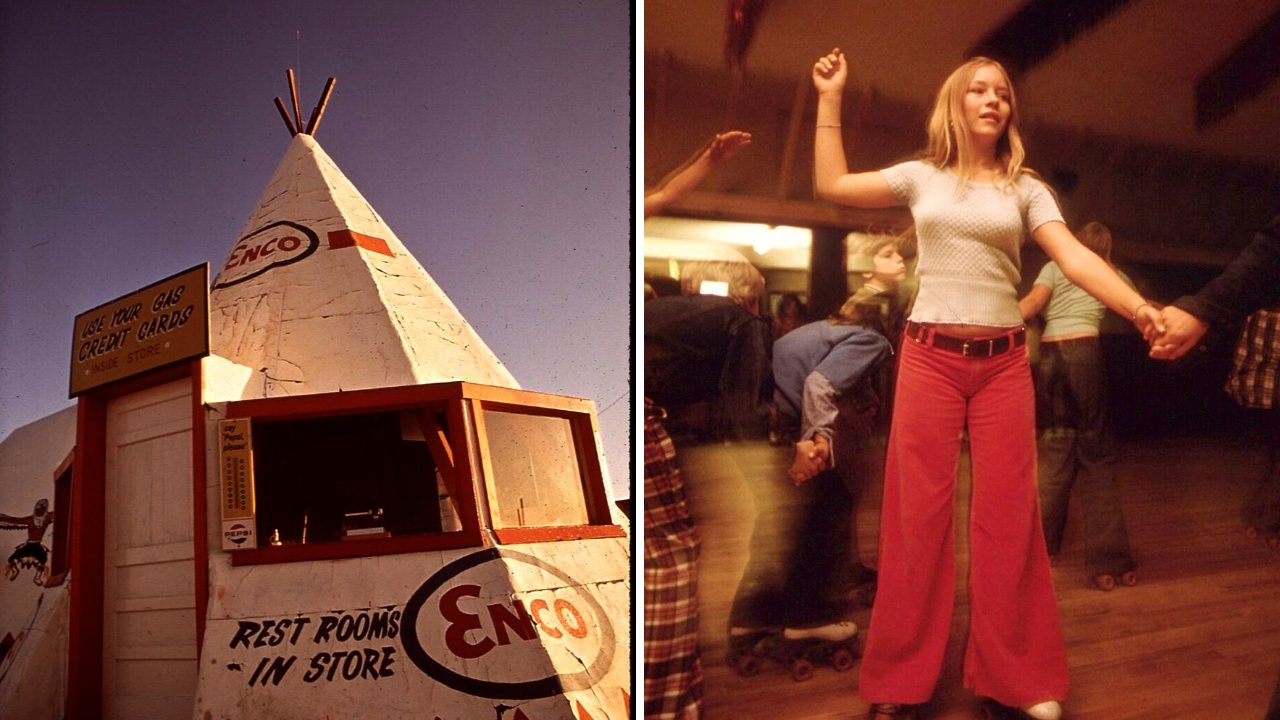
A tepee on Route 66
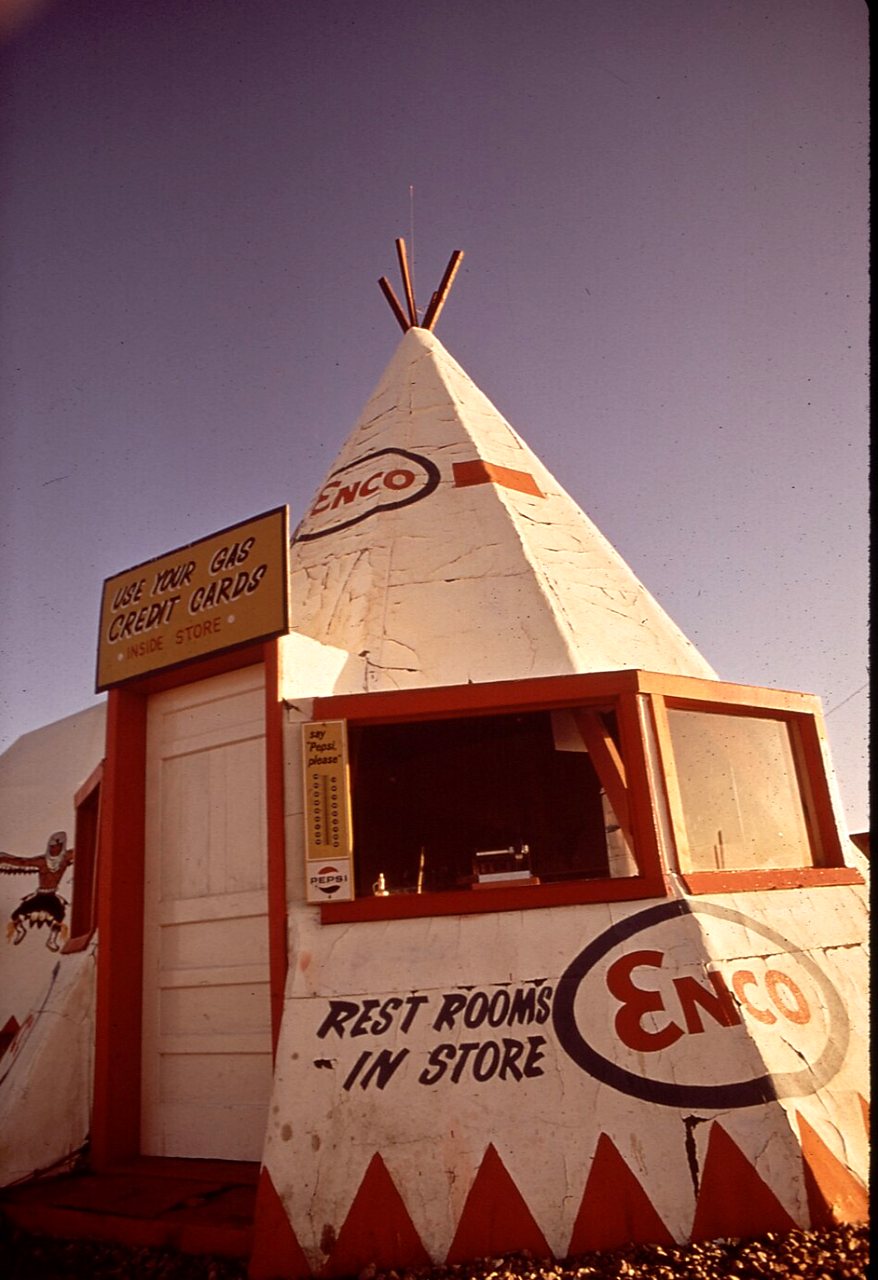
This tepee-shaped Enco station stood on Route 66 in Arizona, according to the National Archives record, and was photographed in June 1972. The poles poking out of the peak are a good touch, and so is the painted promise of rest rooms in the store.
Graffiti on the Lexington Avenue line
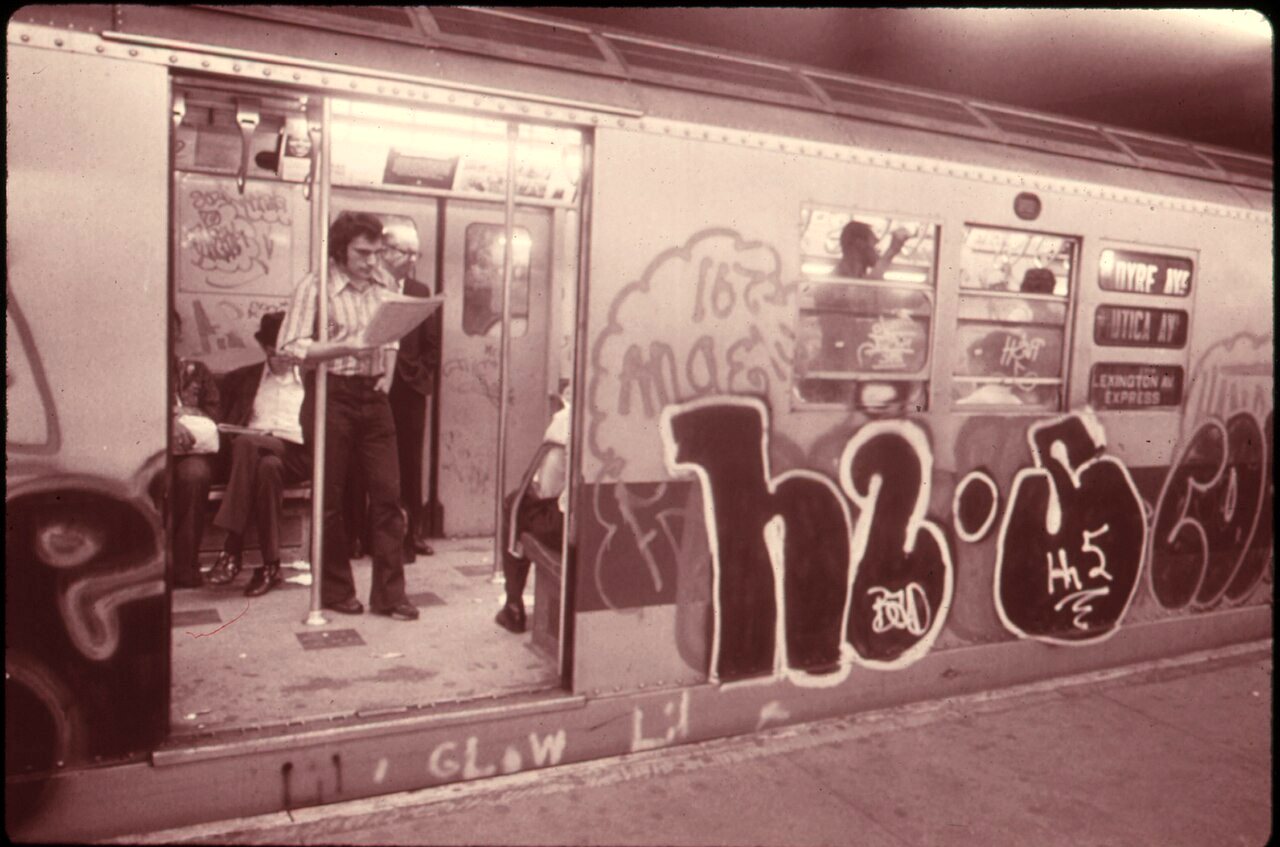
Transit police arrested more than 1,400 people for graffiti in 1973 and more than 2,000 in 1974, the record says, and very few cars in the system were clean. Through the open doors of this one, two passengers stand about as if nothing were unusual.
A train at Times Square
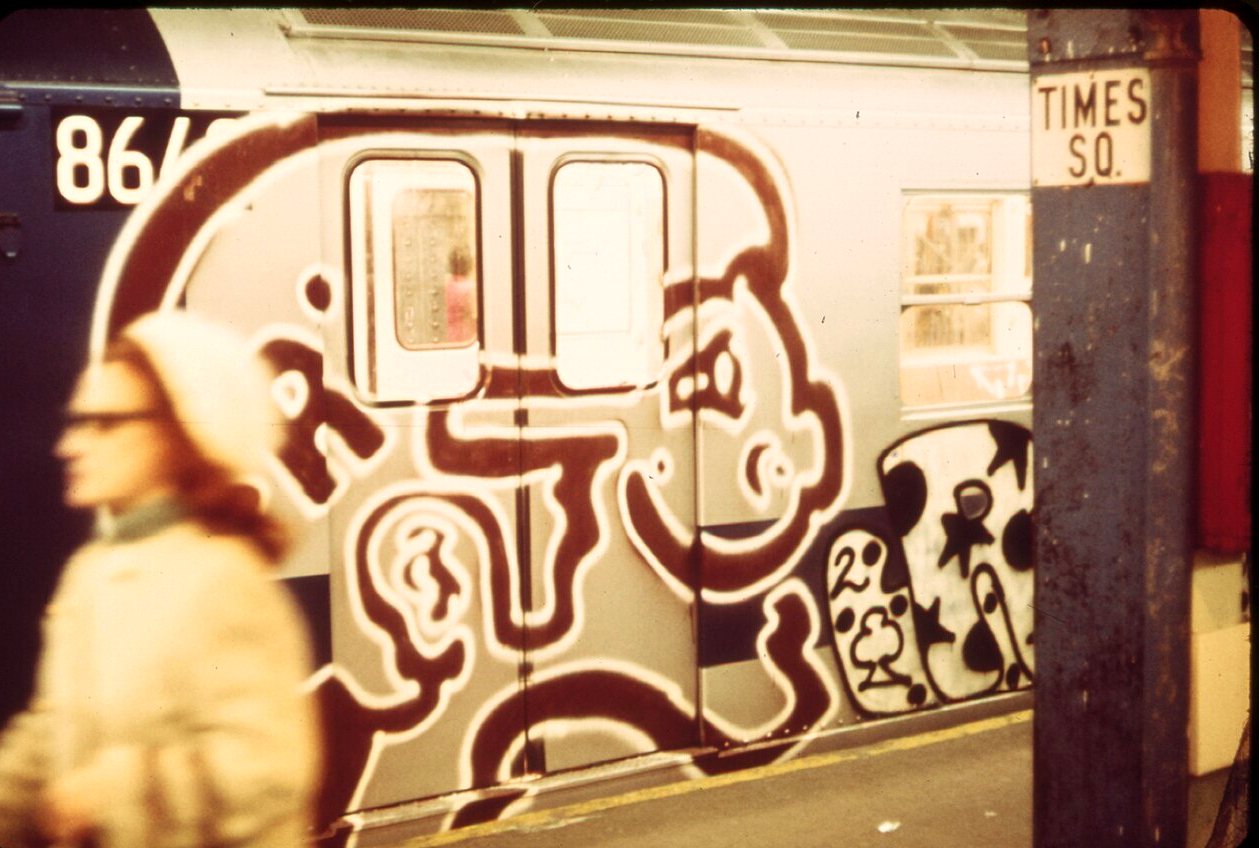
In 1970 the New York subway carried 47 percent of the city’s work force every day, so a train like this one had a very large audience. In May 1973 a commuter in a white coat and hat hurries past the giant cartoon face in a blur.
Skate night at Izzy-Dorry’s
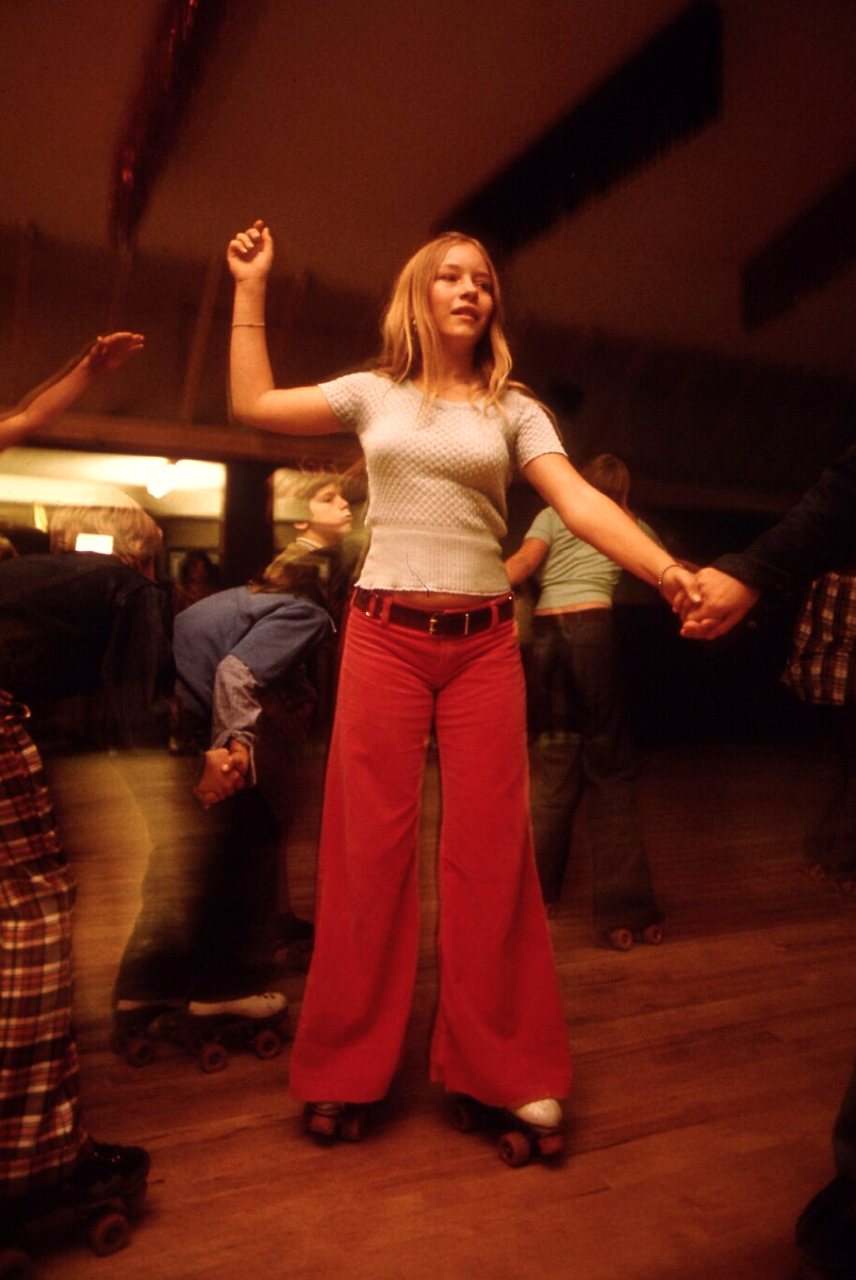
New Ulm, Minnesota, was founded in 1854 by a German immigrant land company and had about 13,000 residents when Flip Schulke photographed its roller rink in October 1974. The girl in red flares is holding hands with someone just out of frame, and everyone behind her has dissolved into streaks.
Isaac Hayes at the piano
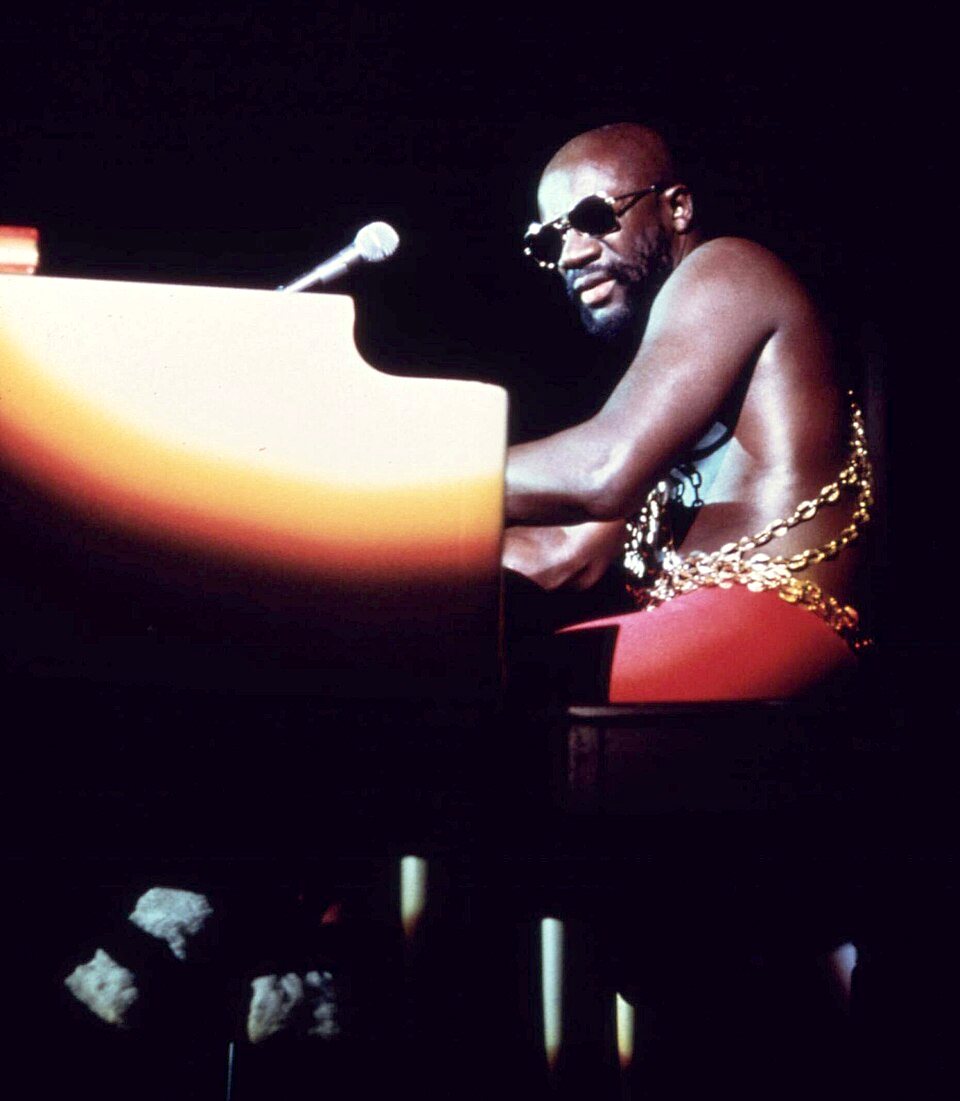
Isaac Hayes played Chicago’s International Amphitheater in October 1973 as part of the annual PUSH Black Expo; PUSH stood for People United to Save Humanity. John H. White caught him in sunglasses and chains, with the piano lid glowing like a lamp in the dark.
A red spinner in a Baltimore park
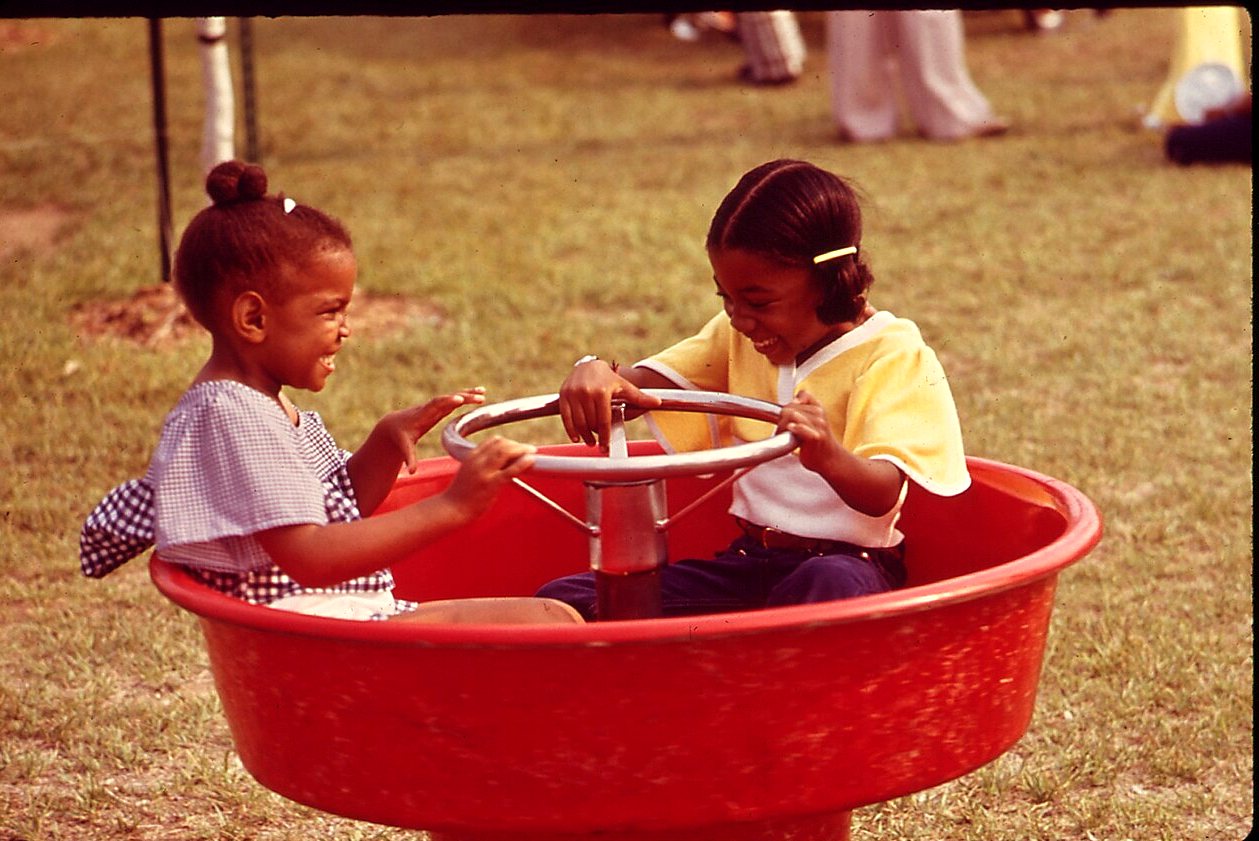
In June 1973 Jim Pickerell photographed children playing in a downtown Baltimore park. Two girls share a round red spinner with a steering wheel in the middle, and they are looking at each other, not at the camera. That is the right way to take a ride.
A park without much grass, Manhattan
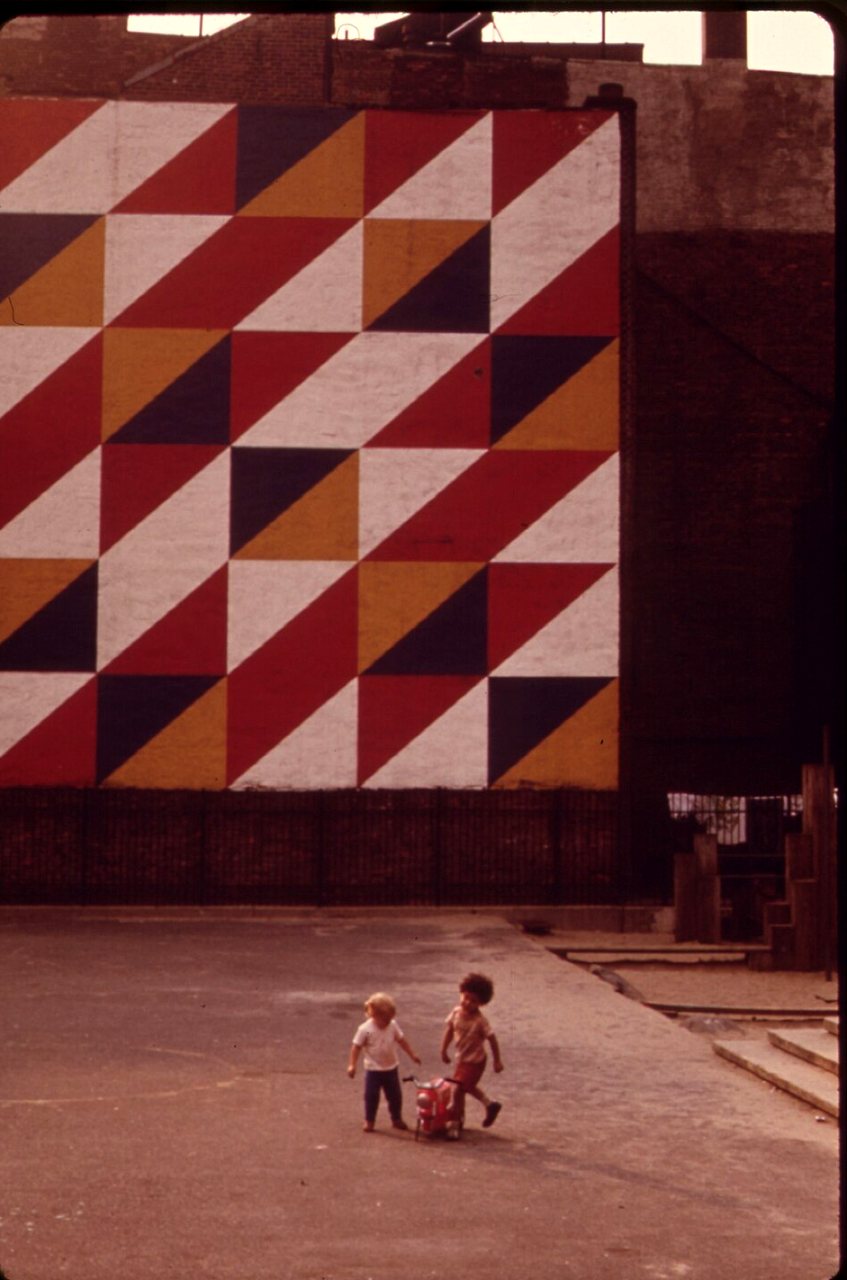
The caption calls this small park at 29th Street and Second Avenue in Manhattan “a good example of an attractively designed non-green park.” There is hardly a blade of grass, just a mural of red, orange and navy triangles and two small children crossing the pavement below it.
Monroe Street parking lot, Chicago
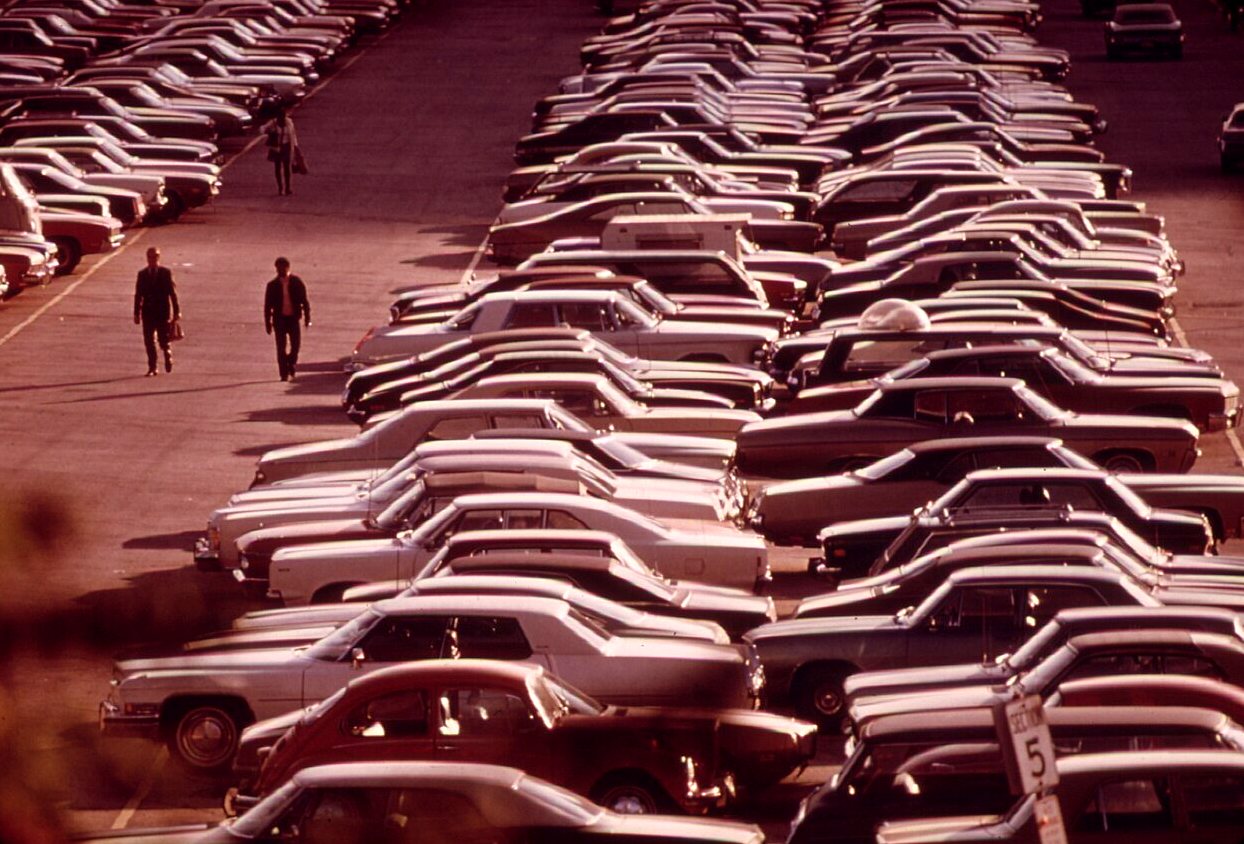
The Monroe Street lot at Lake Shore Drive held 2,700 commuter cars in October 1973, and construction was adding 900 more spaces and a new park. Two pedestrians walk down the middle, dwarfed by a sea of roofs.
A power plant before it was a power plant
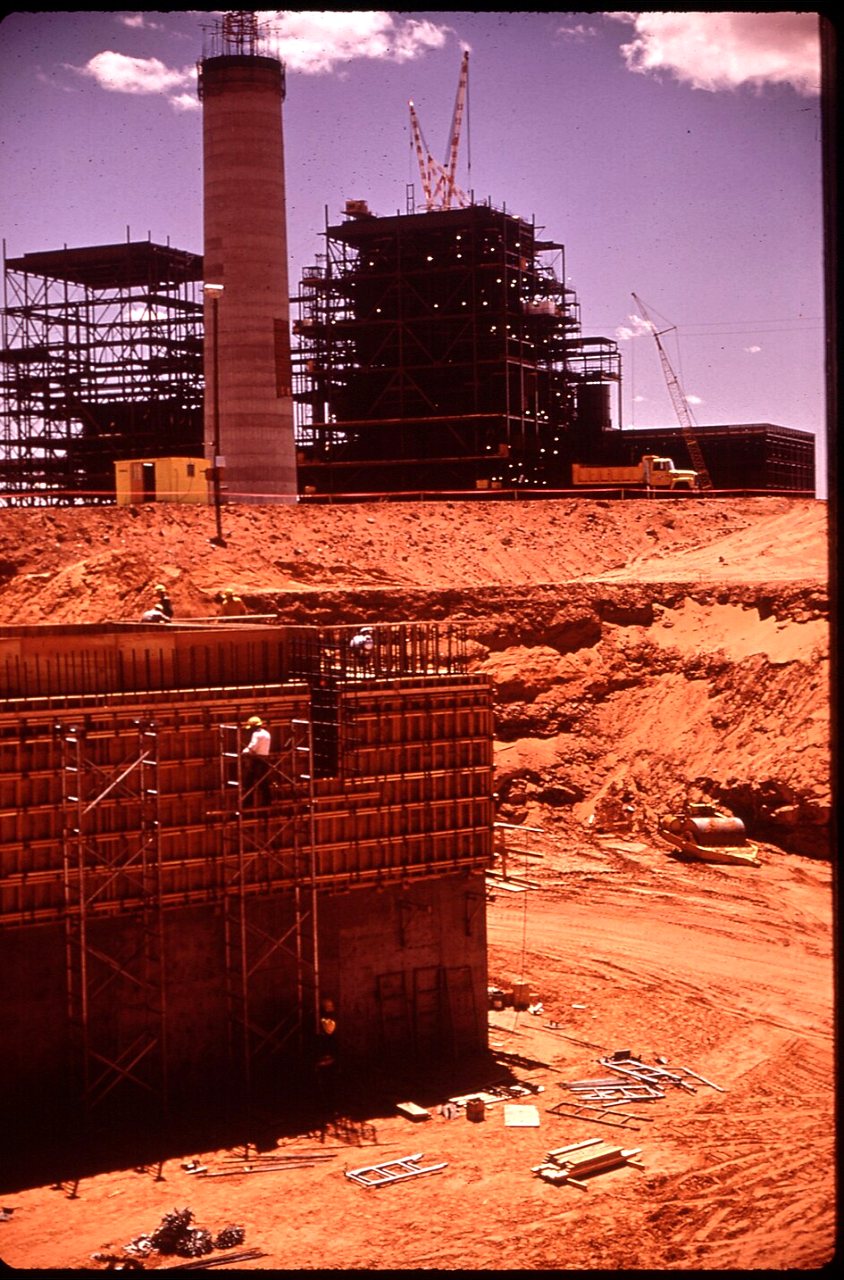
In May 1972 the Navajo Generating Plant near Page, Arizona, was still scaffolding and red dirt. The caption says it would occupy more than a thousand acres leased from the Navajo and become the largest electric generating station in the state. Two workers on the formwork give you the scale.
A dragline at the Navajo Mine
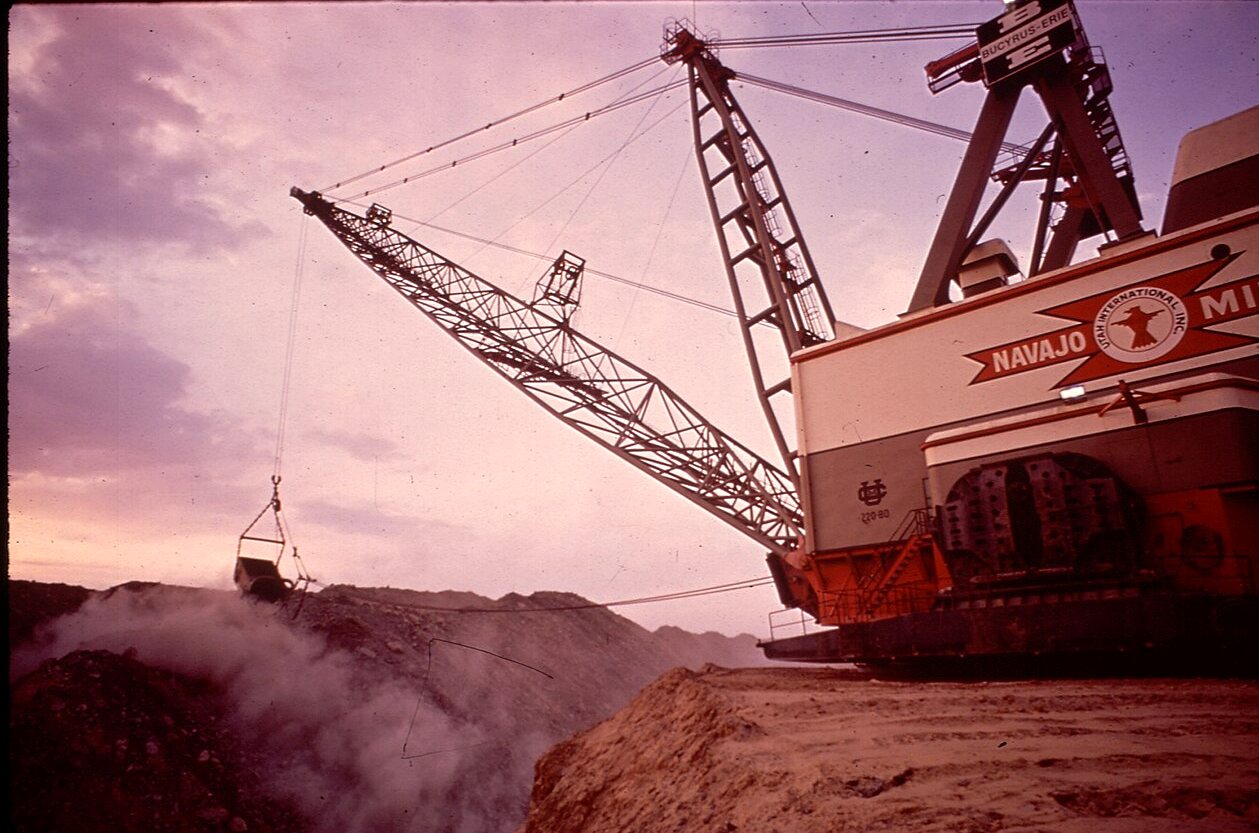
Lyntha Scott Eiler photographed this dragline at the Navajo Mine in May 1972, the same month as the power-plant picture above. The boom is long enough to drop a bucket into the pit from the far edge, and the cab is lettered with the mine’s name.